Washington’s foreign policy establishment just discovered a problem it cannot sanction, legislate, or coordinate its way out of.
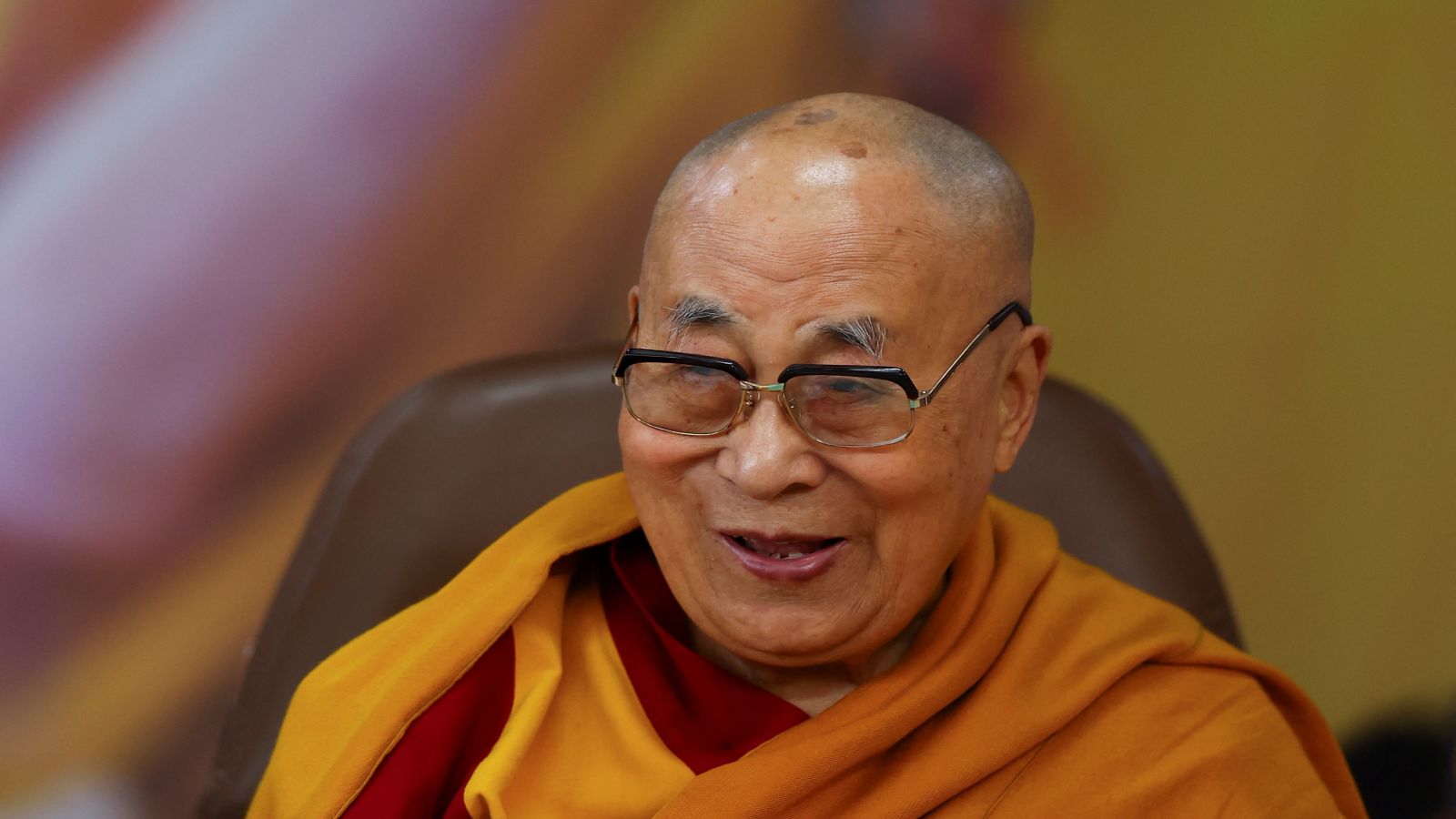
A congressional panel recently warned that Beijing will try to hijack the Dalai Lama’s succession and urged the United States to "coordinate" with India to stop it. The consensus among Beltway analysts is predictable. They treat a centuries-old Tibetan Buddhist spiritual institution like a contested corporate board seat or a standard geopolitical proxy battle. They assume that if Washington passes enough resolutions and New Delhi hosts enough exiled monks, the free world will successfully counter China’s influence.
That consensus is dangerously naive.
In over fifteen years of analyzing Asian geopolitics and religious statecraft, I have watched Western policymakers repeatedly misread how power actually operates in the Himalayas. They view the succession of the 14th Dalai Lama, Tenzin Gyatso, through the sterile lens of diplomatic joint statements and soft-power messaging. Meanwhile, Beijing is playing a completely different game on a board it already physically controls.
To understand why the US-India coordination narrative fails, you have to stop asking who will win the battle over the next Dalai Lama. You are asking the wrong question. The real question is whether the institution of the Dalai Lama, as a unified political and spiritual force, can survive a succession crisis at all.
The Myth of the Diplomatic Counter-Punch
The standard Western analysis rests on a comforting illusion. It assumes legitimacy is a popularity contest won in international media.
When the 14th Dalai Lama passes, Beijing will invoke its 2007 State Religious Affairs Bureau Order No. 5, which mandates that all reincarnations of Tibetan lamas receive government approval. Chinese officials will use the Golden Urn lottery—a Qing Dynasty ritual co-opted by the Chinese Communist Party—to select a compliant child inside Tibet. Simultaneously, the Tibetan exile community in Dharamsala, backed by Washington and quietly sheltered by New Delhi, will recognize a rival boy born in the free world, likely in India or Nepal.
Beltway think tanks love this scenario because it looks like a clear moral victory. The world will see Beijing’s pick as a state-manufactured puppet and Dharamsala’s pick as the authentic spiritual leader. The US State Department will issue stern condemnations. Congressional panels will hold hearings.
Here is the flaw in that logic. Beijing does not care if a senator in Washington or a pundit in London recognizes its Dalai Lama.
Legitimacy in Tibet is not decided by op-eds in the New York Times. It is decided by access to monasteries, control over monastic education, and the daily reality of life on the Tibetan Plateau. The Chinese state controls every square inch of Tibet. It controls the passports, the internet cables, the monastery budgets, and the security checkpoints. When Beijing installs its 15th Dalai Lama in Lhasa, he will sit on the historic throne at the Potala Palace and preside over the major monastic seats of Sera, Drepung, and Ganden.
An exile-recognized Dalai Lama sitting in northern India will have international prestige, moral authority, and Western applause. What he will not have is physical access to six million Tibetans inside China. Over a generation, forced isolation changes religious reality. Look at what happened to the Panchen Lama, the second-highest figure in the Gelug school of Tibetan Buddhism.
The Panchen Lama Blueprint
In 1995, the 14th Dalai Lama recognized six-year-old Gedhun Choekyi Nyima as the 11th Panchen Lama. Three days later, Chinese authorities abducted the boy and his family. They have not been seen in public since. Beijing then installed its own candidate, Gyaincain Norbu.
For nearly thirty years, Western observers dismissed Gyaincain Norbu as a failure. Tibetans inside China privately mocked him as the "false Panchen." Yet look at the trajectory over three decades. The boy is now a grown man in his thirties. He speaks fluent Tibetan and Mandarin, holds a senior position in the Chinese People's Political Consultative Conference, and tours Tibetan monasteries under heavy state choreography, distributing blessings and state development funds.
Imagine a scenario where this same dynamic plays out over forty years with the Dalai Lama.
The generation of Tibetans who remember the 14th Dalai Lama fleeing Lhasa in 1959 is dying out. The generation that remembers the 1989 protests or the 2008 uprising is aging. A child born inside Tibet today grows up in state-run boarding schools, learns Mandarin alongside—or instead of—Tibetan, and sees only the state-approved religious hierarchy. By the time a Beijing-appointed 15th Dalai Lama reaches middle age, he will not need Washington’s approval. He will simply be the only Dalai Lama physically present in the lives of ordinary Tibetans.
Washington’s "coordination" strategy offers zero practical mechanism to prevent this slow-motion demographic and institutional absorption. Passing the Tibetan Policy and Support Act of 2020, which threatens sanctions against Chinese officials who interfere in the succession, makes for great domestic politics in the United States. Against the Chinese Communist Party's existential security priorities in Tibet, visa bans and asset freezes are paper shields against artillery.
Why India Will Never Play Washington’s Game
The second pillar of the Beltway consensus is equally shaky. It assumes India is an eager, reliable partner ready to lock arms with Washington to confront Beijing over Tibetan Buddhism.
This fundamentally misunderstands New Delhi’s strategic calculus. India is not a treaty ally of the United States. It is a pragmatic, fiercely independent regional power that shares a 2,167-mile disputed border with China.
New Delhi’s primary objective on its northern frontier is not liberating Tibet or defending religious freedom. Its primary objective is preventing a two-front war and avoiding another deadly border clash like the 2020 Galwan Valley skirmish. Every time New Delhi plays the "Tibet card," Beijing retaliates where India hurts most—by escalating pressure along the Line of Actual Control in Ladakh and Arunachal Pradesh, or by deepening military ties with Pakistan.
Consider New Delhi’s actual behavior over the last decade. While India hosts the Central Tibetan Administration in Dharamsala, the Indian government has systematically restricted Tibetan political activism on its soil whenever it seeks to stabilize ties with Beijing. In 2018, Indian officials quietly warned senior ministers and government officials to stay away from events marking the 60th anniversary of the Dalai Lama’s exile so as not to offend Beijing ahead of an informal summit between Narendra Modi and Xi Jinping.
If the 14th Dalai Lama dies and an exile search committee identifies a reincarnation in Tawang—a sensitive region in India’s Arunachal Pradesh that Beijing claims as "South Tibet"—New Delhi will face a geopolitical nightmare. Backing an exile-chosen Dalai Lama from Tawang would effectively hand Beijing a permanent casus belli on India’s northeastern border.
New Delhi will offer quiet sanctuary to the Tibetan exile community, just as it has since 1959. It will allow religious rituals to proceed quietly in Dharamsala. What it will not do is join a loud, Washington-led diplomatic coalition designed to publicly humiliate Beijing over the succession. Anyone expecting India to act as America’s forward operating base for Tibetan religious warfare has not been paying attention to Indian foreign policy since Jawaharlal Nehru.
Dismantling the Common Misconceptions
Public discourse around this issue is clogged with lazy assumptions. If you want to understand what is actually coming, discard the standard talking points.
Can the Dalai Lama simply abolish the institution?
He has floated this idea publicly for years, suggesting the lineage might end with him if the Tibetan people no longer want it. In theory, yes. In practice, it will not stop Beijing. The Chinese Communist Party has already declared that the Dalai Lama does not have the authority to end his own reincarnation lineage. Whether Tenzin Gyatso declares the institution closed or names an emanation before his death, Beijing will still pull a name out of the Golden Urn. Abolishing the title only guarantees that Beijing gets an uncontested monopoly on the brand.
Will a dual-Dalai Lama scenario spark a massive uprising inside Tibet?
Unlikely on the scale seen in 1959 or 2008. Tibet today is one of the most heavily surveilled territories on earth. Under the grid-management system pioneered by former regional party secretary Chen Quanguo, every neighborhood, village, and monastery is wired into real-time facial recognition, biometric tracking, and informant networks. Spontaneous mass mobilization is almost impossible. Resistance will remain quiet, fractured, and deeply personal—expressed through private prayer and cultural preservation rather than street protests.
Does the Tibetan Policy and Support Act actually deter Beijing?
No. Sanctions work when the target values access to the Western financial system more than the political objective at stake. For Xi Jinping, absolute control over Tibet is tied directly to regime survival and national territorial integrity. No mid-level or senior CCP official is going to defy Beijing’s succession plan to protect a US visa.
The Uncomfortable Reality of What Comes Next
To be clear, this assessment carries a bitter pill. Recognizing the limits of US-India coordination does not mean conceding moral legitimacy to Beijing. The Chinese Communist Party’s attempt to control Buddhist reincarnation—an atheist state dictating the spiritual rebirth of a religious leader—is an absurd, Orwellian exercise in authoritarian overreach.
Furthermore, there is a genuine risk in underestimating the resilience of Tibetan faith. Empires have tried to co-opt or crush Tibetan Buddhism for centuries, from the Mongols to the Manchus to the Red Guards during the Cultural Revolution, and the faith outlived them all. A Beijing-appointed 15th Dalai Lama could easily face decades of silent rejection by devout Tibetans, turning into an expensive, permanent embarrassment for the CCP.
However, faith surviving underground is very different from an exile government winning a geopolitical chess match.
If Washington and Dharamsala actually want to preserve Tibetan identity rather than score cheap rhetorical points against Beijing, they need to abandon the obsession with the succession battle. You cannot beat the CCP at a game of institutional control inside borders it completely dominates.
Instead of pouring diplomatic capital into coordinating public warnings about the 15th Dalai Lama, the focus must shift to three brutally practical priorities:
- Decentralize Tibetan leadership immediately. The Tibetan movement is dangerously over-indexed on the charisma and global fame of one man. When Tenzin Gyatso dies, no child—no matter how legitimately recognized—will possess his global stature for at least twenty-five years. The Central Tibetan Administration and prominent lamas across the Himalayan belt need to build distributed, institutional authority now, rather than waiting for a toddler to grow up.
- Shift funding from political lobbying to linguistic and digital survival. Beijing’s most lethal weapon in Tibet is not the Golden Urn; it is the Sinicization of the school system. Protecting Tibetan culture means aggressively funding independent Tibetan-language education, digital archives, and uncensored information pipelines across the diaspora and border regions.
- Accept India’s boundaries. Stop pressuring New Delhi to make public anti-China gestures on Tibet. Quiet Indian tolerance of Tibetan monastic centers in Karnataka and Himachal Pradesh is worth infinitely more than a joint US-India press release that provokes Beijing into locking down the border further.
The tragedy of the current Washington consensus is that it mistakes noise for strategy. Congressional panels will keep holding hearings, think tanks will keep publishing white papers on trilateral coordination, and diplomats will keep drafting strongly worded statements.
Meanwhile, Beijing is waiting out the clock—knowing full well that when the 14th Dalai Lama takes his final breath, no amount of diplomatic coordination in Washington will stop the gates of Lhasa from slamming shut.