Russia is shifting its hybrid warfare doctrine from cyber-espionage and disinformation to deniable, localized kinetic sabotage. Intelligence assessments from Poland and the Baltic states indicate that Moscow is preparing targeted operations against critical energy and transport infrastructure.
This strategic shift is a direct response to Ukraine’s increasingly effective long-range strikes and deep-theater operations, which have forced the Kremlin to seek asymmetric leverage. Rather than risk a full-scale conventional invasion, Moscow’s current operational calculus relies on a highly calculated cost-benefit framework: executing operations intense enough to disrupt European connectivity and political resolve, yet structured carefully to remain below the consensus threshold required to trigger NATO’s Article 5 collective defense clause.
The Strategic Triad of Sub-Article 5 Escalation
To dissect the threat vectors facing Poland, Lithuania, Latvia, and Estonia, we must categorize Moscow’s operational options. Russian state planners evaluate targets through a matrix of deniability, economic disruption, and psychological friction. This strategy manifests across three primary kinetic pillars:
                  [ RUSSIAN KINETIC STRATEGY ]
                               |
       +-----------------------+-----------------------+
       |                       |                       |
[ Physical Sabotage ]    [ Maritime & Air ]     [ Frontier Incursions ]
 - Grid substations       - Shadow-ship drones   - Border GPS jamming
 - Rail chokepoints       - Airspace probing     - Demarcation shifts
 - Baltic power cables    - GPS spoofing         - Spontaneous crossings
1. High-Value Physical Sabotage
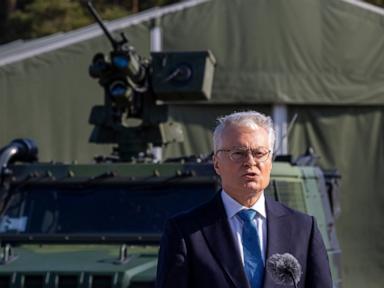
The primary threat vector targets infrastructure critical to the Baltic-European integration. Lithuanian President Gitanas Nausėda highlighted facilities supporting the synchronization of the Baltic electricity grid with continental Europe. Historically tied to the Russian-controlled BRELL ring, the Baltics’ ongoing transition to the European grid represents a strategic decoupling. Targets in this category include:
- High-Voltage Substations and Interconnectors: Physical destruction of converters or distribution nodes to isolate regional grids.
- Combined Heat and Power (CHP) Plants: Expanding on the December cyber-sabotage of a Polish CHP plant that served 500,000 customers, Russia’s FSB Center 16 is pivoting toward physical or hybrid destruction of thermal infrastructure during peak winter loads.
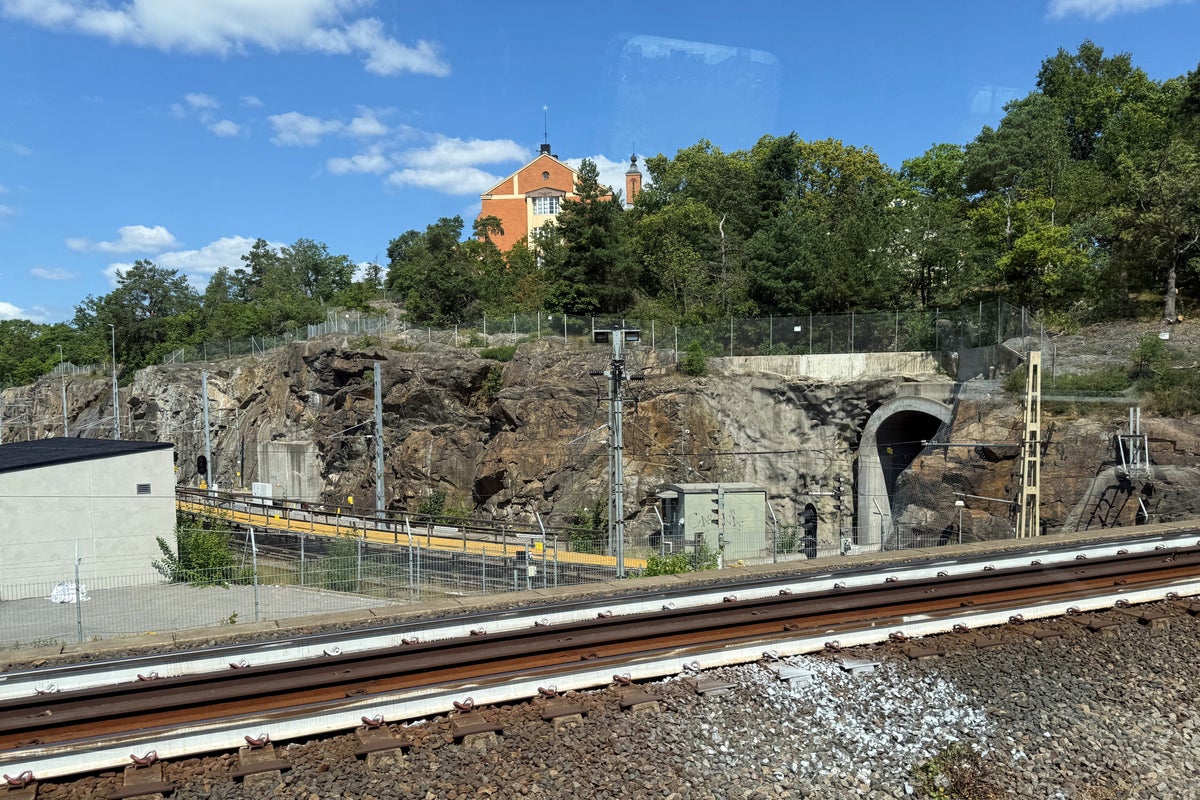
- Rail and Logistics Arteries: The Suwalki Gap corridors and Baltic railway networks—essential for civilian transit and NATO military reinforcement—are highly vulnerable to physical interdiction.
2. Maritime and Airspace Disruption
Operations in international waters and contested airspace provide natural deniability.
- Aviation Interference: Investigations by the International Institute of Strategic Studies (IISS) show Russia has deployed commercial shadow ships in the Baltic Sea to launch drones. These operations disrupt civilian aviation through GPS spoofing, electromagnetic interference, and physical proximity hazards.
- Airspace Probing: Continuous military flights by Russian reconnaissance aircraft over the Baltic Sea—such as those intercepted by Poland—serve a dual purpose: mapping Allied air defense radar frequencies and forcing NATO Quick Reaction Alert (QRA) assets into high-wear operational cycles.
3. Frontier Incursions and Border Friction
Low-intensity ground actions are designed to trigger localized panic without presenting a clear-cut military invasion. Polish and Baltic border services anticipate localized border violations, such as brief incursions by small, unmarked military detachments, drone-drop sabotage inside border zones, or the unilateral alteration of border demarcation lines.
The Cost Function of Hybrid Provocation
To understand why Russia is adopting this approach, we must analyze the economic and political cost functions of modern gray-zone conflict. For Moscow, a full-scale conventional assault on a Baltic state is cost-prohibitive. It would deplete dwindling conventional forces and guarantee a direct, devastating conventional response from NATO.
Conversely, sub-threshold kinetic operations offer highly asymmetric returns. We can express this operational calculus through a basic strategic cost function:
$$C_{\text{total}} = C_{\text{execution}} + P_{\text{retaliation}} \times L_{\text{retaliation}} - V_{\text{political}}$$
Where:
- $C_{\text{execution}}$ is the incredibly low operational cost of deploying state-backed saboteurs, cyber assets, or deniable commercial vessels.
- $P_{\text{retaliation}}$ is the probability of a unified, kinetic NATO retaliation.
- $L_{\text{retaliation}}$ is the magnitude of that retaliation.
- $V_{\text{political}}$ is the strategic value gained by dividing Allied political consensus.
By keeping the intensity of an attack below the threshold of an "armed attack" under Article 5, Russia drives $P_{\text{retaliation}}$ close to zero. The political value ($V_{\text{political}}$) remains exceptionally high. If Russia successfully disables a Polish power plant or Baltic rail link and NATO responds only with diplomatic protests or minor sanctions, the core promise of collective defense is functionally undermined. The primary objective is not territorial acquisition, but the systematic erosion of public trust in state institutions, national defense forces, and the broader NATO alliance.
Strategic Flaws in Allied Defense Postures
While Poland and the Baltic nations have increased physical security and deployed military personnel to safeguard infrastructure, several operational vulnerabilities remain unaddressed.
The Attribution Lag
The classic gray-zone dilemma is the gap between an incident and its definitive attribution. When a subsea cable is severed or a power grid fails, forensic investigations take weeks or months. This delay prevents a rapid, unified Alliance response, allowing Moscow to control the escalation cycle and shape the public narrative.
The Asymmetry of Response Mechanisms
NATO’s deterrence model is optimized for high-intensity conventional war. It lacks a standardized, rapid-response framework for sub-threshold economic and infrastructure warfare. When faced with hybrid aggression, individual member states are often left to respond unilaterally, creating a fragmented defensive front that Russia can exploit.
Private-Sector Vulnerability
A significant portion of Europe's critical infrastructure—ranging from offshore wind farms to digital communication links—is owned and operated by private entities. These companies rarely possess the tactical surveillance, physical security, or cyber-defense capabilities required to withstand state-sponsored kinetic attacks.
Hardening the Eastern Flank
Countering Russia's sub-threshold strategy requires shifting from reactive defense to active deterrence. Allies must implement three immediate counter-measures:
First, NATO must establish a Joint Hybrid Attribution Center. This dedicated intelligence and forensics unit would merge military satellite telemetry, maritime AIS tracking, cyber-forensics, and signal intelligence. Its sole objective would be to reduce the attribution window from months to hours, neutralizing Russia’s plausible deniability.
Second, the Alliance needs to pre-negotiate a Graduated Response Matrix for Gray-Zone Attacks. NATO should define a clear spectrum of collective, non-kinetic retaliatory measures. An attributed hybrid attack on any member's critical infrastructure should trigger automated, pre-planned economic, cyber, or maritime counter-actions. This would effectively raise $P_{\text{retaliation}}$ and alter Moscow's strategic cost calculations.
Finally, regional partners must prioritize Grid and Infrastructure Redundancy. Governments should mandate and subsidize rapid-recovery capabilities for critical utilities. This includes stockpiling high-voltage transformers, creating redundant routing for rail logistics, and accelerating the deployment of autonomous undersea surveillance networks to protect Baltic subsea cables. Deterrence is achieved not just by threat of retaliation, but by demonstrating that target infrastructure can absorb a blow and recover immediately.