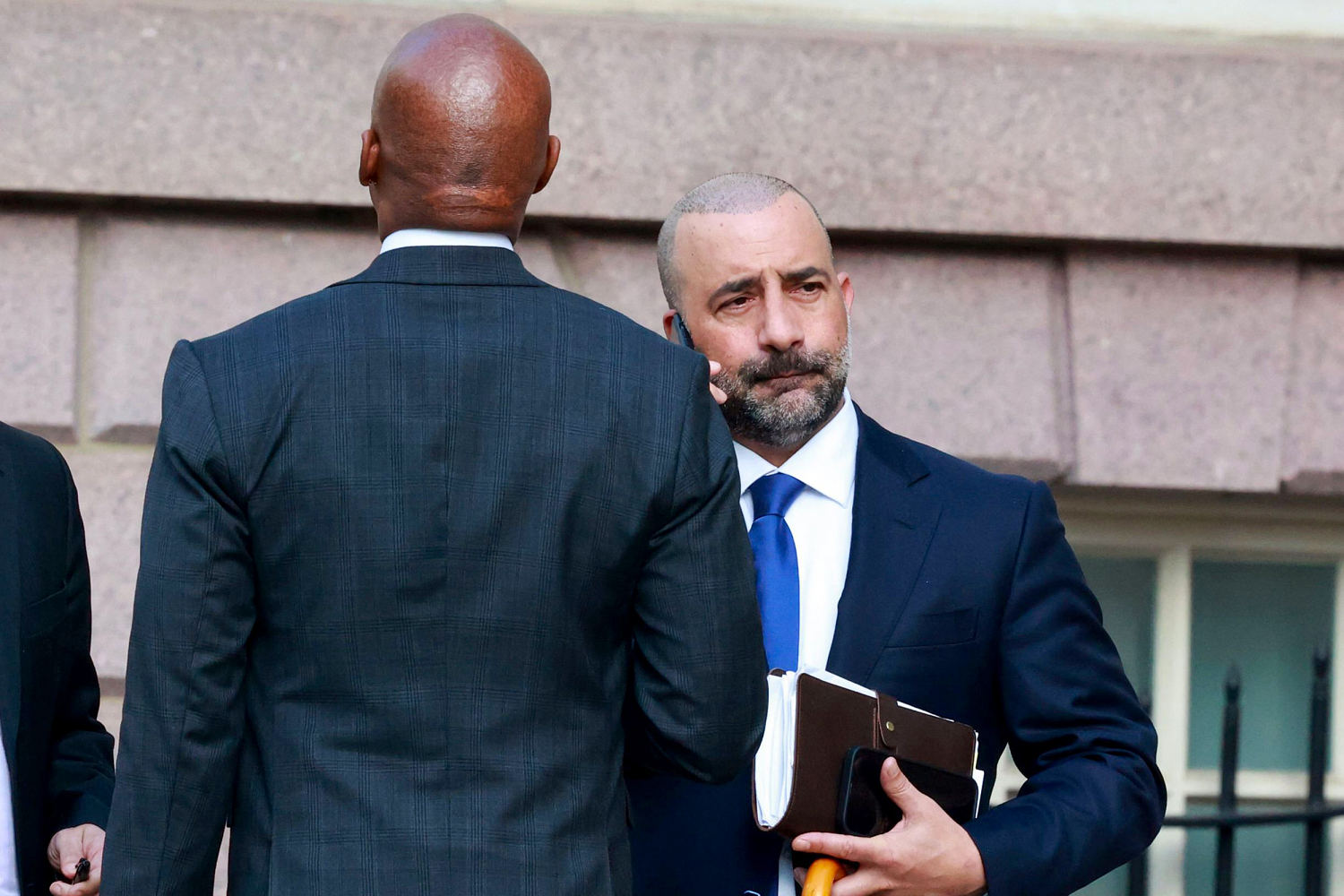
Frank Carone wants a trial right now. Most federal defendants facing a massive 13-count corruption indictment try to drag things out for months or even years. They want time to dissect the evidence, bury the prosecution in paperwork, and hope the public forgets the scandal. Not Carone. The former chief of staff to former New York City Mayor Eric Adams is doing the exact opposite. He is demanding that his trial start on August 24, 2026.
It is a stunning, high-stakes gamble. Federal prosecutors unsealed the bribery and money laundering indictment just last week. For a defense team to say they are ready to face a jury in less than two months is practically unheard of in federal court. Even the presiding judge expressed deep skepticism that a trial could happen that fast.
Why the rush? Carone and his high-profile legal team are trying to call the government's bluff. They want to force prosecutors to put up or shut up before the federal authorities can build an even tighter web around them. It is an aggressive play from a seasoned political street fighter who knows that in the court of public opinion, speed can sometimes look a lot like innocence.
The Shocking Details of the Shelter Bribery Indictment
To understand why Carone is sprinting toward a jury, you have to look at what the government claims he did. Federal prosecutors in the Eastern District of New York painted a picture of pure crisis profiteering. They allege that Carone used his immense power inside City Hall to profit from the city's migrant crisis.
The core of the case centers on a $6.8 million emergency shelter contract. Prosecutors say that in 2022, New York City was scrambling to find housing for tens of thousands of asylum seekers. Hotel owners across the city saw a goldmine. Among them was Yan Po Zhu, who owned a Microtel hotel in Long Island City, Queens, along with his employee Crystal Chen.
The city's Department of Social Services originally rejected the Microtel. Officials felt the hotel was too small. On top of that, local residents in that specific Queens neighborhood were already furious about the density of shelters in their area. The city said no.
That is where Carone allegedly stepped in. The government claims Zhu and Chen turned to Carone for help, offering a steady stream of cash to get the city to reverse its decision. According to the indictment, Zhu sent a text message to Carone in September 2022 asking for immediate help with a one-year contract. Carone allegedly replied by asking for the hotel's address. Zhu text back with the details, adding a telling phrase. "Thank you my big guy."
How the Alleged Money Trail Moved Through Family and Legal Fees
The government claims the bribery scheme did not stop once the contract was signed. Prosecutors allege that Carone hauled in roughly $120,000 in total bribes from the hotel operators. But instead of taking direct cash payments, the money took a detour through family ties.
The indictment names Carone's brother, Anthony Carone, who is also a practicing attorney. Federal authorities say the hotel operators funneled payments directly into an account controlled by Anthony Carone under the guise of legal fees. From there, the money allegedly moved into Frank Carone's accounts, where it was used to clear his personal credit card bills.
The timeline is what makes this case particularly toxic for the defense. Prosecutors say these payments did not just happen while Carone was working in City Hall. They allegedly continued long after he left his official post in December 2022, stretching all the way through September 2023.
The government also tacked on obstruction of justice charges. When the Carone brothers realized a federal grand jury was sniffing around their business dealings in 2024, they allegedly panicked. The indictment states they fabricated a fake, backdated promissory note from 2022 to make the illicit payments look like a legitimate business loan. Zhu also text Carone in late 2023 stating he asked his partners to pay him for a year. Prosecutors say Carone deleted that message to hide the evidence.
The Secret Pressures on City Officials
The indictment drops a lot of hints about how things worked behind closed doors at City Hall. It references "City Official #1," who has since been identified as former Department of Social Services Commissioner Gary Jenkins.
According to the paperwork, Jenkins and his department had solid, objective reasons to deny the Microtel contract. It simply did not fit the city's criteria. Yet after Carone intervened, the agency suddenly shifted its stance. The contract was approved, and millions of dollars in public funds began flowing to the Long Island City hotel.
Carone's defense attorney, Arthur Aidala, has come out swinging against these claims. Outside the Brooklyn courthouse, Aidala slammed the prosecution's case as a weak, circumstantial mess. He called it a "Frankenstein indictment" that stitches together random text messages and phone records without any real proof of what was actually said. Aidala insists that Carone was simply doing his job as chief of staff by managing a chaotic, unprecedented civic emergency. He argues that trying to connect different departments and solve housing crises is what a chief of staff is supposed to do.
Reading Between the Lines of the Speed Strategy
So, why push for August 24? There are a few strategic reasons why a fast trial benefits Carone.
First, federal prosecutors love to take their time. They like to gather documents, flip co-defendants, and build an airtight narrative. By forcing a quick trial date, the defense team puts immense pressure on the U.S. Attorney's office to turn over all their discovery material immediately. If the government is not fully organized, they might stumble at trial.
Second, Carone is currently out on a hefty $2 million bond, secured by his massive 5,500-square-foot home in Boca Raton, Florida. His co-defendants are under even tighter restrictions. Zhu is wearing an ankle monitor after posting an $8 million bond. Sitting around for two years under federal scrutiny ruins business operations and drains financial resources.
Third, the political climate is incredibly volatile. Eric Adams is no longer in office, having abandoned his reelection campaign after his own legal troubles and dismal polling numbers. The entire political circle that Carone operated within has crumbled. Carone might believe that his best chance at a clean break is to fight this out right now, before prosecutors dig up anything else from his extensive history as a Brooklyn political fixer.
The Broader Shadow of New York Political Corruption
You cannot look at the Carone case in a vacuum. It is part of a much larger, systemic collapse of the political structure that dominated New York City over the last few years. Federal investigators have been tearing through the homes and offices of city officials for months.
Just last week, federal agents raided the homes of several current and former New York Police Department leaders in a completely separate bribery investigation. The city's political world is completely upside down.
Carone was always known as the ultimate insider. Before he became Adams' chief of staff, he was the long-time counsel to the Brooklyn Democratic Party. He was the man who made things happen in the shadows. He helped bankroll campaigns and orchestrate political rises. Even after he left City Hall to start his own lobbying firm, Oaktree Solutions, he kept a tight grip on municipal power, hiring a small army of former Adams administration officials.
His name even popped up in bizarre side stories, like the federal scrutiny surrounding a Brooklyn Catholic church leader who allowed pop star Sabrina Carpenter to film a music video in a sanctuary. Investigators looked into Carone's financial dealings with that priest, though his lawyer notes that the government found nothing illegal there. The point is that Carone's fingers were in almost every major pie in the city.
What Happens if the Judge Grants the August Date
If the federal judge actually goes through with scheduling this trial for late August, the legal community will be watching closely. The defense will have to digest thousands of pages of government call logs, bank records, and text transcripts in a matter of weeks.
The prosecution will have to prove beyond a reasonable doubt that the $120,000 sent to Anthony Carone's law firm was explicitly a bribe for official action, not legitimate legal consulting fees. That is a notoriously difficult line to draw in federal corruption cases, especially after recent Supreme Court rulings that narrowed the definition of what constitutes political bribery.
If you are following this case, watch the upcoming pretrial hearings in July. Look closely at whether the hotel operators, Zhu and Chen, decide to stick with Carone or cut a deal with the government. If one of them flips to save themselves from a potential 20-year prison sentence, Carone's strategy for a fast trial could backfire instantly. Keep an eye on the discovery motions filed over the next two weeks to see just how much raw evidence the government actually has in its folders.