The sun does not care about schedules. It rose over Heathrow Airport, painting the concrete in pale, cold golds, indifferent to the roaring engines and the thousands of lives converging on the tarmac.
Morning arrives differently when you work the line. It smells of burnt jet fuel, de-icing fluid, and damp English air. To the passengers staring out cabin windows, wings and engines are magic. To the engineers crouching beneath the belly of a wide-body jet, they are heavy, breathing iron. Learn more on a connected topic: this related article.
We forget the iron. We book our seats, select our meals, and scroll through movies, trusting an invisible contract. Thousands of people keep that contract alive in the dark hours before dawn. They wear high-visibility vests. They carry heavy toolboxes. They check hydraulic pressures and torque bolts until their knuckles ache.
Then came the radio call. Additional reporting by The New York Times delves into comparable perspectives on this issue.
An accident. A critical incident.
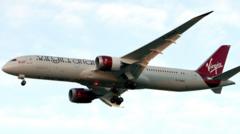
A Virgin Atlantic engineer, a person with a family, a history, a routine of morning coffee and boots by the door, did not finish their shift.
The Architecture of Safety
A modern commercial aircraft is a masterclass in redundancy. Every critical system has a backup, and every backup has a monitor. We engineer safety into the metal. But human beings are not made of titanium.
Consider the environment. A bustling international hub like Heathrow operates like a hyper-dense city compressed into concrete and asphalt. Heavy machinery moves constantly. Tow tractors, baggage tugs, fuel tankers, and multi-ton hydraulic lifts crisscross the tarmac in a complex choreography.
When things go wrong, they go wrong quickly.
Safety regulations in aviation are written in blood and refined through decades of investigation. Every procedure has a checklist. Every hazard has a warning. Yet, the pressure to turn planes around remains relentless. Airlines operate on tight schedules where minutes equal thousands of dollars. That pressure trickles down to the ground crew.
It is a quiet pressure. Nobody asks anyone to be unsafe. They simply ask for speed.
When the Routine Shatters
Imagine standing beneath the wing of a Boeing 787. The aircraft towers over you, a quiet leviathan resting between flights. You have done this a hundred times. You know the sequence. Power off. Pins secured. Panels open.
Routine breeds efficiency. Routine also breeds vulnerability.
When an accident occurs in a high-stakes industrial environment, the aftermath is a study in contrasting realities. Inside the terminal, announcements chime, boarding passes scan, and vacationers complain about delayed baggage. Just outside, emergency vehicles flash blue lights against the gray belly of a grounded aircraft.
Investigations begin immediately. The Air Accidents Investigation Branch and local authorities step in. They measure skid marks. They examine hydraulic lines. They interview coworkers whose eyes are wide and hollow.
Why? That is the question that hangs in the hangar.
Was it mechanical failure? Was it a communication breakdown? Was it simply the cruel math of probability catching up with someone who pushed too hard?
The Cost We Do Not See
We talk endlessly about aviation safety in terms of passenger statistics. We track fatal accident rates per million flights. Those numbers have plummeted over the decades, making commercial flying the safest mode of transport in human history.
We rarely calculate the human toll required to maintain that record.
Every safe landing is built on the physical labor and quiet sacrifice of ground engineers, mechanics, and ramp agents who work in freezing rain, blistering heat, and grueling night shifts. They are the invisible tier of aviation.
When a life is lost on the tarmac, the shockwave shatters a community. It ripples through union halls, breaks the hearts of families who watch their loved ones walk out the door every morning, and forces an entire industry to look hard at its own reflection.
The hangar falls silent. Tools are laid down.
The planes remain parked.
And the sky waits.