The frost does not knock. It arrives in silence, coating the metal hulls of research vessels and turning human breath into fragile plumes of white smoke. Standing on the deck of an icebreaker floating somewhere north of the Arctic Circle, you realize quickly that scale here is an illusion. The horizon is a flat, uncompromising stroke of white meeting a pale, indifferent sky. There are no trees to measure your height against. There are no familiar landmarks to anchor your mind. There is only the ice, and beneath it, a vast, dark ocean that has spent millennia guarding its secrets from the rest of the world.
For generations, this bitter expanse was considered a frozen wasteland—a geographic buffer zone useful only to polar bears, indigenous communities, and the occasional doomed expedition. It was the planet's air conditioner, humming quietly at the top of the globe, too harsh and remote for the ambitions of ordinary commerce.
That silence is breaking.
Look closely at the boardrooms of Brussels, the defense ministries of Scandinavian capitals, and the drafting desks where trade policies are carved out of stone. A quiet realization has taken hold among European Union member states. The roof of the world is melting. And as the ice retreats, it leaves behind a liquid corridor and a treasure trove of untapped resources that could reshape the economic and geopolitical balance of the continent for the next century.
Consider what happens when a wall disappears.
For centuries, shipping goods from Asian manufacturing hubs to European ports meant navigating the congested choke points of the Suez Canal or embarking on the long, fuel-heavy arc around the southern tip of Africa. It meant vulnerability to piracy, geopolitical friction, and astronomical shipping times. But as global temperatures rise and Arctic sea ice thaws during the summer months, maritime routes across the top of the globe are opening up. The Northern Sea Route and the Northwest Passage are no longer theoretical lines drawn on academic maps. They are becoming navigable highways.
A cargo ship moving from Shanghai to Rotterdam via the Arctic cuts its travel distance by roughly forty percent compared to traditional southern routes. Less distance means less bunker fuel burned. Less fuel burned means lower emissions per voyage, lower costs, and a massive competitive advantage for whichever powers can secure and manage those waterways.
This is not simply about shipping lanes. Beneath the seabed of the Arctic basin lie vast reserves of natural gas and oil, alongside critical raw materials—rare earth elements, lithium, cobalt, and nickel—that are desperately needed to fuel the transition to green energy. Electric vehicles, wind turbines, and grid-scale battery storage do not build themselves out of thin air. They require minerals. And right now, much of the world's supply chain relies on nations outside of European democratic alignment. The Arctic represents an alternative source, a northern chest waiting to be unlocked.
Yet, stepping into this arena requires walking a tightrope between economic necessity and ecological catastrophe.
To understand the tension, imagine a fisherman in northern Norway whose family has reeled cod from the same icy fjords for four generations. He does not care about geopolitical strategy meetings in Brussels. He cares about water temperature. He cares about migration patterns that are shifting northwards, chasing colder depths as the shallows warm. When European policymakers talk about expansion, development, and resource extraction, he sees massive industrial trawlers churning up fragile marine ecosystems that have remained undisturbed since the last ice age.
The paradox is cruel. Europe is pushing toward a greener future, investing heavily in decarbonization and renewable infrastructure, yet the pursuit of the materials required to build that future threatens to desecrate one of the most pristine and vulnerable environments left on Earth.
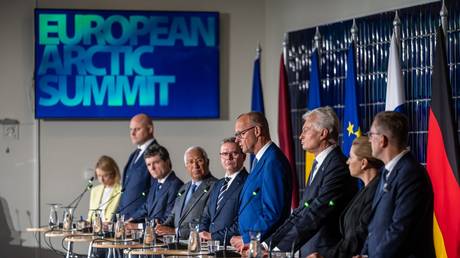
Diplomats in European capitals are grappling with this friction daily. The strategy taking shape is multifaceted, blending environmental preservation mandates with assertive maritime policies. The European Union has long lacked a unified, muscular Arctic policy, often watching from the sidelines while neighboring powers like Russia and non-arctic economic actors like China staked their claims with icebreakers and scientific outposts. Russia has systematically rebuilt its northern military infrastructure, reopening Soviet-era bases along its extensive Arctic coastline. China has declared itself a "near-Arctic state," investing heavily in scientific research stations and polar silk road initiatives.
Europe woke up to a changing map.
The member states realized that if they remained passive, they would become bystanders in their own backyard. The Arctic circle touches the northern borders of EU members Finland and Sweden, while neighboring Norway and Iceland are deeply integrated into the European economic sphere. The security of the continent's northern flank is tied directly to who controls the navigation rights, the data cables resting on the ocean floor, and the airspace above the tundra.
So, the plotting began. Not with dramatic military maneuvers or flag-planting ceremonies reminiscent of nineteenth-century imperialism, but through policy frameworks, funding allocations for advanced polar research vessels, and diplomatic pressure to keep the Arctic governed by international law rather than bilateral brute force.
There is an inherent vulnerability in all of this. The Arctic does not forgive mistakes. A single oil spill in waters choked by shifting sea ice is nearly impossible to clean up using current technology. The freezing temperatures shatter metal, thicken lubricants, and turn routine maintenance into a life-or-death engineering challenge. Rescue operations in regions thousands of miles away from major deep-water ports are a logistical nightmare. If a cruise ship or a commercial tanker runs aground on an uncharted underwater ridge—and many Arctic charts are still dangerously outdated—help is days away, not hours.
We are standing at a historic threshold.
The temptation to view the melting Arctic purely as an economic windfall is dangerous, driven by short-term desperation and the insatiable global demand for resources. But the alternative—pretending the north can remain locked in amber while the rest of the world changes around it—is equally naive. The ice is already gone; the physical reality has already shifted.
The true test for European leaders over the coming years will not be whether they can plant their economic footprint across the north, but whether they have the discipline to exercise restraint where exploitation is easiest. It requires a rare kind of political courage to look at a vast, unclaimed frontier and decide that some things are more valuable left untouched, even as the rest of the world rushes in to carve up the spoils.
Out on the ice, the wind picks up, screaming across the white expanse with a biting fury that reminds every living creature of its own fragility. The storm will pass, as all storms do, leaving behind a reshaped landscape under a cold, clear night sky. What remains to be seen is whether the civilization watching from the south has the wisdom to match the magnitude of the north.