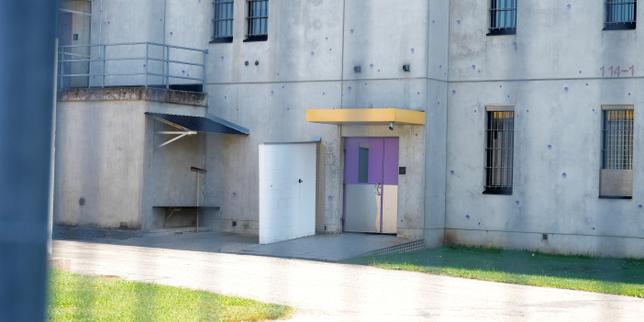
The media is currently hyperventilating over the first flight of Swedish prisoners landing in Estonia. They frame it as a novel, clever "rent-a-cell" scheme to fix Sweden’s bursting prison system. It is a fairy tale.
Let’s be brutally honest: this is not a policy triumph; it is a desperate attempt to ignore the rot in the foundation of the Swedish justice system. Stockholm is paying Estonia millions to house its societal failures because it can no longer manage the consequences of its own policy volatility.
The Illusion of Capacity
The lazy consensus holds that if you run out of physical floor space, you simply buy more. This is the definition of a bureaucratic trap. Sweden is not "renting prison space"; it is paying a premium for the convenience of forgetting. By shipping inmates to Tartu, the Swedish government is buying a reprieve from the optics of early releases and overcrowded cells.
What happens when those 600 beds in Estonia are full? Because they will fill up. Criminal networks operate on supply and demand. If the state creates an artificial ceiling on its incarceration capacity, the market for crime doesn’t just evaporate—it adapts. Sending prisoners abroad is an expensive band-aid applied to a compound fracture. It does nothing to address the radical surge in gang violence, explosive attacks, and the systematic breakdown of public safety that landed these individuals in cuffs in the first place.
The Estonia Trap
Estonia’s perspective is framed as a pragmatic economic maneuver. A small nation with excess prison capacity gets to subsidize its defense budget with Swedish tax euros. On paper, it looks like a win-win. In reality, it is a dangerous dependency.
Imagine a scenario where the political winds shift in Tallinn. The nationalist sentiment is already bubbling. If a new administration decides the social friction of managing foreign convicts isn’t worth the transaction fee, the deal collapses. Sweden is effectively outsourcing its core sovereign duty—the detention of its own criminals—to a third-party vendor. If that vendor cancels the contract, Sweden is left holding the bag with zero additional infrastructure of its own.
The Missing Nuance
The mainstream narrative focuses on the logistics, the costs, and the moral hand-wringing. They ignore the structural failure: Sweden’s refusal to build capacity at home.
Building prisons is politically toxic. It is far easier to pay an intermediary than to explain to a voting bloc why a new penitentiary is being built in their backyard. This is cowardice masquerading as statecraft. Real authority involves taking responsibility for the outcomes of your legislation. If you change your sentencing guidelines or your criminal justice posture, you must bear the physical weight of that decision.
Shipping inmates across the Baltic Sea is a distraction. It provides a momentary, artificial sense of order while the underlying conditions remain unchanged. You aren't solving crime; you are moving it.
Dismantling the Expert Consensus
We hear that this is a "new model for Europe." Look at the history. Belgium and Norway have flirted with similar arrangements before. It is not an innovation; it is a recurring symptom of political exhaustion.
The critics who argue that "foreign criminals" or "organized crime figures" should be excluded from these transfers—as Estonia has rightfully demanded—miss the point. If you only export the low-level offenders to make room for the dangerous ones, you aren't fixing the system; you are just performing a logistical shuffle that favors the most violent occupants.
The strategy is flawed because it treats prison space as a commodity rather than a component of a cohesive national safety strategy. When you view incarceration as an exportable service, you detach the penal system from the society it is supposed to be protecting. The disconnect between the crime committed in Stockholm and the cell occupied in Tartu is not just physical; it is symbolic of a state that has lost the ability to manage its own house.
Stop calling this a solution. It is a bill that will eventually come due, and the price will be far higher than the sixty million euros currently being exchanged. Until Stockholm builds the infrastructure required for its own legal reality, every flight across the Baltic is just an expensive delay of the inevitable.
The state is not solving the crisis. It is merely buying time it hasn't earned.