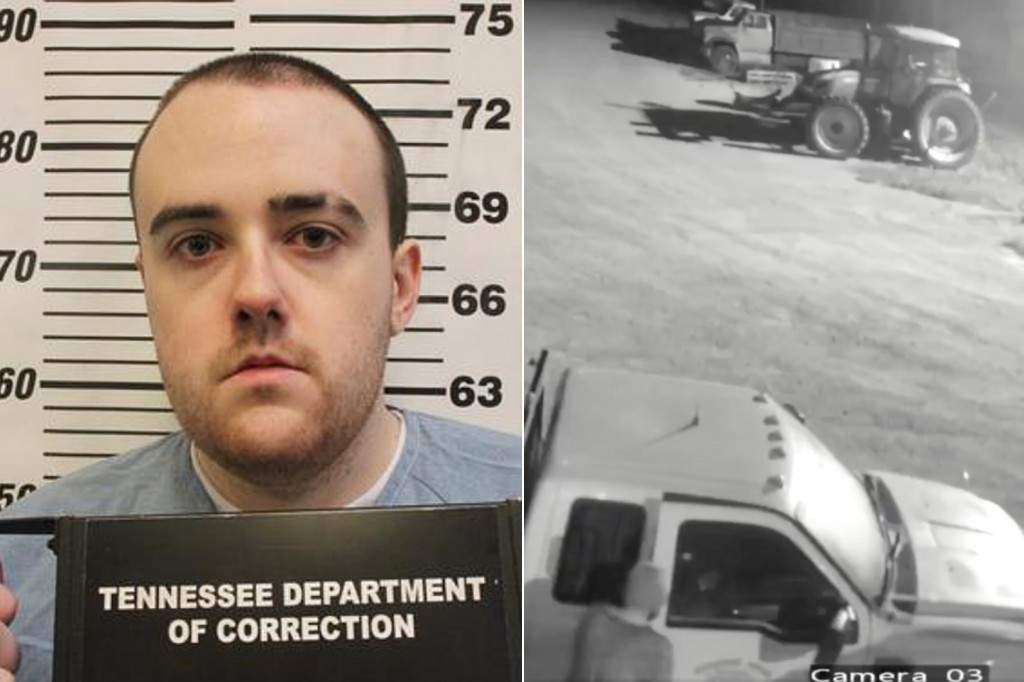
Most prison escapes end the exact same way. A massive multi-agency manhunt kicks into high gear, local tips flood emergency dispatch lines, and within days or weeks, an escaped inmate is back in handcuffs.
When officials announced that a convicted murderer who escaped from a Tennessee prison had been recaptured, the headlines focused on the relief of local residents. That relief makes sense. Living near an active manhunt changes how you lock your doors at night and whether you let your kids walk to the bus stop alone. Yet if you look closely at how modern corrections and law enforcement operate in states like Tennessee, the recapture itself wasn't a lucky break. It was almost inevitable.
Running from a state correctional facility in the modern era is nothing like the movies. There are no clean getaways across state lines without a digital footprint, and almost nobody has the cash reserves or outside network required to vanish indefinitely.
How Tennessee Prison Escapes Actually Unfold
People tend to picture prison breaks as elaborate, months-long tunneling operations. In reality, most escapes from Tennessee Department of Correction facilities—and county jails across the state—happen through breaches in perimeter security, trustee work detail walk-aways, or failures in headcount verification.
Minimum and medium-security annexes often sit right next to maximum-security compounds. Inmates who earn trusty status might work on landscaping crews, kitchen loading docks, or maintenance teams outside the main razor-wire perimeter. When a violent offender slips away, it usually points to either a classification mistake or a lapse in direct supervision during routine movement.
Once the alarm sounds, the clock starts ticking against the fugitive.
The First Four Hours Matter Most
Law enforcement veterans will tell you that the initial four-hour window determines whether a manhunt takes two days or two months. If prison staff notice someone missing during a standard count rather than catching them at the fence line, the inmate already has a head start.
During those first few hours, an escapee usually does one of two things. They either hunker down in thick woods or abandoned outbuildings within a five-mile radius, or they try to steal a vehicle to put immediate distance between themselves and the facility. Both choices carry massive risks. Staying close means thermal drones and tracking dogs will eventually sweep your grid. Stealing a car triggers an immediate statewide BOLO alert with license plate readers scanning major corridors like I-40, I-24, and I-75.
Why Modern Manhunts Close the Net So Fast
You can't disappear in Tennessee without leaving traces. Even if an escaped murderer ditches prison-issued clothing within twenty minutes, survival forces them to interact with the outside world.
Hunger, dehydration, and weather exposure hit fast. Tennessee's terrain—ranging from the dense woods of the Cumberland Plateau to the humid river bottoms of West Tennessee—isn't forgiving if you don't have gear. Within 48 hours, almost every fugitive has to take a risk. They break into a hunting cabin for food, approach a rural homeowner with a made-up story about a broken-down truck, or show up on a convenience store security camera.
And that's before factoring in the technology stack deployed by the Tennessee Bureau of Investigation (TBI) and the U.S. Marshals Service.
- Digital Footprints and Associate Monitoring: The moment an escape is confirmed, investigators pull every phone call, commissary transfer, and visitation log tied to that inmate over the past year. If the escapee reaches out to an old friend, a relative, or a former cellmate for a ride or cash, agents are usually already listening or watching the house.
- TBI Top 10 Most Wanted Alerts: Placing a fugitive on the TBI's Most Wanted list immediately pushes their photo onto highway billboards, local news broadcasts, and millions of smartphones across the region. Cash rewards turn casual observers into active lookouts.
- Thermal Imaging and K-9 Units: Modern helicopter units and tactical drones equipped with forward-looking infrared (FLIR) sensors can pick up body heat through tree canopies at night. Pair that with bloodhound teams from the Tennessee Department of Correction, and hiding in the woods becomes nearly impossible.
What People Get Wrong About Prison Recaptures
There's a common assumption that when a convicted murderer escapes, they immediately head for a major city to blend into the crowd. Honestly, the opposite happens just as often.
Fugitives frequently gravitate toward familiar territory. They return to hometowns, old neighborhoods, or rural counties where they know the backroads. They think familiarity gives them an advantage, when it actually gives U.S. Marshals a predictable map of where to set up surveillance.
Another misconception is that outside accomplices make an escape more likely to succeed. In practice, bringing another person into the plan doubles the points of failure. Accomplices buy burner phones, withdraw cash at ATMs, or get pulled over for minor traffic violations. Federal and state task forces routinely crack escapes wide open simply by tailing a cousin or girlfriend who suddenly makes an unusual late-night drive.
The Reality of Harboring a Fugitive
Anyone who helps an escaped inmate doesn't just risk a slap on the wrist. Under Tennessee law and federal statutes, harboring or concealing a fugitive—especially a convicted felon—carries severe prison time of its own. Once investigators sit down with an inmate's inner circle and lay out the exact years they'll serve for aiding an escape, loyalty evaporates fast. Most "loyal" contacts end up handing over the exact address where the fugitive is hiding before detectives even leave the living room.
How Corrections Officials Respond After a Recapture
Bringing an escaped inmate back into custody doesn't close the book on the incident. It triggers an internal audit that can reshape facility operations for years.
First, the recaptured inmate goes straight into maximum-security restrictive housing, often transferred to a higher-security facility like Riverbend Maximum Security Institution in Nashville or Morgan County Correctional Complex. Privileges vanish permanently. On top of their original murder sentence, they face fresh felony escape charges that tack additional years—and stricter parole restrictions—onto their record.
Second, the Tennessee Department of Correction conducts a root-cause review. Investigators examine surveillance blind spots, staffing ratios during the shift when the escape occurred, and whether perimeter sensors failed or were ignored.
Staffing shortages have plagued correctional systems nationwide, and Tennessee hasn't been immune. When correctional officers work mandatory double shifts, fatigue creeps in. Headcounts get rushed. Gates don't get double-checked. While officials rarely advertise specific security vulnerabilities to the public, recaptures almost always lead to immediate changes in shift protocols, fence-line patrols, and inmate classification rules.
What Residents Should Do During an Active Escape Alert
Whenever a Blue Alert or TBI fugitive warning hits your phone, knowing how to react keeps you safe and actually helps investigators close the case faster.
- Secure vehicles and outbuildings immediately. Most escaped inmates aren't looking for a confrontation inside an occupied home; they're looking for unattended keys in a pickup truck, unlocked sheds with clothes, or campers stocked with food. Lock your vehicles and take the keys inside.
- Check trail cameras and doorbell feeds. If you live within twenty miles of a correctional facility, review motion alerts from your Ring camera, driveway sensors, or hunting trail cams. Fugitives frequently cut across residential yards and wooded property lines at night.
- Never approach or confront a suspect. A convicted murderer running from a life sentence has very little left to lose. If you spot someone matching the description wearing mismatched clothing, looking exhausted, or acting out of place near a highway, keep your distance and call 911 or the TBI tip line at 1-800-TBI-FIND immediately.
Staying aware of local alert systems and keeping basic property security tight removes the exact resources fugitives rely on to stay ahead of law enforcement.