Embassy alerts about unrest and local curfews in France make great copy. They trigger instant anxiety. They also misdiagnose almost everything that actually puts a traveler in danger.
When a diplomatic mission issues a notice telling citizens to stay alert amid civil disturbances or municipal curfews, the standard coverage writes itself. Headlines warn that an entire country is teetering on the edge of chaos. Readers picture burning barricades outside every cafe in Paris, Lyon, or Marseille. Travel group chats light up with panicked questions about canceling flights, locking hotel doors at dusk, and treating a vacation like a deployment into a war zone. You might also find this similar coverage insightful: Airbnb Broke the Chore Wars But Left the Host Economy Bleeding.
That is the lazy consensus. And it is lazy because it mistakes localized friction for nationwide collapse.
A curfew in one suburb is not a lockdown across a country. A protest march clogging a central boulevard for four hours on a Saturday afternoon is not a civil war. Yet standard travel reporting flattens complex geography into a single red alarm. It treats "unrest" as a uniform cloud hanging over forty million acres of territory, ignoring scale, timing, duration, and actual exposure. As extensively documented in latest articles by The Points Guy, the implications are notable.
I have spent years watching travelers, corporate security teams, and global mobility managers burn time and money reacting to the wrong threat. I have seen companies blow six figures rerouting executives, chartering last-minute flights, or canceling high-value trips because a headline shouted "curfew" while the actual disruption was confined to a single neighborhood block miles away from their hotel. Worse, I have seen travelers obsess over dramatic street clashes while leaving their passports in an unlocked bag at a crowded transit hub or walking straight into routine pickpocket traps because they assumed "danger" only wears a mask and throws a brick.
Panic is cheap. Precision is hard.
What an Embassy Advisory Actually Means—and What It Does Not
To read a safety advisory properly, you have to understand what a diplomatic mission is doing when it hits send. An embassy is not a live-action tactical radar for your weekend itinerary. It is a liability-management and duty-of-care mechanism built for large populations and worst-case contingencies.
When unrest flares in France—whether tied to labor strikes, pension disputes, policing protests, or localized youth riots—embassies update guidance to cover their bases. They remind citizens to monitor local news, avoid demonstrations, obey local authorities, and respect municipal curfews where enacted.
Notice what that notice is not doing. It is not predicting that your train from Gare de Lyon will be derailed. It is not saying the Louvre is under siege. It is not telling you that a quiet evening in Bordeaux or Nice carries the same risk profile as a flashpoint district during a midnight curfew.
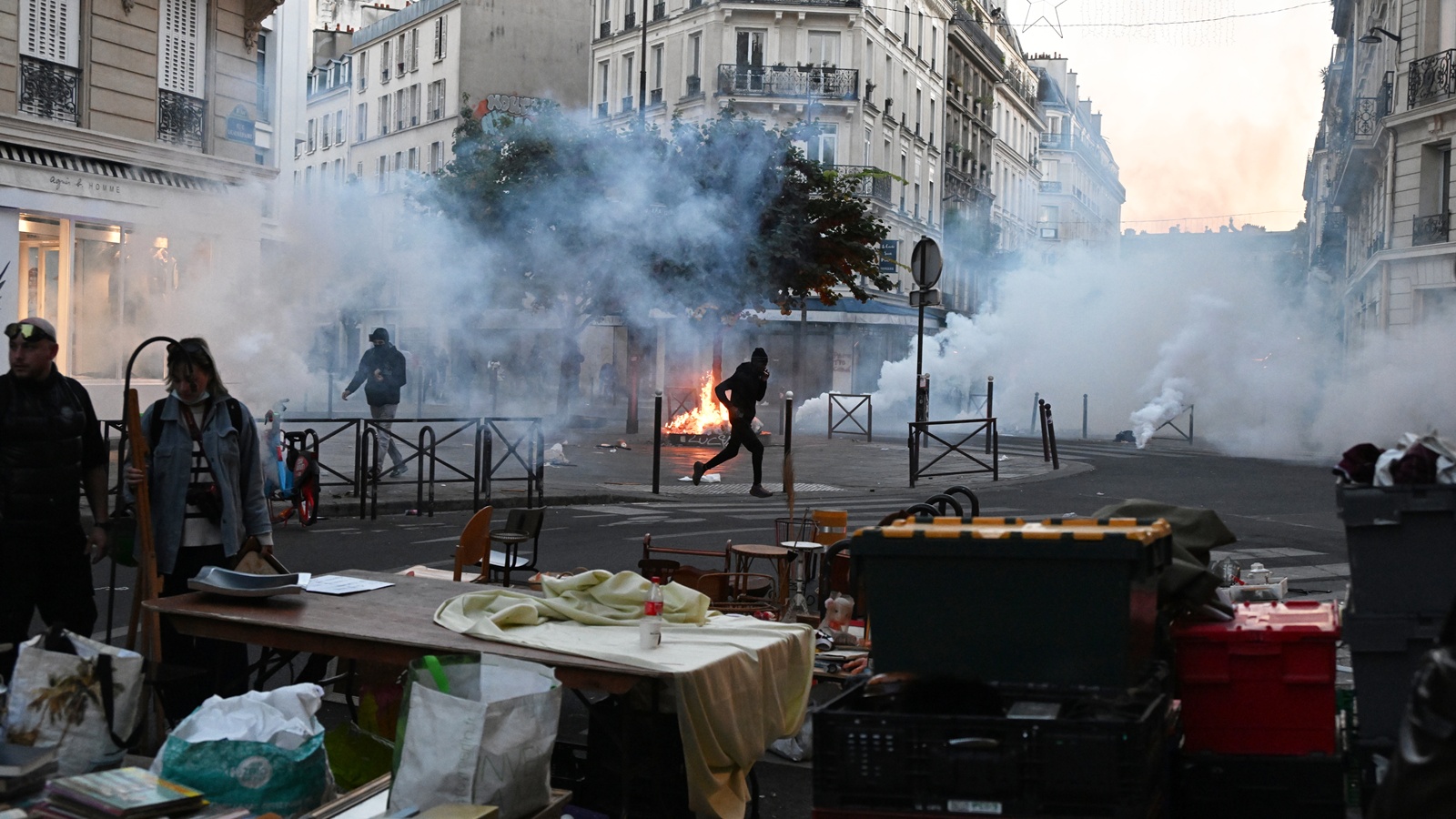
In security and risk analysis, threat and exposure are two separate variables. A threat can exist somewhere in a country without creating meaningful exposure for you. Exposure requires proximity, timing, and vulnerability. If a municipal curfew applies to minors or specific troubled districts after dark, and you are staying in a well-lit area three miles away with no reason to be near the friction zone, your exposure is fundamentally different from someone standing at the edge of a tear-gas line with a smartphone.
Standard advisories blur those lines because bureaucrats write for broad coverage, not surgical nuance. Journalists then amplify the blur because fear gets clicks faster than context.
The Question Travelers Keep Asking Is the Wrong One
Whenever unrest and curfews hit the news cycle, the same "People Also Ask" style questions flood search bars: Is it safe to travel to France right now? Should I cancel my trip? What happens if I break a local curfew?
Those questions start from a flawed premise. They treat safety like a light switch—on or off, safe or unsafe—across an entire nation of roughly 68 million people.
France is not a single room where turning up the heat in one corner boils the water in the other. A strike by rail workers or air traffic controllers can paralyze transport across regions while leaving a coastal town completely calm. A localized curfew in a specific commune can restrict late-night movement in that zone while restaurants three neighborhoods over serve dinner normally.
Asking Is France safe? is like asking Is the ocean calm? without checking whether you are talking about a sheltered cove in Brittany or a storm swell in the Bay of Biscay.
If you want a better question, ask this instead: Where is the friction happening right now, how is it affecting transit and municipal rules, and am I placing myself inside that footprint?
Even when a question is straightforward—such as What happens if you ignore a local curfew?—the honest answer is blunt: you risk police stops, fines, detention, or getting caught in a fast-moving enforcement sweep where nobody cares that you are a tourist who "didn't read the fine print." Curfews are enforced by local law enforcement under specific administrative or public-order powers. Arguing jurisdiction with a police officer at 11:30 p.m. is a losing strategy.
Why Everyday Friction Beats Headline Drama
Here is the uncomfortable truth that alarmist coverage misses: for most visitors, routine operational friction is far more likely to ruin a trip than dramatic civil unrest.
Consider what unrest in France actually tends to disrupt first:
- Transit schedules: Rail slowdowns, metro line closures near demonstration routes, and airport delays create cascading missed connections long before any physical danger reaches a hotel lobby.
- Access and closures: Shops, museums, or streets along protest corridors may close early or reroute foot traffic, turning a tight itinerary into a logistical headache.
- Information lag: Rumors on social media move faster than official updates, leading travelers to overreact to old clips from previous protests or unrelated cities.
Meanwhile, the things that quietly hurt travelers every single week—distracted belongings on crowded trains, scams around major landmarks, unfamiliar driving rules, or getting stranded without a backup route—rarely carry a dramatic banner headline. When people fixate on macro-level "unrest," they often let their guard down on micro-level basics.
Imagine a scenario where a traveler lands in Paris during a wave of localized protests and night curfews in select areas. Spooked by dramatic news alerts, they rush through a crowded station, stare at their phone reading every rumor, and leave their daypack unzipped while navigating a bottleneck. Nothing happens near the protest zone, yet they end up at a police station reporting a stolen wallet. The headline threat never touched them; the distraction from the headline did.
What Heavy Hitters in Risk Management Actually Look At
People who manage real-world risk for multinational firms, diplomatic security teams, and seasoned international operators do not treat a single advisory as gospel. Analysts like Ian Bremmer at Eurasia Group have long emphasized looking past surface noise to separate political theater and localized protest from systemic instability, while risk frameworks from organizations like Control Risks and OSAC (Overseas Security Advisory Council) stress granular location intelligence, movement corridors, and verified local reporting over sensationalized summaries.
Good risk assessment relies on three habits that cost almost nothing:
- Separate geography from generalization. Pinpoint the exact arrondissement, commune, or transit line mentioned in local updates. Do not paint a whole region with one brush.
- Watch mobility, not just mood. Check actual metro closures, SNCF/train notices, roadblocks, and municipal orders rather than relying on dramatic video clips shared out of context.
- Build buffer, not panic. Keep flexible timing, offline maps, digital and physical copies of key documents, and a clear plan to walk or reroute away from crowds before tensions escalate.
The Downsides of Taking a Contrarian Stance
Being contrarian has its own traps, and pretending otherwise would be dishonest.
If you dismiss every advisory as overblown, you can underreact when conditions genuinely deteriorate. Protests can shift routes faster than expected. A calm afternoon can turn tense after dark. A municipal curfew that starts as a targeted measure can widen if authorities face repeated disturbances.
There is also a practical cost to ignoring official guidance: insurance and corporate travel policies sometimes tie coverage, assistance, or compliance rules to official advisories and local law. Even when a rule feels overly broad, breaking a local curfew or walking into a restricted zone can create legal and logistical headaches that a clever contrarian argument will not solve at two in the morning.
Nuance is not permission to be reckless. It is a discipline to be accurate.
What You Should Actually Do When Alerts Hit
Stop treating safety advisories like fortune-telling and start treating them like raw weather data. A storm warning tells you to check the radar, watch the wind direction, and adjust your route—it does not mean the sky is falling on every street in the country.
Check the exact locations covered by any curfew or restriction. Verify live transit and municipal updates from local sources. Keep clear of gatherings, crowds, and police cordons. Carry identification, keep emergency numbers handy, and give yourself extra time when moving across the city.
Most importantly, do not let dramatic headlines hijack your judgment. Pay attention to the real map in front of you, respect local rules where they apply, and move with calm precision instead of fear.