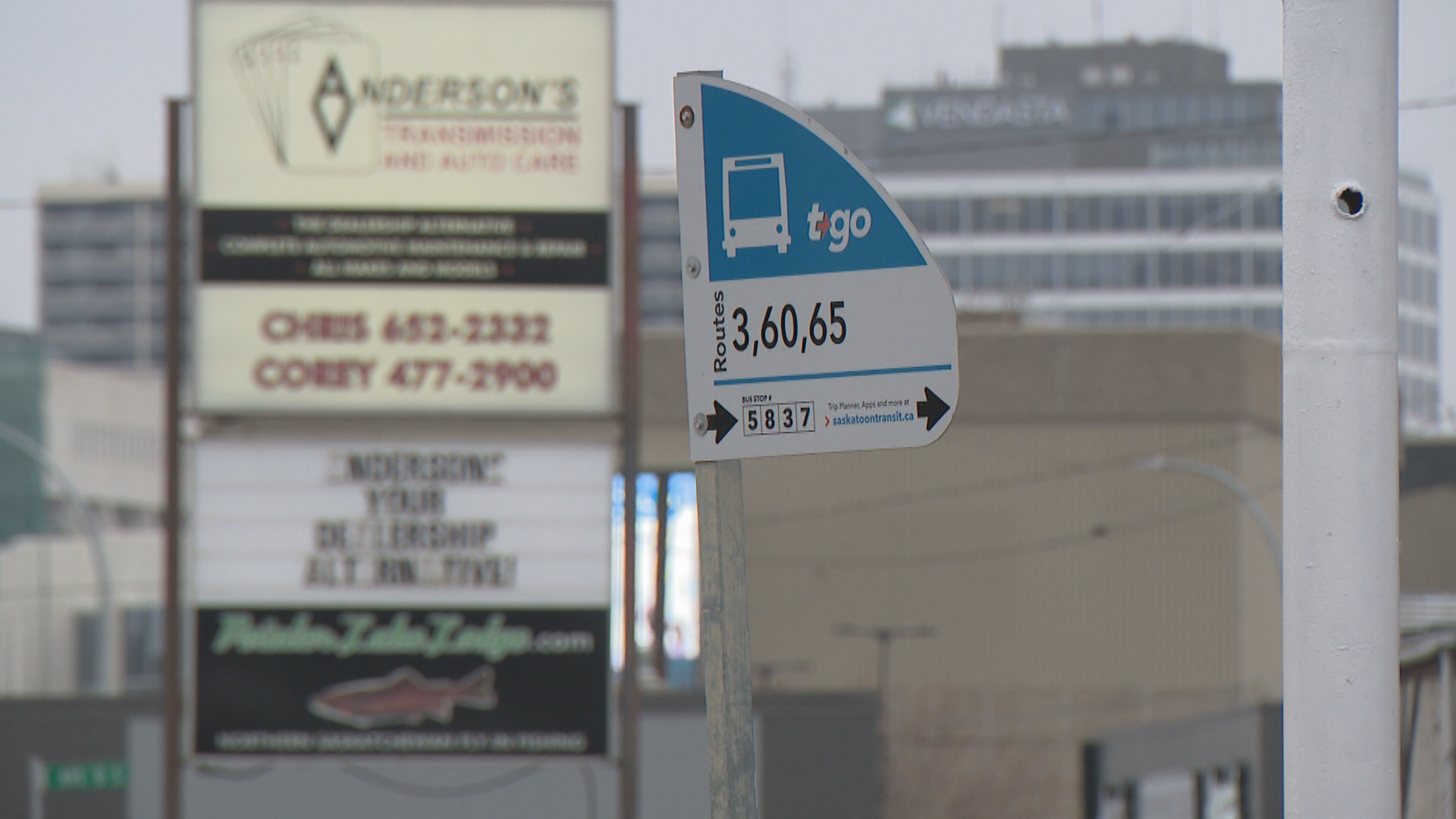
Municipal transit infrastructure fails most frequently at the intersection of spatial geometry and private property rights. When a city council committee moves to weigh expropriation for Bus Rapid Transit (BRT) stations, as Saskatoon’s Standing Policy Committee on Transportation is doing, the public debate usually devolves into emotional arguments over property rights versus public good. That framing misses the operational reality. Expropriation is not a political preference; it is a mathematical necessity triggered by the spatial requirements of high-capacity transit and the game theory of urban real estate markets.
To understand why Saskatoon is confronting compulsory land acquisition now, one must strip away the municipal bureaucracy and examine the physical, economic, and legal mechanics governing rapid transit corridors.
The Geometry of Modern Transit
Standard municipal bus routes operate within existing rights-of-way by utilizing curbside stops that share asphalt with general traffic. This model collapses when a city attempts to transition to true Bus Rapid Transit. A high-frequency BRT system—such as Saskatoon’s planned Link network—requires dedicated infrastructure to maintain schedule reliability and achieve competitive end-to-end travel times.
The spatial footprint of a functional BRT station exceeds that of a traditional bus stop by an order of magnitude. Modern transit accessibility standards, winterized shelters, level-boarding platforms, and off-board fare collection terminals require significant lateral depth. On legacy arterial roadways designed around mid-twentieth-century automobile standards, the existing municipal right-of-way is rarely wide enough to accommodate dedicated transit lanes, standard vehicular lanes, pedestrian sidewalks, and deep station platforms simultaneously.
When a transit corridor encounters a pinch point, engineers face a binary choice: compromise the infrastructure or expand the right-of-way. Compromising the infrastructure means shrinking platform widths, eliminating dedicated turn lanes, or forcing buses back into mixed traffic. Each compromise degrades system velocity. In transit network design, a single bottleneck creates a cascading delay across the entire line, forcing the agency to deploy additional buses just to maintain advertised headways. Expanding the right-of-way preserves network velocity, which directly reduces long-term operational expenditures. Because urban corridors are already built out, expanding that right-of-way requires acquiring slivers of adjacent private parcels.
The Holdout Problem and Market Failure
In a frictionless market, a municipality would simply negotiate voluntary purchase agreements with every property owner along a proposed transit corridor. Urban land markets are rarely frictionless. Once a transit alignment becomes public knowledge, the price discovery mechanism breaks down due to the holdout problem—a classic economic failure in spatial assembly.
Consider a transit corridor requiring partial acquisitions from forty distinct parcels to construct twenty stations. If thirty-nine owners sell at fair market value, the fortieth owner gains monopolistic pricing power over the entire project. Because the transit line cannot easily bend around a single uncooperative parcel without destroying vehicle dynamics and station spacing, that final parcel becomes infinitely valuable to the completion of the network. Rational property owners recognize this asymmetry and demand premiums far exceeding the intrinsic or market value of their land.
Without the credible threat of expropriation, municipal land assembly becomes financially unviable. Voluntary negotiations stall indefinitely, or the city drains its capital budget paying exorbitant holdout premiums, leaving insufficient funds for actual construction. Expropriation functions as an economic circuit breaker. It strips away monopolistic holdout power by decoupling land acquisition from a seller’s unilateral willingness to transact, anchoring compensation instead to objective market valuation methodologies.
The Mechanics of Statutory Expropriation in Saskatchewan
In Saskatchewan, municipal expropriation is not an arbitrary seizure of property; it is a tightly regulated statutory process governed by The Municipal Expropriation Act and The Expropriation Procedure Act. Understanding this legal architecture reveals why committees weigh these decisions months or years before shovels hit the ground.
The process operates across four distinct phases:
- Authorization and Notice: The municipality must formally declare the public purpose of the acquisition. For a BRT network, this requires demonstrating that the specific parcel—or portion thereof—is operationally necessary for the station footprint, sightlines, or utility relocation. The city serves a Notice of Intention to Expropriate, triggering statutory timelines.
- Valuation and Appraisal: Compensation is determined by the fair market value of the land taken, plus damages for "injurious affection"—the reduction in value to the remaining portion of the owner’s property caused by the loss of the acquired strip or the construction of the public work. If a BRT station eliminates front-lot parking for a retail strip mall, the city must compensate the owner not just for the square footage of asphalt acquired, but for the diminished commercial utility of the remaining building.
- Title Transfer vs. Compensation Settlement: A critical operational feature of Canadian expropriation law is the separation of possession from price litigation. Once the municipality registers the declaration of expropriation and serves the required notices, title transfers to the city, allowing construction to proceed on schedule. If the property owner disputes the city’s valuation, the financial disagreement moves to the Court of King's Bench for arbitration, without halting the infrastructure build.
- Cost Shifting: To prevent municipalities from lowballing property owners, statutory frameworks typically require the expropriating authority to pay the reasonable legal and appraisal costs incurred by the landowner during the valuation dispute, provided the owner’s claim is not frivolous.
The Financial Calculus of Partial Acquisitions
For Saskatoon’s transportation committee, the decision to authorize expropriation is an exercise in risk-adjusted capital allocation. The financial cost of acquiring land for BRT stations extends far beyond the raw price per square foot of commercial or residential real estate.
When a city acquires a three-meter strip along the frontage of a commercial lot, it triggers secondary capital costs. Underground utilities—water mains, fiber optic conduits, electrical transformers—frequently sit beneath those frontage strips. Moving a single high-voltage transformer or telecom junction box can easily exceed the market value of the land itself. Furthermore, partial acquisitions often violate existing municipal zoning bylaws regarding minimum lot sizes, building setbacks, or mandatory parking ratios. The city must either grant legal non-conforming status to the affected properties or compensate the owners for the cost of reconfiguring their sites.
Despite these expenses, the alternative—delay—carries a higher financial penalty. Major transit projects in Canada rely heavily on cost-sharing agreements with federal and provincial governments, such as the Investing in Canada Infrastructure Program. These funding envelopes come with strict expenditure deadlines. If municipal land assembly stalls in voluntary negotiations, the city risks missing federal construction windows, forfeiting matching funds, and absorbing construction inflation that routinely outpaces general consumer price indices.
The Operational Trade-Offs of Station Placement
Every BRT station location represents a compromise between engineering efficiency, ridership capture, and acquisition cost. Transit planners evaluate potential station footprints against three competing variables:
- Intersection Proximity: Placing stations immediately adjacent to major intersections maximizes transfer efficiency for passengers connecting from cross-town feeder buses. However, corner lots are the most valuable and complex parcels in urban real estate, often occupied by high-turnover retail, gas stations with environmental remediation liabilities, or dense commercial structures. Expropriating corner real estate carries the highest price tag and the greatest legal friction.
- Mid-Block Alternatives: Shifting a station mid-block reduces acquisition costs by targeting lower-value frontage and avoiding complex intersection turning radii. The operational penalty is severe: passengers must walk further to transfer, and buses must merge back into traffic before hitting the intersection signal, losing priority advantage.
- Far-Side vs. Near-Side Positioning: Far-side stations—located immediately past an intersection—allow buses to clear traffic lights before stopping, optimizing Transit Signal Priority (TSP) systems. If a far-side corner lacks adequate public right-of-way, the municipality must choose between expropriating the far-side parcel or settling for a sub-optimal near-side stop that degrades signal synchronization.
When a transportation committee reviews specific parcels for expropriation, it is validating that the planners have exhausted geometric workarounds and that the specific parcel is irreplaceable for maintaining corridor integrity.
Strategic Risks and Limitations
Expropriation solves the holdout problem, but it introduces political and financial liabilities that municipal administrators frequently underestimate.
The primary risk is valuation inflation through litigation. While expropriation prevents an owner from blocking a project, it does not cap the municipality's financial exposure. Injurious affection claims are notoriously difficult to quantify prior to construction. A business owner can argue that removing five parking stalls or altering driveway access permanently impaired business goodwill and property value. Courts often interpret ambiguity in favor of the dispossessed landowner, leading to final compensation awards—plus compound interest and legal fees—that blow past initial capital budgets.
The second limitation is political capital depletion. Compulsory acquisition generates concentrated, vocal opposition from affected property owners, while the benefits of a faster transit network are diffused across thousands of future riders who do not yet exist as an organized political constituency. If a city council authorizes expropriation poorly—failing to demonstrate exhaustive good-faith negotiation prior to triggering statutory mechanisms—it creates a narrative of municipal overreach that can jeopardize broader transit zoning reforms, such as corridor densification plans.
The third constraint is environmental liability transfer. Acquiring strips of older commercial corridors, particularly near major arterial intersections, carries the risk of inheriting legacy soil contamination from former automotive or industrial uses. Under provincial environmental statutes, taking title to contaminated land can make the municipality liable for remediation costs, turning a minor frontage acquisition into a multi-million-dollar environmental cleanup project.
The Strategic Playbook for Saskatoon
To execute the Link BRT land assembly without derailing the project budget or timeline, Saskatoon’s administration and committee must treat expropriation as a structured risk-management tool rather than a blunt instrument.
First, initiate parallel-track execution immediately. Do not wait for voluntary negotiations to fail before starting the statutory clock. Serve Notices of Intention to Expropriate concurrently with final-offer voluntary settlements. This establishes a hard deadline for holdouts while preserving the option to close a standard real estate transaction if the owner becomes reasonable, avoiding the administrative overhead of formal compensation hearings.
Second, decouple zoning relief from financial compensation. Where a partial acquisition reduces a commercial property's parking count or front setback below bylaw minimums, immediately process a blanket municipal zoning variance for the corridor. Offering pre-approved regulatory relief eliminates the landowner's legal basis for claiming that the city rendered their remaining property non-compliant, stripping away a major vector for injurious affection damages.
Third, conduct intrusive Phase II environmental site assessments before registering expropriation declarations on any parcel with historical commercial or automotive use. If contamination is detected, structure the acquisition as a permanent surface easement rather than a fee-simple title transfer wherever engineering allows, insulating the municipality from subsurface remediation liabilities while securing the operational footprint required for the transit station.


