The City of Edmonton is asking homeowners and businesses to swallow another four years of property tax hikes—4.9% in 2027, 4.7% in 2028, 4.5% in 2029, and 3.9% in 2030—in exchange for promises of cleaner streets, steadier transit, and infrastructure renewal. If approved as drafted, a household assessed at the median value of $492,500 would pay roughly $18 more per month in 2027, pushing monthly municipal taxes to $335.39. Whether that trade-off feels like a bargain or a burden depends on how much faith you still have in municipal follow-through after years of steep hikes and strained city services.
Anyone who has watched municipal budgets across Western Canada over the last decade knows the script by heart. City hall unveils a multi-year fiscal plan framed around basics, restraint, and service reliability. Residents brace for another bill increase while wondering why routine maintenance still feels uneven.
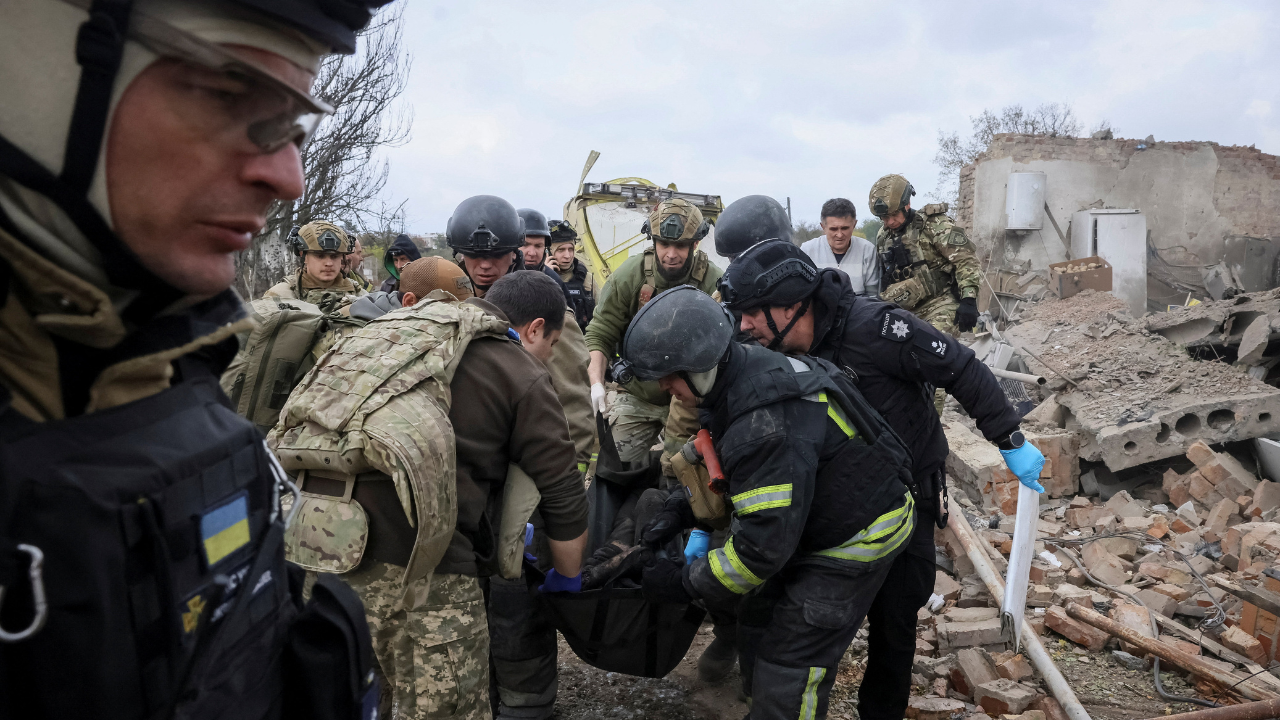
What makes Edmonton's 2027–2030 budget proposal worth dissecting isn't a flashy new megaproject. There isn't one. Instead, administration has put forward a $4 billion operating budget and a $6.3 billion capital budget built around catching up on deferred upkeep, finishing massive builds already underway, and absorbing the real-world costs of rapid growth.
Why Administration Calls It Un-Sexy
City Manager Eddie Robar described the blueprint as "not sexy," and Mayor Andrew Knack echoed that framing by calling it closer to "boring" or "un-sexy". Politically, that honesty is calculated. After council approved a 6.9% property tax increase for 2026—capping off a four-year stretch from 2023 to 2026 that brought some of the steepest tax hikes in more than a decade—selling grand visions would have sounded tone-deaf.
Under-funding asset renewal creates a compounding bill. Deputy City Manager of Infrastructure Services Sara Nichols noted during the rollout that putting off maintenance doesn't save money in the long run; it lets roads, bridges, and facilities deteriorate until repairs become far more expensive.
Look at the capital numbers and the reality becomes clear. Roughly $3.0 billion of the $6.3 billion capital plan is already spoken for to finish projects that have been reshaping—and testing the patience of—Edmontonians for years. That bucket covers major builds scheduled to open by 2030, including:
- The Valley Line West LRT and the Capital Line South LRT extension (with the Capital Line South extension alone carrying $617.2 million in the plan).
- The Yellowhead Trail freeway conversion and the Southeast Transit Garage ($364.1 million).
- Community anchors such as the mistahaya wîkihk (Lewis Farms) Community Recreation Centre and library.
The remaining half of the capital plan is aimed at renewal and essential growth rather than vanity projects. Proposed allocations include $421.0 million for neighbourhood renewal, $285.9 million for bridge renewal, $186.9 million for bus renewal, $171.7 million for vehicle and equipment replacement, $163.8 million for new fire stations and emergency management facilities, $100.0 million for widening major roads like Parsons Road, 215 Street, and 41 Avenue, and $95.5 million for arterial road renewal.
On the operating side, the proposal puts $96.4 million in additional funding toward snow removal, turf mowing, graffiti removal, and litter pickup, plus $70.4 million to support business growth and commercial development, alongside modest increases to transit fares and recreation centre fees.
The Math Behind Your Monthly Bill
Property tax headlines often confuse people because a percentage increase on the city's total tax levy does not automatically mean every single homeowner sees the exact same percentage jump on their bill. Municipal taxes account for roughly 70% of a typical property tax bill in Edmonton, with provincial education taxes and any local improvement charges or community revitalization levies making up the rest.
To understand how your share is calculated, start with a simple mechanism. The city divides the revenue required for municipal programs and services by the total assessed value of all taxable properties in Edmonton to set the municipal tax rate, then applies that rate to your property's assessment.
If your home's assessed value rises at the citywide average, your tax change will track closely with the projected average. If your assessment jumps faster than the city average, your increase will be higher; if it rises more slowly or drops relative to the rest of the town, your increase will be lower—or even negative.
(Hypothetical example: Suppose Edmonton's total residential assessment pool grows by 4% in a given year, and the municipal levy rises by 4.9%. A house whose value increases by the city average of 4% sees a tax bill increase right around that 4.9% mark. A house that jumps 10% in assessed value shoulders a larger slice of the pie, while one that rises only 1% sees a much smaller increase.)
Administration estimates that Edmontonians would pay about $68 per month in municipal property taxes for every $100,000 of assessed home value in 2027, up $3.58 per month from 2026. For that $492,500 median home, that translates to $335.39 a month, up $17.64 from $317.74 in 2026.
Where the Friction Points Really Are
A budget looks tidy on a spreadsheet until real-world pressures collide with hard spending caps. Even with tax hikes starting at 4.9%—well above Alberta's 3.1% average inflation rate cited in early November 2026—council is already facing pushback from multiple directions.
Policing Versus Core Services
Policing is rarely an easy line item for any municipal council, and Edmonton is no exception. The Edmonton Police Service has warned that the administration's recommended budget would leave the department $62 million short.
That creates a classic zero-sum squeeze. Adding tens of millions of dollars to policing without cutting elsewhere either pushes property tax increases higher or forces council to trim money from transit, parks, libraries, or road upkeep. First-term Councillor Reed Clarke captured the mood around council chambers when he noted that while he wants lower taxes, the proposed trajectory steps down from recent highs—provided residents actually see tangible improvements on day one, such as better snow clearing.
Safety in Public Spaces
Public safety isn't confined to police cruisers anymore. Budget documents point to a 64% jump in reported safety and security incidents at city facilities between pre-pandemic levels and last year.
The city is proposing $13 million for security upgrades across recreation centres, libraries, and attractions. Bryce Jowett, president of Civic Service Union 52, highlighted hotspots like the Clareview Recreation Centre—often used as a drop-off point for people leaving remand—and the downtown Stanley Milner Library, where staff have dealt with rising harassment, threats, and social disorder. He argued for a 24/7 coordinated dispatch for municipal security and safety calls rather than relying solely on either police or guards.
Commercial Tax Base and Industrial Land
Residential homeowners aren't the only ones watching the numbers. Mayor Andrew Knack has pointed out that non-residential properties make up roughly 40% of the tax burden, and the draft plan increases non-residential taxes by $10.34 per $100,000 of assessed value per month in 2027, bringing that figure to $220.52 per $100,000 compared to $210.18 in 2026.
There is a delicate balancing act here. Push commercial tax rates too hard without growing the tax base, and businesses feel squeezed; leave too much room on the table, and homeowners carry more weight. Knack has emphasized that only about 2.6% of the city's industrial land is currently shovel-ready, arguing that unlocking industrial land and supporting development is essential to broadening the economy and sharing costs over time. Meanwhile, business and housing leaders are urging council to begin planning land south of 41st Avenue SW to create space for housing, jobs, and investment.
The Climate Tab and Provincial Wildcards
Two bigger-picture pressures sit right beneath the surface of this four-year plan. First is the city's climate ledger. While Edmonton has cut emissions per capita by 50% since 2005, total emissions have stabilized around 15 million tonnes annually rather than continuing to fall, driven in part by population growth. City projections warn that without further action, Edmonton's corporate carbon budget could be depleted by 2030 and its community carbon budget by 2034. Balancing climate commitments against immediate affordability and infrastructure needs remains an unresolved tension.
Second is the provincial environment. With Alberta floating property tax relief and a proposed three-year freeze on property taxes aimed at urban voters, alongside provincial moves on infill regulations, municipal finances rarely operate in a vacuum. Any shift in provincial grants, education tax policy, or housing rules can alter Edmonton's room to manoeuvre long before 2030 arrives.
What Happens Next at City Hall
Council opened public hearings on the 2027–2030 budget with hundreds of residents registered to speak, ahead of formal debates on the operating, capital, and utility budgets in late November and early December. Under Alberta's Municipal Government Act, council must pass a budget by December 31, 2026.
If you own a home or run a business in Edmonton, don't judge this plan by the headline percentages alone. Check how your specific property assessment compares to citywide trends, track which amendments council adds during December debates—especially around police funding, transit, and snow clearing—and hold officials to the basic promise they chose to run on: higher bills only count as a fair deal if the city actually delivers the services you pay for.