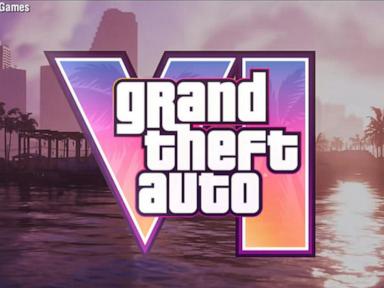
Media conglomerates routinely mistake marketing expenditure for demand generation, yet the debut of Grand Theft Auto VI demonstrates that accumulated brand equity operates as an independent economic force capable of rendering traditional customer acquisition models obsolete. When Rockstar Games releases promotional material, the resulting surge in viewership and engagement is not merely a successful advertising campaign; it is a textbook case of network effects colliding with artificial scarcity. Standard industry analysis attributes these record-breaking metrics to hype, a vague label that obscures the underlying mechanics of consumer behavior, platform algorithms, and capital allocation. To understand why this single intellectual property commands unprecedented global attention, analysts must examine the structural architecture of long-cycle franchise management, the compounding value of extended development timelines, and the asymmetric distribution of risk in modern interactive entertainment.
The Architecture of Accumulated Scarcity
Most entertainment studios operate on an annualized or biennial release cadence to satisfy quarterly corporate earnings targets. This high-frequency output creates a predictable revenue stream at the expense of marginal utility. Every subsequent installment in an annualized franchise reduces the perceived novelty of the core product, forcing publishers to spend progressively larger sums on paid user acquisition to maintain baseline unit sales. Rockstar Games and its parent company, Take-Two Interactive, invert this model by treating time as a capital asset rather than an operational cost.
The gap of over a decade between Grand Theft Auto V and Grand Theft Auto VI establishes a supply constraint that fundamentally alters the demand curve. In classical economics, when supply is artificially restricted while the addressable market expands, price elasticity drops and consumer surplus converts directly into brand devotion. Over the past ten years, the global install base of high-definition gaming consoles and capable personal computers has grown substantially, introducing an entire demographic cohort to the franchise who were too young to purchase the previous entry at launch.
This extended dormancy accomplishes three distinct operational objectives:
- Elimination of Franchise Fatigue: Consumers cannot grow tired of an iteration schedule that barely exists. By withholding new mainline entries, the publisher ensures that public appetite remains permanently unfulfilled.
- Organic Generational Onboarding: Legacy titles remain active through persistent multiplayer ecosystems, allowing older players to introduce younger cohorts to the brand without additional marketing outlay from the publisher.
- Normalization of Premium Pricing Power: When a product arrives once per decade, consumers evaluate its cost against ten years of inflation and entertainment value rather than comparing it directly to standard seventy-dollar seasonal releases.
The record-breaking viewership of the game's promotional trailers is therefore a lagging indicator of a decade-long supply squeeze. The trailer itself is merely the catalyst that releases pent-up demand across global digital distribution networks.
Algorithmic Amplification and Zero-Cost Distribution
Traditional media launches rely on paid media buys—television spots, digital display ads, and sponsored influencer placements—to force a product into the public consciousness. This approach treats attention as a commodity to be purchased at market rates. Grand Theft Auto VI operates under a different distribution mechanic, wherein the consumer base functions as an unpaid, hyper-efficient distribution network that hijacks recommendation algorithms across every major social platform.
When a cultural artifact achieves a critical mass of simultaneous engagement, platform algorithms on YouTube, X, TikTok, and Instagram classify the content as a global breaking event. These recommendation engines are designed to maximize user session duration; they automatically suppress niche content and flood user feeds with whatever topic is generating the highest velocity of clicks, comments, and shares. Rockstar Games exploits this algorithmic bias by releasing a single, high-density video asset without surrounding promotional clutter.
The mechanics of this zero-cost distribution follow a strict causal chain:
- Concentrated Initial Velocity: Millions of core fans subscribe to official channels and enable notifications, generating an immediate, vertical spike in concurrent views within the first sixty seconds of release.
- Cross-Platform Migration: Secondary creators—streamers, video essayists, and news outlets—immediately download, dissect, and re-upload the footage to capture search traffic, multiplying the total impressions by an order of magnitude within hours.
- Mainstream Media Capitulation: Legacy news organizations, recognizing the search volume, publish coverage to capture advertising revenue, thereby exposing the product to non-gaming demographics who do not participate in gaming subcultures.
Through this sequence, the publisher shifts the financial burden of distribution onto third-party platforms and content creators. Every reaction video, frame-by-frame breakdown, and news segment acts as a free customer acquisition channel, driving down the effective cost per impression to near zero.
The Illusion of Comparable Metrics
Industry commentators frequently compare the trailer views of Grand Theft Auto VI against historical benchmarks set by blockbuster cinema, such as the Marvel Cinematic Universe, or competing video game franchises. While these comparisons generate compelling headlines, they are analytically flawed because they equate passive media consumption with interactive software adoption.
A two-hour theatrical film requires a low time commitment and a minimal financial outlay, typically under twenty dollars for a ticket or the sunk cost of an existing streaming subscription. A modern open-world video game demands a seventy-to-hundred-dollar upfront capital expenditure, proprietary hardware costing several hundred dollars, and an average time commitment ranging from fifty to several hundred hours. Measuring trailer views across these two mediums ignores the vast disparity in conversion friction.
When an interactive entertainment property outperforms a film trailer in raw twenty-four-hour viewership, it signals a far deeper level of consumer intent. Viewers watching a movie trailer are often engaging in casual browsing; viewers watching a game trailer are frequently validating a major hardware and software purchasing decision. The standard metrics of digital engagement—views, likes, and shares—fail to capture this distinction in economic weight.
To accurately evaluate the commercial trajectory of such a release, analysts must discard vanity metrics and track structural indicators of purchasing readiness:
- Hardware Attach Rates: Spikes in current-generation console sales directly following promotional announcements indicate consumers actively acquiring the necessary infrastructure to run the software.
- Back-Catalog Velocity: Surges in unit sales and active player counts for previous installments demonstrate that prospective buyers are using older software as a proxy to satisfy immediate demand.
- Wishlist and Pre-Order Conversion: The speed at which digital storefront algorithms register wishlist additions provides a cleaner signal of day-one liquidity than public video view counts.
Relying on raw view counts creates a distorted picture of the market, leading rival executives to mistakenly believe that higher production values in their own marketing trailers will yield similar commercial returns.
Capital Concentration and the Death of the Mid-Tier Studio
The unprecedented success of Grand Theft Auto VI exposes a severe structural vulnerability within the broader interactive entertainment sector. As development costs for flagship titles escalate into the hundreds of millions—and potentially billions—of dollars, the industry is bifurcating into two extreme tiers: hyper-capitalized mega-franchises and low-budget independent productions. The middle tier of game development, historically defined by moderately budgeted projects with experimental mechanics, is being systematically starved of both capital and consumer attention.
This capital concentration is driven by risk aversion among publicly traded publishers. When a single intellectual property can generate billions in high-margin revenue over a multi-year lifecycle, institutional investors pressure executives to reallocate R&D budgets away from unproven concepts and toward guaranteed tentpoles. However, attempting to replicate Rockstar's model without Rockstar's structural advantages leads to catastrophic capital destruction.
Rival publishers face three insurmountable barriers when trying to imitate this strategy:
- The Talent Density Bottleneck: Retaining thousands of specialized engineers, artists, and writers over an eight-to-ten-year development cycle requires a corporate culture and compensation structure that few publicly traded companies can sustain through quarterly market fluctuations.
- The Iteration Trap: Most studios lack the financial cushion to absorb a delayed release. When a mid-tier publisher delays a title by two years, the mounting interest on development debt often exceeds the game's total addressable revenue, forcing premature launches of broken software.
- The Live-Service Fallacy: Many competitors attempt to fund long development cycles by forcing multiplayer monetization into single-player franchises, alienating their core audience and destroying the brand equity required to sustain long-term scarcity.
The market reality is that Grand Theft Auto VI is an outlier that cannot be reverse-engineered through sheer financial expenditure. When competitors attempt to match its scale, they inflate their own break-even thresholds to unsustainable levels, setting the stage for massive write-downs when their titles inevitably fail to capture a comparable share of consumer attention.
Limitations of the Tentpole Dependency Model
While Take-Two Interactive's strategy yields extraordinary returns upon release, concentrating corporate valuation into a single, decade-long production cycle introduces extreme operational fragility. No business model is immune to structural trade-offs, and the ultra-long development cycle carries distinct liabilities that institutional investors frequently overlook during periods of peak hype.
The primary vulnerability is binary execution risk. When a company deploys hundreds of millions of dollars over ten years into a single product, there is zero margin for systemic failure. If shifting consumer tastes, unforeseen technical bottlenecks, or macroeconomic contractions dampen launch-window sales, the publisher cannot pivot quickly to recover the lost capital. Unlike a diversified portfolio of smaller releases where three failures can be offset by two moderate successes, a single-pillar strategy leaves the parent enterprise entirely exposed to the reception of one software build.
Second, extended development cycles create severe internal attrition risks. Creative directors, lead engine architects, and senior producers rarely remain at a single studio for a full decade. Managing institutional knowledge transfer across multiple generations of hardware architecture—moving from one console generation's development kits to the next mid-production—introduces technical debt that exponentially increases quality assurance costs.
Finally, reliance on a persistent online component to monetize the post-launch tail creates a delicate balancing act. If the multiplayer economy is perceived as overly predatory at launch, the resulting backlash can tarnish the mainline single-player reputation, impairing the long-term tail sales that justify the initial capital outlay.
Strategic Execution for Industry Competitors
Competing directly against a generational cultural event is a guaranteed path to capital loss. Studios and publishers operating in the interactive entertainment space must treat the launch window of Grand Theft Auto VI not as a competitive arena, but as a temporary market blackout.
Executives managing release schedules should execute three immediate operational adjustments:
- Clear the Release Calendar: Vacate a ninety-day window surrounding the confirmed launch date for any title targeting overlapping demographics, specifically open-world action, narrative-driven adventures, and competitive multiplayer shooters. Marketing costs during this period will spike due to algorithmic saturation while conversion rates plummet.
- Pivot to Counter-Programming: Allocate marketing spend toward genres with entirely distinct mechanical loops and low demographic overlap, such as grand strategy, cozy simulation, or compact indie titles that require minimal time commitments and low price points.
- Abandon Scale-Based Competition: Cease greenlighting multi-hundred-million-dollar open-world projects intended to rival Rockstar's scope. Redirect capital toward high-margin, mechanics-first titles with three-year development cycles, prioritizing rapid iteration and predictable return on invested capital over chasing unachievable cultural dominance.