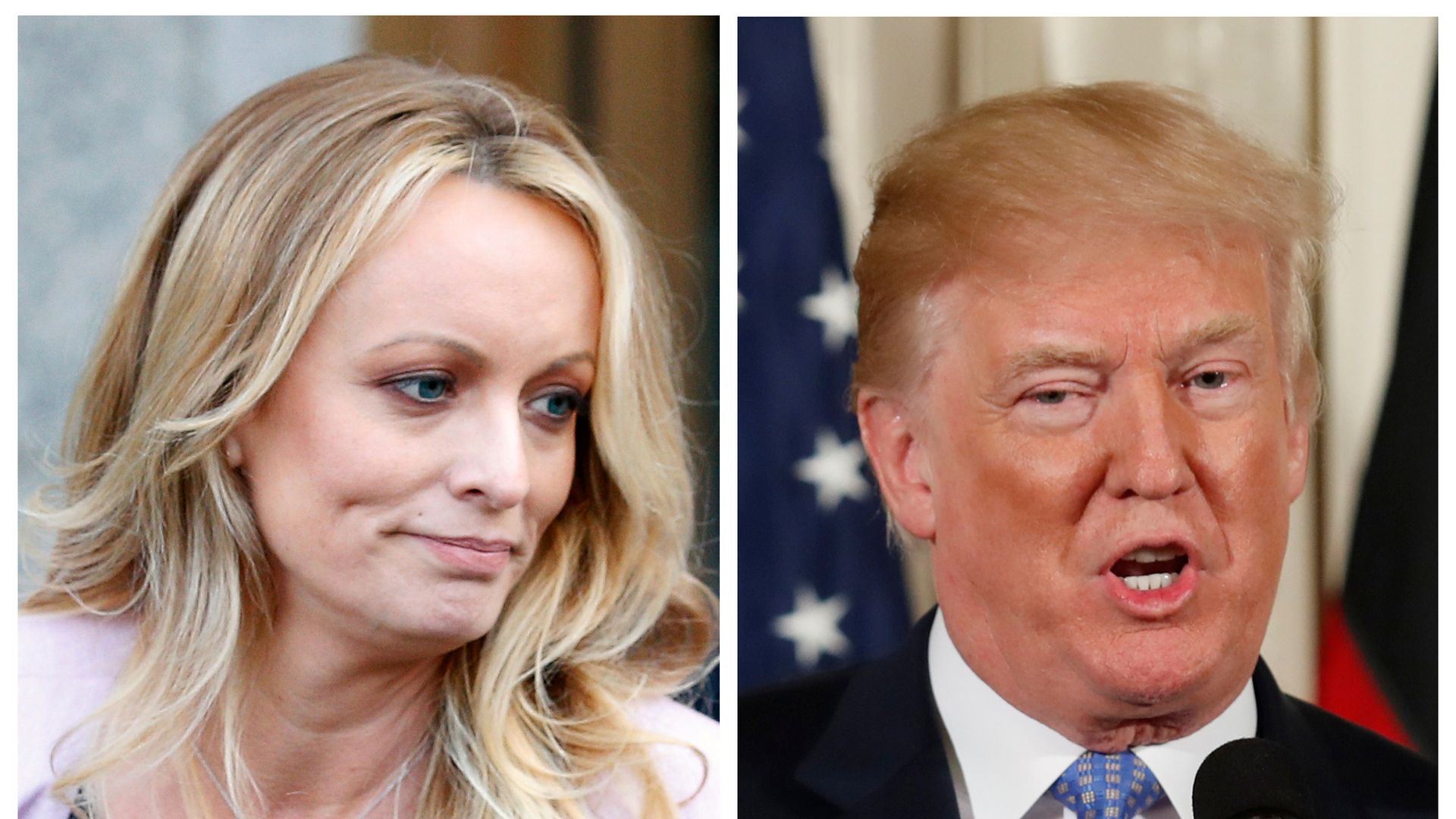
Mainstream legal commentators are treating the New York Appellate Division’s latest move in Donald Trump’s hush-money case like a golden parachute.
They are wrong. Dead wrong.
The lazy consensus sweeping across cable news and digital headlines suggests that granting an appeals court review—or entertaining arguments that could vacate his 34 felony counts—gives Trump a clean shot at "erasing" his criminal record. That framing is pure political theater, completely divorced from how appellate jurisprudence, presidential immunity doctrine, and the New York Criminal Procedure Law actually operate.
If you think an appellate hearing is a magic eraser for a felony conviction, you don't understand the machinery of the New York Unified Court System. You are falling for a headline written for clicks rather than legal reality.
Having spent two decades dissecting white-collar defense strategies and appellate briefs in Manhattan, I have watched high-profile defendants burn millions of dollars chasing appellate miracles that only exist on television. When a defendant’s legal team secures a procedural opening at the Appellate Division, First Department, the public assumes the verdict is crumbling. In reality, appellate courts grant leave or entertain briefing on novel constitutional questions precisely to inoculate the record against future reversal—or to narrow the exact grounds on which a conviction stands.
Here is the contrarian truth nobody in the pundit class wants to admit. Trump’s appeals team isn't walking into a sanctuary. They are walking into a jurisdictional minefield where winning the battle over presidential immunity could permanently lock in the underlying factual record, while losing guarantees the conviction survives every subsequent federal challenge.
The Myth of the Appellate Eraser
Let’s dismantle the core premise right out of the gate. Under New York Criminal Procedure Law (CPL) Article 470, an intermediate appellate court does not sit as a thirteenth juror. It does not re-weigh whether Stormy Daniels was credible. It does not decide whether Michael Cohen lied. It does not care whether you think Alvin Bragg’s prosecution was politically motivated.
The Appellate Division looks at two primary things: errors of law preserved at trial, and whether the verdict was against the weight of the evidence.
When headlines scream that Trump has been "given a chance to erase his criminal record," they conflate three entirely distinct legal outcomes:
- Vacatur and Dismissal: The indictment is thrown out entirely, and the charges cannot be refiled. This requires proving a fatal jurisdictional defect or absolute constitutional immunity that barred the prosecution from day one.
- Vacatur and Remand for a New Trial: The conviction is wiped, temporarily, because tainted evidence reached the jury. The Manhattan District Attorney gets to retry the case from scratch.
- Modification: Certain counts are dropped or downgraded, leaving the core felony record intact.
Notice the difference? Only the first option actually erases the threat. The second option puts Donald Trump right back inside a Lower Manhattan courtroom, facing a second jury, with a prosecution team that now knows every single defense strategy, cross-examination angle, and evidentiary objection his lawyers possess.
Imagine a scenario where the Appellate Division agrees with Trump’s team that certain testimony from former White House aides—like Hope Hicks or Madeleine Westerhout—violated the Supreme Court’s Trump v. United States immunity ruling. What happens next? Does the record vanish into thin air?
No. Under standard harmless-error analysis established in Chapman v. California and New York’s People v. Crimmins, the appellate judges first ask whether there is a "reasonable possibility" that the tainted evidence contributed to the conviction. Even if they find the error wasn't harmless, the standard remedy for an evidentiary error is a new trial, not dismissal.
Erasing a conviction only to trigger a retrial isn't a victory. It is prolonging the bleeding.
The Trump v. United States Trap
To understand why the current appellate posture is so treacherous for the defense, you have to look closely at what Chief Justice John Roberts actually wrote in Trump v. United States (2024). Pundits treated that ruling as a blanket shield for Trump. Legal scholars—from Harvard’s Laurence Tribe to conservative appellate heavyweight Jack Goldsmith—immediately recognized it as a nuanced, multi-tiered test that creates massive headaches for a defendant trying to undo a state-court conviction involving pre-presidential conduct.
The Supreme Court divided presidential actions into three buckets:
- Core Constitutional Powers: Absolute immunity.
- Official Acts (Outer Perimeter): Presumptive immunity.
- Unofficial Acts: Zero immunity.
Here is the fatal flaw in the "erase his record" narrative. The underlying conduct in the New York falsification of business records case—reimbursing Michael Cohen, signing checks from the Donald J. Trump Revocable Trust, and booking legal retainers in the Trump Organization’s general ledger—occurred while Trump was president, yes, but it involved his personal business and campaign finances. Even the most aggressive originalist on the bench struggles to categorize a private trust check drawn on a personal bank account as an "official act" of the Commander-in-Chief.
So Trump’s lawyers had to get creative. Instead of arguing the crimes were official acts, they argued that the evidence used to prove them—specifically, tweets sent from the White House, the Form 278e financial disclosure report, and conversations with White House staff—constituted official acts that should never have been shown to the jury.
Look at the trap that creates.
By anchoring the appeal on evidentiary immunity rather than transactional immunity, Trump’s legal team is implicitly conceding that the Manhattan District Attorney had the constitutional authority to indict him for the underlying conduct. If the Appellate Division strips out the White House testimony and orders a retrial, the prosecution still has the invoices, the ledger entries, the checks signed by Trump himself, and the testimony of David Pecker and Keith Davidson—none of which have anything to do with the presidency.
You cannot use Trump v. United States to erase evidence that existed before you ever took the oath of office.
What Everyone Gets Wrong About New York Appellate Politics
If you want to know how this actually plays out, stop listening to Washington, D.C. pundits and start looking at 27 Madison Avenue in Manhattan, where the Appellate Division, First Department sits.
There is a widespread, deeply cynical assumption among casual observers that New York courts are uniformly hostile to Trump, or conversely, that appellate judges will bend over backward to clear a sitting or former president's docket to avoid a constitutional crisis. Both assumptions misunderstand the institutional ego of the First Department.
The First Department is the busiest, most commercially sophisticated appellate court in the country. These judges spend their days dismantling multi-billion-dollar Wall Street mergers, complex insurance coverage disputes, and high-stakes white-collar appeals. They do not view themselves as political actors; they view themselves as the ultimate technicians of New York statutory law.
When the First Department scrutinizes Judge Juan Merchan’s trial rulings, they aren't looking at polls. They are looking at New York Penal Law § 175.10—specifically, the "object offense" requirement that elevates falsifying business records from a Class A misdemeanor to a Class E felony.
This is the real battleground that mainstream coverage completely misses while obsessing over presidential immunity.
To convict Trump of a felony, prosecutors had to prove he falsified records with the intent to commit or conceal another crime. Merchan instructed the jury that the underlying "unlawful means" could be a violation of New York Election Law § 17-152, and that jurors did not have to agree unanimously on which specific unlawful means were used to violate that statute—whether it was federal campaign finance violations, tax fraud, or falsification of other records.
That jury instruction is an appellate lightning rod.
In Schad v. Arizona and Richardson v. United States, the U.S. Supreme Court drew a razor-thin line between "means" (which do not require jury unanimity) and "elements" (which absolutely do). If the First Department decides that Judge Merchan blurred that line—allowing four jurors to believe Trump violated federal campaign limits, four to believe he committed state tax fraud, and four to believe he falsified bank records—the felony enhancement collapses.
And here is the kicker: if the felony enhancement collapses on a jury-unanimity error, what happens? Again, it doesn't automatically erase his criminal record. It either triggers a retrial on the felony counts, or it leaves him exposed to the lesser-included misdemeanor counts of Penal Law § 175.05, where no "other crime" is required at all.
Trading 34 felonies for 34 misdemeanors might change the sentencing guidelines, but it leaves the guilty verdict etched into the historical and legal record forever.
The Downside Nobody Mentions: The Preservation Problem
Let’s be brutally honest about the weaknesses in any contrarian forecast. Could the Appellate Division shock the legal establishment, toss the entire indictment with prejudice, and wipe the slate completely clean?
Technically, yes. Two specific avenues could deliver a total erasure:
- Federal Preemption: If the court rules that New York Election Law § 17-152 cannot be bootstrapped onto a federal presidential election because the Federal Election Campaign Act (FECA) preempts state regulation of federal campaigns, the entire felony theory evaporates.
- Structural Due Process Error: If the appellate bench concludes that the combination of venue, judicial recusal denials, and gag orders created a fundamentally unfair proceeding incapable of being cured by a retrial.
Why are both of those long shots? Because of a dirty little secret in appellate practice called preservation.
Under CPL § 470.05(2), you cannot complain to an appeals court about an error unless your trial lawyers objected to it specifically, timely, and on the exact same legal theory during the trial. If trial counsel objected on hearsay grounds, appellate counsel cannot suddenly argue constitutional preemption. If trial counsel failed to object to a specific line of questioning from Hope Hicks on immunity grounds—because Trump v. United States hadn't been decided yet—the appellate court has the discretion to treat that issue as unpreserved.
In New York, unpreserved errors can only be reviewed under the court's "interest of justice" jurisdiction. And if you have ever watched the First Department operate, you know they guard their interest-of-justice power like Fort Knox. They rarely invoke it for indigent defendants serving twenty-year sentences; invoking it to rescue a billionaire former president whose team of high-priced litigators failed to make a contemporaneous objection would ignite a firestorm of institutional criticism that these judges have zero appetite to endure.
Stop Reading Headlines Like Box Scores
People searching for updates on Trump’s appeals are asking the wrong question. They keep asking: "Will the appeals court erase Trump's conviction?"
That is a binary question applied to a non-binary legal system. If you want to track what is actually happening in this case without getting played by partisan spin, throw away the cable news chyrons and track three specific indicators in the appellate filings:
- Watch the Remand Language: Ignore whether the court criticizes Judge Merchan’s evidentiary rulings. Look strictly at whether the defense successfully argues that the indictment itself was jurisdictionally defective. Without a jurisdictional defect, any win leads back to a courtroom, not an exit door.
- Track the Preservation Footnotes: Read the Manhattan DA’s brief for the phrase "unpreserved for appellate review." Every time Alvin Bragg’s appellate unit successfully pins an unpreserved label on a defense argument, that issue dies on the vine unless the First Department takes the extraordinary step of overriding its own procedural rules.
- Separate the Presidency from the Man: Understand that the Supremacy Clause of the U.S. Constitution can pause a state criminal proceeding while a defendant occupies the Oval Office, effectively freezing the sentence, the probation requirements, and the appellate timeline. Freezing a conviction is not erasing it. When the clock unfreezes, the judgment of conviction is still sitting right there on the docket, untouched.
The legal system was never designed to give high-profile defendants a clean slate through appellate sleight of hand. It was designed to grind slowly, narrow the issues, and protect the finality of jury verdicts unless the trial court broke the foundational rules of the game.
Trump’s lawyers didn't get handed an eraser by the appeals court. They got handed a shovel—and every inch they dig into the trial record risks burying their client deeper in a retrial they cannot afford to lose.