Disney has officially run out of ideas. If you need proof, just look at the box office and critical carnage surrounding the new live-action Moana remake. Directed by Thomas Kail, the film crashed onto theater screens with a dismal 35% score on Rotten Tomatoes, making it one of the lowest-rated entries in the studio's entire catalog of animated-to-live-action do-overs.
The real question isn't whether the film is bad. It's why Disney thought we wanted this in the first place. The original animated masterpiece came out in 2016. Its animated sequel just smashed records less than two years ago. We haven't had time to miss this world, yet Disney is already trying to sell it back to us with a coat of digital paint. It reeks of corporate desperation.
The Uncanny Valley of Motunui
The biggest problem with converting an animation classic into live-action is that you lose the very soul of the medium. Animation allows for boundless imagination. When the animated Maui shape-shifts into a hawk, it looks natural. When the ocean high-fives Moana, it feels magical.
In this new version, that magic is replaced by actors standing in front of blurry CGI backdrops. It looks flat, artificial, and shockingly cheap. Multiple critics have noted that the visual style resembles an AI-generated video rather than a major studio feature.
- The dry ocean: Moana, played by newcomer Catherine Lagaʻaia, gets tossed into the sea repeatedly by living waves. Oddly, she barely gets wet. Her hair stays perfectly coiffed and her lip gloss remains unsmudged.
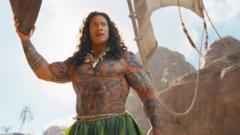
- The rubber suit effect: Dwayne "The Rock" Johnson returns as Maui, but his physical presence is bizarre. He spent hours in a 40-pound prosthetic bodysuit to mimic the character's massive animated frame. The result looks stiff, and his lack of nipples on screen gives him the creepy appearance of a giant action figure.
- The awkward animals: Characters that soared in animation look downright terrifying here. The giant crab Tamatoa, voiced again by Jemaine Clement, loses all his neon charm and becomes an awkwardly staged, murky mess.
A Checked Out Star and a Trapped Newcomer
Catherine Lagaʻaia is actually the only bright spot in this entire shipwreck. She has incredible vocal power and brings a fierce, earnest energy to Moana. She tries her hardest to keep the film afloat.
Unfortunately, her co-star completely lets her down. Dwayne Johnson feels totally checked out. The bouncing, boisterous charm he brought to the 2016 voice role is entirely missing here. He delivers his lines with a flat stiffness, coasting on his star power without putting in the actual performance work. It feels like he's just there to collect a paycheck and protect his brand.
Then there's the hair. The internet has spent months mocking Johnson's absurd, flowing curly wig. It looks like a cheap nylon piece bought from a Halloween pop-up store. It fights against the wind, gravity, and visual immersion in every single scene. When a movie's biggest talking point is how bad the main actor's wig looks, you know the production is in deep trouble.
The High Cost of Redundancy
What exactly does this film add to the story? Nothing. It is a note-for-note, shot-for-shot carbon copy. Lin-Manuel Miranda is on board as a producer, and they even threw a new song called "Along the Way" into the end credits. But if the original story needed extra padding, it would have been there a decade ago.
This isn't just an artistic failure; it's a financial warning sign. Industry analysts predict the film will struggle to cross $50 million to $85 million in its opening domestic weekend. That is a massive drop from last year's live-action Lilo & Stitch remake, proving that audiences are finally getting tired of paying premium prices for worse versions of movies they already own on Disney Plus.
If you want to experience the story of Motunui, just stay home and watch the 2016 version. Skip this theatrical cash grab entirely. Don't reward Disney for laziness. Vote with your wallet, buy a ticket for an original indie film instead, and let the studio know that we want new stories, not expensive reruns.