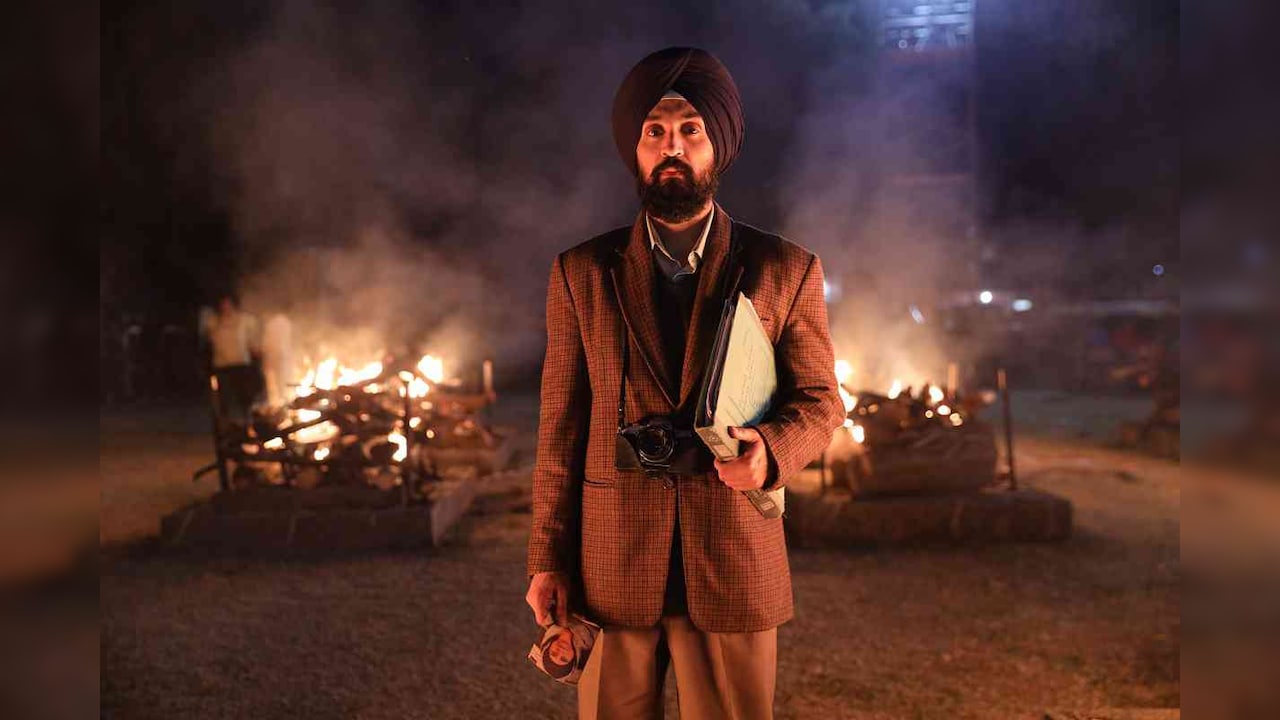
When Honey Trehan’s biographical drama Satluj vanished from the streaming platform Zee5 less than forty-eight hours after its unannounced release, the official explanation was predictably vague. The platform cited unspecified current developments, a corporate euphemism for a late-night phone call from regulatory authorities. The film, which stars Diljit Dosanjh as the murdered human rights activist Jaswant Singh Khalra, had already spent nearly four years in a bureaucratic purgatory, surviving two title changes and a demand from the Central Board of Film Certification for more than a hundred cuts. Its brief weekend appearance and immediate erasure illustrate a dark reality in the modern media ecosystem. Getting offended has evolved from a spontaneous cultural reaction into a highly organized, weaponized transaction that dictates what a nuclear-armed nation of 1.4 billion people is allowed to watch.
The standard narrative frames this as a simple clash between artistic freedom and societal sensitivity. That view is dangerously naive. What we are witnessing is not a grassroots surge of wounded pride, but a highly profitable political economy. Moral outrage has become an investable asset class for political entrepreneurs, a risk-mitigation strategy for multi-billion-dollar streaming conglomerates, and a powerful tool of state control. From the street riots that targeted Padmaavat to the bureaucratic quietus handed to Satluj and the quiet suppression of nuanced police dramas like Sandhya Suri's Santosh, the mechanism remains identical. Grudge-holding is the premier political currency of the subcontinent. Learn more on a similar subject: this related article.
The Transformation of Public Grievance
To understand how we arrived at this point, one must track the structural evolution of the offense industry. A decade ago, manufacturing a cultural crisis required physical infrastructure. It required fringe organizations, printing presses, local coordinators, and a fleet of chartered buses to transport protesters to a cinema hall. When Sanjay Leela Bhansali was filming Padmaavat, the outrage engine relied on medieval theatricality. Sets were vandalized, bounties were placed on actors' heads, and highways were blockaded over a rumored dream sequence that did not even exist in the final edit.
That was a chaotic, expensive model. It has since been replaced by a lean, highly efficient digital bureaucracy. Additional journalism by GQ explores comparable perspectives on this issue.
Today, a single coordinated WhatsApp campaign or a trending hashtag can achieve identical results with zero capital expenditure. The modern outrage specialist does not need to burn down a theater. They simply need to tag the Ministry of Information and Broadcasting in a tweet containing a screen grab taken entirely out of context. The state, operating under revised Information Technology rules, then exerts quiet pressure on the intermediary platforms. The result is a highly effective system of censorship where the state rarely has to issue a formal, legally binding ban. The mere threat of regulatory friction forces corporate compliance.
This shift has changed the nature of the content that triggers an uproar. It is no longer just about historical revisionism or religious iconography. The threshold of offense has dropped so low that ordinary institutional critique is treated as an existential threat to national security.
The Cowardice of Global Capital
When the major streaming platforms entered the Indian market, they promised a golden era of storytelling. Free from the archaic constraints of the cinematograph act, directors were supposed to tackle deep systemic realities. For a brief window, they did. We saw complex portrayals of caste violence, political corruption, and historical trauma.
That window has slammed shut. The turning point was not a change in public taste, but a realization by global corporations that their multi-billion-dollar investments were vulnerable to local legal harassment.
When a corporate entity faces multiple police complaints filed across seven different states over a single scene, the math changes. The legal defense fees are irrelevant to a conglomerate, but the reputational risk and the threat of executive arrest are not. The response has been a total surrender to preemptive self-censorship. Streamers now employ massive teams of legal compliance officers who read scripts not for narrative structure, but for potential friction points. They look for any detail that could be twisted into an insult against a community, a profession, a government scheme, or a geographic region.
Consider the treatment of Satluj. The creators knew that a theatrical release was impossible after the censor board demanded the removal of scenes detailing documented judicial records and historical testimonies. They attempted a surprise digital drop, hoping to bypass the traditional gatekeepers. The platform folded within hours because its broader corporate survival depends on regulatory goodwill. This is not an isolated incident. Dozens of completed projects sit permanently on corporate servers, paid for but unreleased, because a risk-assessment algorithm decided that public peace was worth more than artistic integrity.
The Mirage of Neutral Bureaucracy
The defense of this system always rests on the maintenance of public order. The state argues that in a deeply pluralistic society, unchecked creative expression can ignite real-world violence. This argument would carry more weight if the enforcement of these standards were consistent.
It is not. The system is explicitly asymmetric.
While serious investigations into historical state overreach or systemic caste bias face endless delays and demands for cuts, films that traffic in hyper-partisan historical revisionism or overt majoritarian triumphalism receive tax exemptions and state promotion. The message to the film industry is clear. Outrage is entirely permissible, provided it is directed at the correct targets. If a film demonizes a marginalized group or an adversarial neighbor, the state protects it under the banner of free speech. If a film examines the extrajudicial actions of the police force, it is suppressed under the guise of maintaining national security.
This creates a terrible incentive structure for filmmakers. True investigative cinema requires capital, time, and immense legal risk. Propagandistic melodrama, by contrast, offers guaranteed distribution, state protection, and a built-in audience primed by prime-time television debates. The creative community is dividing into two camps: those who have accepted their roles as state mythmakers, and those who have grown tired of the fight and moved on to harmless, domestic comedies.
The Permanent Erasure of Public Memory
The long-term danger of this orchestrated sensitivity is the systematic deletion of history. When a film like Satluj is suppressed, the casualty is not just the director's career or the platform's investment. The casualty is the historical record itself. The case of Jaswant Singh Khalra is not a matter of speculative fiction. It is a matter of judicial record, documented by the Supreme Court of India and investigated by the Central Bureau of Investigation. Police officers were tried, convicted, and sentenced to life imprisonment for his abduction and murder.
Yet, when cinema attempts to dramatize these facts, the state treats the narrative as a dangerous fabrication capable of reviving militancy. By conflating human rights advocacy with anti-national activity, the outrage apparatus successfully enforces a collective amnesia. It insists that the state must only be depicted as an unblemished, benevolent entity. Any deviation from this script is treated as malicious intent.
This environment changes how audiences interact with art. When citizens are constantly told that their identity is so fragile that a two-hour movie can destroy it, they begin to believe it. Indignation becomes a badge of honor, a way to demonstrate loyalty to a tribe or a political faction. The audience ceases to be viewers looking for aesthetic value or emotional truth. They become inspectors, scouring the screen for micro-aggressions and historical slights.
The irony is that the suppression of these films rarely achieves its stated goal of burying the truth. In the digital age, a ban is merely an alternative marketing strategy. Within hours of Satluj being removed from Zee5, pirated copies were circulating on encrypted messaging apps and private servers across the globe. The ban simply stripped the filmmakers of their legitimate revenue while amplifying the film's reach among the exact audiences the state wished to insulate. The outrage economy does not cure the perceived offense; it merely drives it underground, where it festers without the benefit of public debate or critical context. The suffocating environment remains, ensuring that the next generation of storytellers will choose simpler, safer, and infinitely emptier stories.