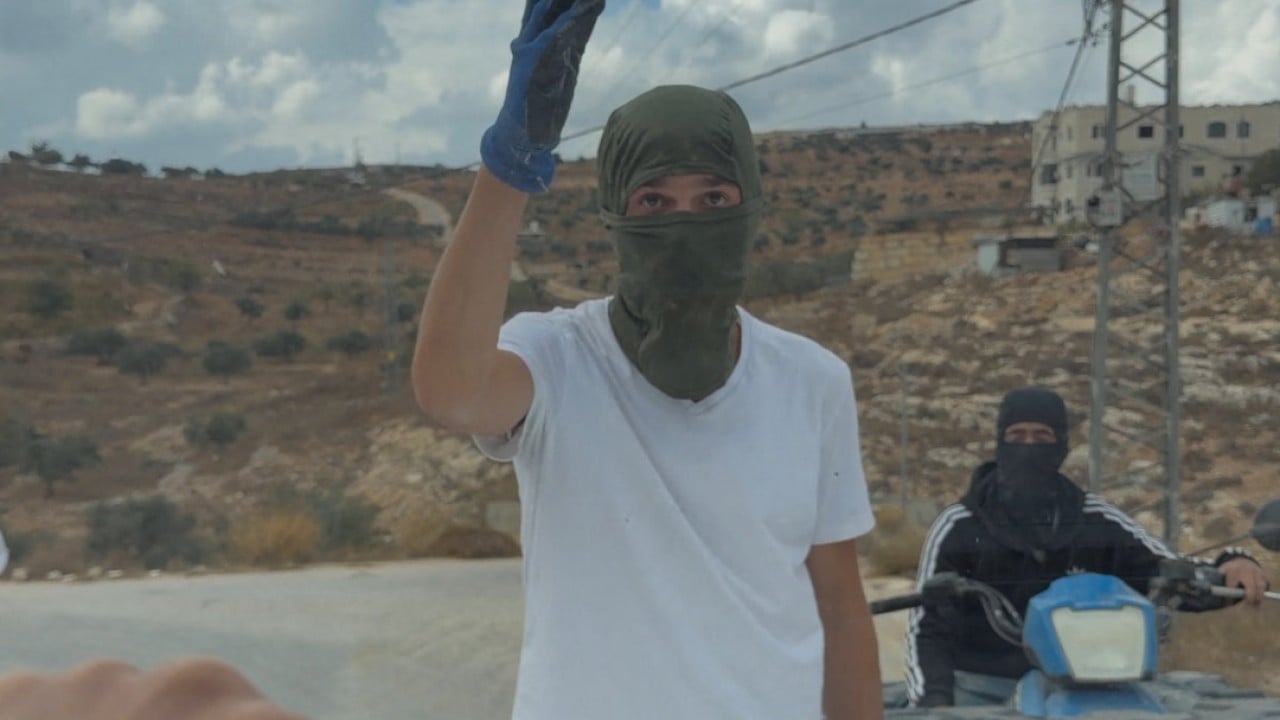
Paper does not stop a fist.
Neither does a passport embossed with gold foil, nor a laminated press badge, nor the quiet, centuries-old agreement among nations that envoys traveling under their flags carry a measure of untouchability. Out on a sun-baked hillside in the West Bank, where limestone boulders bake until they smell like chalk and wild thyme, those legal shields weigh less than a feather. When violence erupts on a rural track or near a contested olive grove, a mayor from a quiet town in France and a foreign service attaché from Brussels share the exact same vulnerability as a shepherd whose family has walked those ridges for generations.
I have stood along the edges of tense checkpoints and dusty valleys where the air feels charged before a single word is spoken. You learn quickly to read the micro-shifts in posture—the sudden stillness of an engine idling on a shoulder, the way gravel crunches under boots when people move faster than the afternoon heat invites, the sharp metallic clink of a latch or a stone striking rock. Those sensory details stay with you long after the briefing notes are filed away. They strip away the polite abstraction of international relations and leave only human bodies, adrenaline, and a sudden collapse of assumed safety.
Reporting on incidents in which Israeli settlers attack European diplomats or beat up a French mayor in the West Bank often arrives in short, clipped wire dispatches. A dateline. A sentence about an altercation. A statement from a ministry condemning the violence. Those dispatches tell you what happened on paper, yet they can leave the deeper reality strangely distant. When a local elected official from France—someone whose daily life back home might revolve around municipal budgets, school buses, town square markets, and neighborhood disputes—is assaulted far from home, the shock is both physical and symbolic. It forces a collision between two worlds that usually operate on entirely different rules.
To understand why these clashes hit with such force, it helps to step back from the headline and look at what a diplomatic or municipal delegation actually represents on the ground. Think of a diplomat's presence in a contested territory as a lantern carried into a dim room. The lantern does not rewrite the architecture of the room, nor does it move the walls. Yet it makes things visible. It records what is happening, signals outside attention, and reminds everyone present that eyes from faraway capitals are watching. When that lantern is knocked aside or met with hostility, the message goes far beyond the immediate bruises. It tests whether external observation still carries weight in places where authority on the ground is fractured, disputed, or unevenly enforced.
Consider a hypothetical scenario—clearly marked as such—to see how ordinary people get pulled into extraordinary friction. Suppose a French mayor named Henri travels to the West Bank as part of a municipal solidarity and observation visit, hoping to see firsthand how local communities manage water access, agriculture, and daily movement. In his hometown in France, his authority is mundane and recognizable: signing permits, meeting residents at Saturday morning coffee, speaking at civic ceremonies. Stepping onto a rocky track in the West Bank, he is no longer an administrator behind a desk. He is a visitor wearing sensible walking shoes, carrying a notebook and perhaps a camera, standing in an environment shaped by decades of occupation, contested land claims, security zones, and volatile settler-Palestinian friction. If an argument flares over access to a road or a piece of land, and scuffles break out that leave him beaten and shaken, the disorientation is total. One moment he is observing a dispute from the outside; the next, his own body is in the middle of it.
That disorientation is real, even when the exact details of any given incident require careful verification. In reporting on West Bank clashes involving European envoys or foreign officials, accuracy matters deeply. Details can be contested, accounts can diverge on sequence and provocation, and official statements often frame the same event through sharply different lenses. A responsible reader—and a careful writer—should never invent facts about a real-world attack or pretend certainty where the record is incomplete or disputed. We should state clearly what is verified, acknowledge where accounts differ, and admit when the full picture is still emerging.
There is nothing weak about saying, "We do not yet know every detail of how that confrontation started." In fact, in environments as layered and volatile as the West Bank, uncertainty is part of the terrain. Rumors travel faster than ambulances. Videos get clipped at the edges. Spokespeople release carefully worded lines within hours. Admitting what remains unclear is not evasion; it is honesty. It respects the reader's intelligence and protects the truth from turning into mere partisan theater.
Why a Local Mayor Becomes a Flashpoint
Why would a French mayor—someone with no direct military command and no sovereign jurisdiction in the region—become the target of physical violence?
Part of the answer lies in how symbols work during high-tension encounters. To residents or activists on the ground who view foreign delegations as politically hostile, intrusive, or aligned with causes they fiercely oppose, a European official or visiting mayor is rarely seen as a neutral bystander. Even if the visitor came intending only to listen, document conditions, or build civic ties, their presence can be read as an act of political intervention. In a place where every road, hilltop, and water pipe carries ideological weight, almost nobody is perceived as merely passing through.
Another part lies in the volatility of close-quarters friction. Many confrontations in the West Bank do not begin as grand strategic operations. They begin over something small and immediate: a blocked lane, a disputed parcel of land, shouting across a short distance, tempers rising in heat and frustration. Once voices rise and crowds gather, the margin for de-escalation shrinks rapidly. A shove becomes a punch. A heated exchange becomes a beating. Once physical force enters the picture, nuance evaporates almost instantly.
Historians and observers of the region have long noted a recurring behavioral pattern during spikes in West Bank violence: local incidents rarely stay local for long. When settlers and Palestinians clash, or when foreign nationals or diplomats get caught in or targeted by settler attacks, shockwaves ripple outward almost immediately. Consulates demand explanations. Foreign ministries summon ambassadors or issue sharp rebukes. Domestic audiences back in Europe see images or read accounts of their own citizens or representatives being harmed abroad, and the political temperature rises at home as well.
Think about how differently a story lands in Paris, Brussels, Berlin, or Madrid when the person nursing a split lip or bruised ribs has a familiar accent and a recognizable civic title. Abstract geopolitical debates about settlements, checkpoints, and security coordination can feel remote to voters scrolling their phones at dinner. A French mayor getting beaten up in the West Bank feels personal. It bridges the gap between distant diplomacy and everyday human safety.
The Invisible Stakes Beneath the Headline
When an attack happens in front of or against diplomats or visiting officials, the visible injury is only the first layer. Beneath it sit three quieter stakes that shape what happens next.
The first stake is access. Much of the international community's understanding of day-to-day life in the West Bank depends on people being able to travel, observe, meet local leaders, and see conditions with their own eyes. If diplomats, observers, or visiting officials face physical intimidation or assault, trips get canceled, routes get avoided, and blind spots grow wider. Less presence means fewer independent witnesses. Fewer witnesses make accountability harder for everyone.
The second stake is credibility of order. When violence breaks out and bystanders or visiting officials are struck, people naturally look to see what authorities do next. Who intervenes in the moment? Who investigates seriously afterward? Are perpetrators held accountable, or does a sense of impunity set in? When enforcement looks selective, delayed, or absent, trust erodes—not only among local residents who have lived with that reality for years, but among foreign governments trying to gauge whether basic norms of safety still apply.
The third stake is escalation. Every clash carries the risk of triggering retaliation or hardening positions on all sides. A diplomat roughed up at a checkpoint or a European delegation harassed near a contested site does not end when the dust settles on that single afternoon. It feeds diplomatic strain, complicates negotiations, and makes future encounters jumpier. Everyone goes into the next meeting or field visit already bracing for trouble.
Sometimes, looking at a conflict through an everyday analogy helps clarify why these invisible stakes matter so much. Imagine a neighborhood where streetlights are flickering out one by one, and whenever someone tries to fix a bulb, rocks are thrown at the ladder. Even if nobody gets hit on the first throw, the message is clear: stay in the dark. In diplomacy and human rights monitoring, presence is a kind of light. Attacking those who carry it pushes the situation toward shadows where fewer people can see—or verify—what is taking place.
Power, Vulnerability, and the Myth of Immunity
There is a comforting illusion many of us carry about diplomatic status: that a title, a flag pin, or an official mandate acts like armor.
In reality, diplomatic immunity and international norms are agreements among states, not force fields. They rely on mutual restraint, institutional respect, and enforcement mechanisms on the ground. Where tensions are acute and passions run hot, norms only hold as far as the people present choose—or are compelled—to uphold them. A French mayor or a European diplomat does not carry a shield that stops a heavy blow or a thrown stone. At the moment of impact, they are just a person trying to protect their head, keep their balance, and figure out how to get out safely.
That realization can feel unsettling, especially for readers who assume international rules automatically protect officials abroad. It should. We live in an era where norms we once treated as settled—about borders, civilian protection, diplomatic conduct, and basic restraint—are being tested across multiple regions at once. Feeling a jolt of discomfort when reading about a French mayor being beaten or European diplomats being attacked in the West Bank is a completely natural reaction. It reminds us how fragile civility can be when pressure builds.
At the same time, we should avoid flattening complex situations into cartoons. West Bank politics involves deeply entrenched grievances, security fears, land disputes, religious and national narratives, and competing claims to safety and survival. Recognizing the wrongfulness of assaulting diplomats or visiting officials does not require pretending that the broader conflict is simple. You can hold two truths at once: physical violence against visiting officials and diplomats is unacceptable and dangerous, and the underlying conflict in which such clashes occur is tangled, painful, and stubbornly resistant to easy fixes.
What Changes When the Story Becomes Human
Why do stories like this keep resurfacing in news feeds across the world?
Because they expose the human friction point where high policy meets raw reality. Around conference tables in European capitals, diplomats speak in measured language—phrases like grave concern, rule of law, de-escalation, and protection of civilians. Those words are essential tools of statecraft. Yet they can sound bloodless until you picture a real person standing on a sun-scorched road, heart hammering, realizing that polite protocol offers zero protection against a sudden surge of anger and fists.
When we shift our focus from dry bullet points to human experience, we do not abandon facts. We anchor them. We ask who was there, what risks they took, how fear alters judgment in a split second, and what happens to trust when boundaries are crossed violently. We also ask what responsibility leaders have—both locally and internationally—to prevent street-level hostility from spiraling into wider crises.
No single article can resolve decades of conflict in the West Bank, nor can a narrative replace careful investigative reporting as facts emerge. What a grounded, human-centered story can do is refuse numbness. It can keep us from treating attacks on diplomats or visiting local leaders as just another fleeting item between weather updates and sports scores.
Out on that dusty hillside, long after the shouting fades and the official statements are drafted in distant offices, the real test remains stubbornly simple: whether human beings can walk through contested spaces without fear of being beaten for showing up.