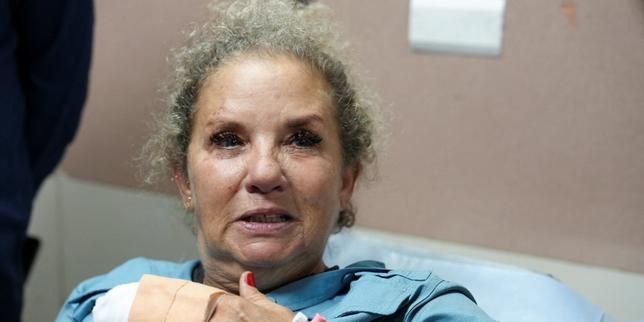
Standard hero-versus-villain reporting obscures the structural vulnerabilities that allowed an insider assault to unfold on flydubai Flight FZ1073 on September 30, 2026. Accounts centered on Captain Smit Machchhar's survival instinct capture human courage, yet they treat a systemic breakdown in aviation security as a sequence of isolated shocks. A rigorous operational analysis shifts focus from emotional recollection to security architecture: how a crew member with access to the flight deck initiated an attack, why cockpit access protocols faced friction during an active assault, how aerodynamic stability is threatened when flight controls are contested, and what vetting and procedural reforms are required to reduce insider risk.
To evaluate the incident accurately, it helps to separate verified facts from ongoing investigations and analytical hypotheses. Public reporting and official statements establish that Flight FZ1073—operating from Dubai to Tel Aviv—experienced a mid-air cockpit assault involving Captain Smit Machchhar and first officer Hamam al-Hammami, resulting in injuries to the captain, a steep descent, intervention involving crew and passengers once the cockpit door was opened, stabilization of the aircraft, and an emergency diversion to Tabuk, Saudi Arabia, with all 172 passengers and crew surviving. Authorities in the United Arab Emirates have described the event as a premeditated terrorist plot and detained the co-pilot, while political leaders have made public statements regarding motive and intent. Legal guilt, exact forensic timelines of every blow or control input, and full intelligence findings remain subject to formal legal and investigative processes. Treating these distinctions clearly prevents speculation from masquerading as settled fact. In related news, read about: Crowd Crush Physics and Bottleneck Failure at Mass Religious Gatherings.
Deconstructing Competitor Framing Versus Operational Reality
Narrative-driven coverage typically structures an aviation crisis around four tropes: normal routine interrupted without warning, a sudden physical blow, an internal struggle to survive, and a dramatic rescue or diversion. While engaging to read, that structure flattens cause-and-effect relationships that matter to aviation safety managers, regulators, and passengers.
When an article frames an attack purely around survival willpower ("You can't die like this"), it leaves three operational questions unanswered: Al Jazeera has also covered this critical subject in great detail.
- Pre-flight vetting and continuous monitoring: How did an individual cleared for flight-deck duties reach a position to execute a coordinated or premeditated assault?
- Cockpit access and denial mechanics: How can a lone actor inside a hardened flight deck prevent cabin crew from entering during an emergency?
- Flight-envelope recovery: How does an aircraft transition from a steep descent back to controlled flight, and what roles do crew resource management and cabin intervention play?
Human determination matters immensely under acute trauma, yet willpower is a lagging indicator of resilience. High-reliability organizations—such as commercial airlines, nuclear operators, and maritime fleets—treat human heroism as a backstop rather than a primary defense. When a system relies primarily on an incapacitated or injured pilot fighting off an assailant while unbuckling restraints and reaching for a door mechanism, upstream controls have already failed or been bypassed.
The Four Pillars of Cockpit Insider Risk
Commercial aviation historically hardened the flight deck against external intrusion, particularly after the September 11, 2001 attacks. Reinforced doors, keypad entry systems, and strict sterile-cockpit rules dramatically reduced external hijacking risk. However, hardening a boundary against outsiders creates a structural asymmetry: once inside the perimeter, an authorized insider possesses familiarity with aircraft systems, emergency equipment, and crew routines.
1. Vetting Gaps and Behavioral Drift
Airline selection pipelines rely on initial background checks, licensing verification, medical certification, and simulator assessments. Those filters are strong at screening out overt disqualifications at hiring, but weaker at detecting slow ideological radicalization, personal crises, or covert planning after onboarding. Continuous monitoring programs—combining periodic psychological evaluations, peer reporting, and security clearance checks—aim to close that gap, yet cross-border hiring, privacy laws, and administrative blind spots can create lags between behavioral change and institutional response.
2. Proximity and Routine Masking
Inside a commercial airliner cockpit, movement and routine behaviors carry low threat salience until an overt act occurs. A pilot standing behind the captain or shifting position during cruise flight appears unremarkable because crew members routinely move, stretch, check tablets, or step away from flight controls during stable phases. An assailant exploits this baseline normality to achieve positional advantage—striking from behind while the pilot is seated, belted, and focused on flight-management or fuel data.
3. Internal Equipment and Access Asymmetry
Cockpits contain specialized tools and controls designed for legitimate emergencies, alongside heavy hardware and avionics panels. International aviation rules require a crash axe on board commercial transport aircraft for emergency egress or rescue access, and flight decks house throttles, trim wheels, autopilot panels, and circuit breakers. Simultaneously, modern security doors are engineered to resist forced breach from the cabin. If an attacker inside the flight deck blocks entry or overrides keypad access, outside helpers face a deliberate physical barrier designed to keep unauthorized persons out.
4. Cognitive Overload and Physiological Shock
A sudden blow to the head or severe blood loss triggers immediate physiological disruption: vision changes, disorientation, intermittent loss of consciousness, and narrowed attentional tunneling. Under normal training scenarios, pilots practice structured checklists and callouts. During a violent assault, motor coordination and executive planning degrade rapidly. Opening a door while injured, unfastening harnesses, or communicating distress becomes exponentially harder precisely when time margins shrink.
How Flight Control Contestation Translates Into Altitude Loss
Understanding why accounts of Flight FZ1073 emphasize a steep nose-down sensation or rapid descent requires looking at basic flight dynamics rather than dramatic shorthand. An airliner at cruise altitude balances lift, weight, thrust, and drag along three axes: pitch (nose up or down), roll (bank left or right), and yaw (nose left or right).
When a struggle breaks out in the flight deck, control inputs can become contradictory or inadvertent. A pilot slumped forward, a person bracing against or falling across the control column or thrust levers, or abrupt disengagement or misuse of autopilot and pitch trim can rapidly pitch the nose down. Once nose-down pitch increases, airspeed builds quickly as potential energy (altitude) converts into kinetic energy (speed). Left uncorrected, rapid descent alters g-loads inside the cabin, disorients occupants, and compresses the time available to recover pitch attitude safely above terrain or structural limits.
Recovery depends on immediate stabilization of pitch and thrust: arresting the dive, managing airspeed so the aircraft neither stalls nor exceeds structural limits, and re-establishing a coordinated crew on the flight controls. When relief pilots or trained crew reach the controls, restoring order requires both physical control of the aircraft and de-escalation or restraint of the threat so inputs do not conflict.
Addressing Common Questions on Cockpit Security and Procedures
Passengers and observers naturally ask how a cockpit assault happens despite locked doors, whether door rules should change, and how cabin crew and passengers can respond when flight-deck communication breaks down.
Why Can't Cabin Crew Always Walk Right In During a Crisis?
Cockpit doors are built to withstand ballistic impacts and prolonged physical force from the cabin side. Standard procedures typically use a keypad code from the cabin that alerts pilots inside, giving them a brief window to either grant entry or deny it if a hijacker is forcing a crew member to open the door. That delay is a deliberate trade-off: it protects against a cabin-side takeover, even though it can slow entry if an incapacitated pilot cannot release the latch or if someone inside actively blocks access.
Should Cockpit Doors Remain Locked From the Inside at All Times?
Aviation regulators have debated two-person rules and door-locking logic repeatedly following past incidents, weighing insider threats against external intrusion. Keeping doors strictly locked from the inside without a cabin override prevents an outside attacker from forcing entry, yet it can complicate rescue if both pilots are incapacitated or if a rogue occupant locks others out. Conversely, unrestricted cabin override could create a pathway for coordinated cabin-to-cockpit attacks if keypad codes are compromised. Any rule change must balance insider containment against external defense rather than solving one risk by creating another.
What Role Do Cabin Crew and Passengers Play When an Attack Starts?
Cabin crew are trained in emergency communication, crowd control, and security response, and they coordinate with the flight deck when normal procedures fail. In rare, extreme emergencies where a cockpit door opens and an active threat is present, passengers with relevant skills—such as medical training to treat bleeding or physical strength to help restrain an attacker—sometimes assist crew. However, relying on ad-hoc passenger intervention is inherently unpredictable; cabin safety depends primarily on clear crew coordination, rapid access once safe, and immediate stabilization of the flight controls.
A Tactical Framework for Evaluating Aviation Security Response
Analysts, airline safety teams, and policymakers can assess future incidents—and audit current preparedness—using a five-step operational sequence:
- Establish the Timeline Before the Breach: Separate pre-flight anomaly indicators (scheduling, vetting, behavioral flags) from the exact moment normal flight-deck operation was disrupted.
- Map Control and Access States: Identify who held active control of pitch, roll, and thrust at each minute, and determine when the cockpit door was locked, challenged, or opened.
- Evaluate Incapacitation and Handoff Friction: Measure how injuries, restraint release, and door mechanics affected the time required to transfer aircraft control to a capable pilot.
- Assess Containment and Medical Stabilization: Examine how the threat inside the cockpit was neutralized and how injured crew members received immediate first aid prior to diversion.
- Audit Structural Trade-Offs: Identify which safeguard succeeded (such as a rapid diversion to a suitable airfield) and which safeguard showed friction (such as insider screening or door-access delays).
Limitations and Strategic Trade-Offs
No security architecture eliminates insider risk completely. Continuous psychological monitoring and heightened background screening improve detection probabilities, yet they carry false-positive costs, administrative friction, privacy constraints, and potential morale impacts if applied punitively rather than constructively. Similarly, tightening physical restrictions inside the cockpit—such as altering access to emergency tools or changing door-latch logic—can introduce new hazards during genuine non-malicious emergencies like smoke, decompression, or dual-pilot incapacitation.
The most effective strategic play for airlines and aviation regulators is to treat cockpit insider threats as a coupled human-technical problem rather than a single-point failure: pair rigorous, ongoing vetting and multi-crew awareness with unambiguous door-access escalation protocols, rapid relief-pilot integration when available, and structured post-event investigations that publish concrete procedural lessons without sensationalism.