The political class is terrified. Not of the technology, but of the loss of narrative control.
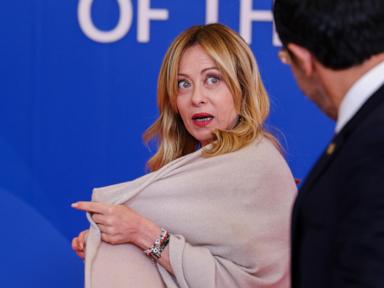
When Italian Prime Minister Giorgia Meloni denounces a deepfake as a "political attack," she isn't just defending her image. She is participating in a choreographed ritual designed to consolidate power over the digital square. The media laps it up, framing synthetic media as a looming existential threat to democracy. They are wrong. Deepfakes aren't the poison; they are the mirror reflecting a political system that already abandoned objective truth decades ago.
The Myth of the Vulnerable Public
The standard argument suggests that voters are helpless sheep, unable to discern reality from a pixelated lie. This is an insult to the intelligence of the electorate and a convenient excuse for leaders who want to implement draconian digital censorship.
We’ve seen this play out in various cycles. A grainy video surfaces, a leader cries "AI," and suddenly, the conversation shifts from their policy failures to the "evils" of unregulated software. In reality, the human brain is remarkably adept at contextual verification. We don't believe a video because it looks real; we believe it because it confirms what we already suspect about the person in the frame.
If a deepfake of a politician taking a bribe goes viral, it succeeds because that politician has already failed to establish a foundation of trust. The math is simple:
$$Trust \approx \frac{Consistency}{Scandal}$$
When the denominator is high, no amount of high-fidelity rendering can save a reputation. Conversely, when trust is high, a deepfake is nothing more than a momentary glitch in the feed.
The "Political Attack" Defense as a Strategic Shield
Labeling synthetic media a "political attack" is the ultimate get-out-of-jail-free card. It allows any public figure to dismiss genuine, damaging footage as "likely AI-generated."
I have watched PR firms prepare for this for years. The strategy is no longer to deny the action, but to deny the medium. We are entering an era where the "Liar’s Dividend" pays out in gold. By hyper-focusing on the threat of deepfakes, Meloni and her contemporaries create a shadow of doubt that covers everything.
- Did the senator say that on a hot mic? "It’s a deepfake."
- Is there a photo of the CEO at a restricted location? "AI-generated."
- Is there a recording of a backroom deal? "Synthetic audio."
By crying wolf about deepfakes today, they ensure that the truth can be ignored tomorrow. The outrage isn't a byproduct; it's the product. It’s a preemptive strike against accountability.
The Regulation Trap
The loudest voices calling for deepfake regulation are the ones who stand to lose the most from a truly open internet. They want a "verified" digital world where only state-sanctioned sources carry weight.
Let’s be precise about the mechanics here. Most proposed legislation focuses on:
- Mandatory Watermarking: Easy to strip for anyone with basic coding knowledge.
- Platform Liability: Forces social media companies to become the ultimate arbiters of truth—a role they have proven they are incapable of handling without bias.
- Criminalization of Satire: Under the guise of "protecting the public," these laws often sweep up political cartoonists and satirists who use exaggeration to make a point.
When a government says they want to protect you from misinformation, they are usually saying they want to protect themselves from criticism. The technology is out of the bottle. You cannot legislate math. You cannot "ban" the ability of a computer to arrange pixels in a specific order.
The Irony of "Authenticity"
Politicians spend millions on lighting, makeup, scriptwriters, and media training. Their entire public persona is a high-budget simulation. A deepfake isn't a departure from their reality; it’s just a version they didn't pay for.
The competitor articles focus on the "harm" to the individual’s dignity. Where was the concern for dignity when political campaigns started using micro-targeting algorithms to feed different lies to different zip codes? The "attack" isn't on the person; it’s on the monopoly they hold over their own brand.
The Technical Reality vs. The Hysteria
We need to stop treating AI as a mystical force. It is a tool. Specifically, Generative Adversarial Networks (GANs) operate on a simple principle: one network generates, and another network discriminates.
$$Loss_{GAN} = E_{x \sim p_{data}(x)}[\log D(x)] + E_{z \sim p_z(z)}[\log(1 - D(G(z)))]$$
The discriminator is getting better because the generator is getting better. This is an arms race that has existed since the invention of the printing press. The fear isn't that the technology is too good; it's that our institutions are too weak to survive a world where they can't control the flow of information.
Stop Fixing the Tech, Start Fixing the Culture
The obsession with "solving" deepfakes is a distraction from the real problem: a total collapse of institutional credibility.
If you want to neutralize the threat of a deepfake photo, you don't need a new law. You need a track record that makes the lie unbelievable. If the public is ready to believe a fake photo of a Prime Minister in a compromising position, the problem isn't the software—it's the Prime Minister's relationship with the truth.
We are witnessing the birth of a new era of digital skepticism. This is actually a good thing. For too long, people believed things simply because they saw them on a screen. If deepfakes force the average citizen to demand better evidence and higher standards of proof, then the "attack" Meloni fears is actually a long-overdue upgrade for the human brain.
The era of visual proof is dead. Good. Now we can finally start judging leaders by their results rather than their optics.
The most dangerous thing about a deepfake isn't that it's fake. It's that it reveals how little the "real" version actually matters.