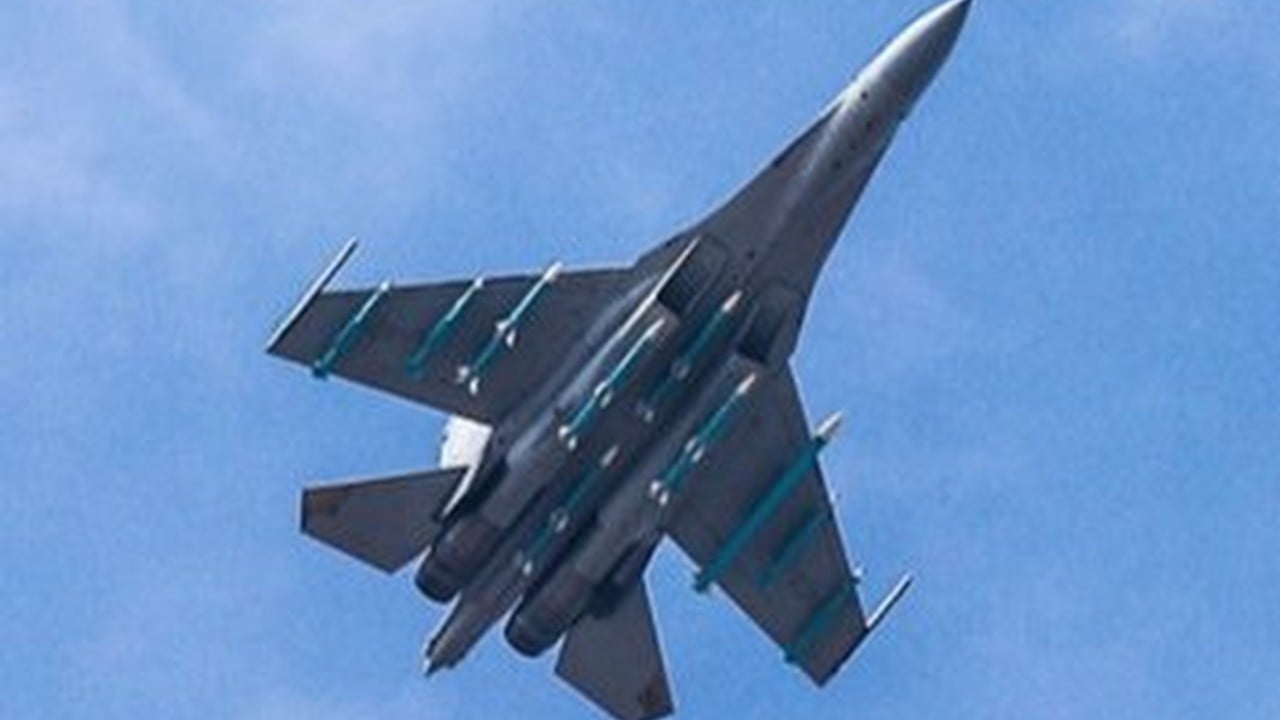
The metal plate beneath the pilot's thigh vibrates at a frequency only a human body can detect after hundreds of hours in the cockpit. At forty thousand feet, the world looks less like a map and more like a curved sheet of slate gray glass. For decades, the men and women flying advanced fighter jets assumed that if death came for them, it would arrive with a frantic, chirping warning from their radar receivers. They expected a duel. They expected a chance to pull hard on the stick, to dump chaff, to fight the air itself for survival.
That assumption is dead.
In modern aerial warfare, the sky does not scream before it breaks. The modern air-to-air missile does not announce its presence until the final, terrifying seconds of its flight. When news filtered through defense circles that China’s PL-15 radar-guided missile had successfully tracked and simulated the downing of high-tier fighters like the French-made Rafale in complex exercises, a collective chill settled over Western air commands. It wasn't just a loss of technological supremacy. It was a fundamental shift in the psychological reality of military aviation.
Now, whispers of an even more elusive successor—the PL-16—are forcing strategist to rewrite the rules of survival entirely.
The Geometry of Fear
To understand why a piece of solid-fuel propellant and a microchip can alter global geopolitics, consider a hypothetical pilot named Marcus. He isn't a symbol; he is the sum of a fifteen-million-dollar training investment and a family waiting in Norfolk. Marcus flies with the supreme confidence that his aircraft's radar cross-section makes him nearly invisible. He believes he can see the enemy before they see him.
The PL-15 shattered that illusion.
Conventional missiles use standard radar to track targets. They light up the sky like a flashlight in a dark room. The moment they turn on their radar, the target's sensors alert the pilot, screaming break left, break left. But the PL-15 introduced an active electronically scanned array (AESA) seeker. It doesn't shine a single, blatant flashlight beam. It casts a shifting, complex web of signals that blends seamlessly into the background static of the atmosphere.
Marcus wouldn’t know he was being hunted.
The weapon boasts an operational range estimated between 200 and 300 kilometers. It travels at five times the speed of sound. Think about that distance. It is the gap between London and Paris, crossed in a matter of minutes, silent and unseen. By the time a Rafale or an F-35 pilot detects the high-frequency terminal radar lock of an incoming PL-15, the missile is already in its "no-escape zone." That is the cold, mathematical term engineers use to describe the atmospheric pocket where a missile's kinetic energy outmatches a jet's physical ability to turn away.
It is a death sentence wrapped in a composite casing.
Beyond the Horizon
But military technology never hits a plateau. It behaves more like a relentless staircase, where each step must be steeper than the last to maintain the same view. Enter the rumored PL-16.
If the PL-15 was a scalpel designed to outrange and outsmart individual fighters, early intelligence suggests the PL-16 is designed to blind the entire theater of war. The technical community debates its exact specifications, but the consensus points toward a dual-pulse rocket motor coupled with anti-radiation capabilities.
To grasp what that means, imagine trying to talk to a friend across a roaring stadium. To hear them, you need a megaphone. In modern air combat, that megaphone is the Airborne Warning and Control System (AWACS)—massive, lumbering converted airliners bristling with radar domes that guide smaller fighters like Marcus’s jet through the chaos. They are the brains of the operation.
The PL-16 is rumored to be an AWACS killer.
It doesn't just look for the reflection of a jet. It hunts the source of the radar itself. It treats the enemy’s tracking signals as a lighthouse guide, riding the beam directly back to the source over distances that push the boundaries of atmospheric physics. If a pilot turns on their radar to find the enemy, they effectively hand the PL-16 a map directly to their cockpit.
The strategic math changes instantly. If you turn on your eyes, you die. If you keep them closed, you fly blind into a storm.
The Human Weight of Mach 5
We often talk about these advancements in cold acronyms and procurement budgets. We discuss thrust-to-weight ratios, dual-stage solid motors, and multi-band data links. It feels clean. It feels like a video game played on high-end monitors in climate-controlled rooms in Beijing, Washington, or Paris.
The reality is suffocating.
Consider what happens inside the cockpit when the system finally alerts the pilot to an incoming threat. The human heart cannot process the speed of a Mach 5 engagement. The pilot's hands don't twitch out of instinct; they rely on muscle memory drilled into them through thousands of hours of simulation. The g-forces required to evade a modern missile compress the human spine, draining blood from the brain until the world constricts into a narrow, black-and-white tunnel.
The Rafale is a masterpiece of aviation engineering. Its delta-wing design allows it to dance through the air with an agility that defies belief. It has proven itself in theatres across the globe. Yet, against a weapon that operates outside the visual spectrum, agility becomes secondary to electronic warfare. The battle isn't fought with spectacular barrel rolls; it is fought in the nanoseconds it takes for an airborne computer to try and trick an incoming missile's brain into thinking the jet is fifty meters to the left.
If the computer fails, the pilot dies before they ever see the aircraft that launched the strike.
The Silent Checkmate
This isn't just about who has the longer reach. It is about deterrence. The existence of the PL-15, and the looming shadow of the PL-16, alters how nations position their aircraft carriers and how close they dare send their surveillance planes to contested borders.
When a single missile can deny access to hundreds of miles of airspace, traditional air superiority vanishes. The sky becomes a no-man's-land where the advantage belongs not to the bravest pilot or the most expensive jet, but to the entity that can project lethality from the furthest, darkest corner of the horizon.
The technical specifications will continue to evolve. Engineers will tweak the solid-fuel mixtures to squeeze out another fifty kilometers of range. Software designers will patch the radar algorithms to see through the latest Western jamming techniques. The names will change from PL-15 to PL-16, and eventually to something even more clinical.
But above the clouds, inside the pressurized cabins where the air tastes like ozone and the silence is absolute, the view remains unchanged. The pilots know the truth. The sky isn't empty anymore. It is filled with invisible paths carved by weapons that move faster than human thought, waiting for someone to flip a switch and light up the dark.