Western observers love a tidy, aestheticized poverty narrative.
Every few months, a glossy trend piece emerges claiming that young people in China have suddenly discovered the Zen Buddhist beauty of owning nothing, spending nothing, and sitting in public parks staring at trees. The standard media framing paints this "zero-cost" lifestyle as a voluntary wellness retreat—a clever mental health hack invented by Gen Z to cure burnout. Expanding on this idea, you can find more in: Stop Panicking Over Lula’s Victory Because Brazil’s Agribusiness Machine Doesn’t Care Who Sits in Brasília.
That framing is dangerously naive.
Spending zero yuan on a Saturday afternoon isn't a mindfulness exercise. It is a rational, cold-blooded economic boycott. When an entire generation decides that the return on investment for participating in consumer society has dropped below zero, they don't buy self-help books. They close their wallets, sit on a park bench, and wait out the storm. Observers at CNBC have provided expertise on this trend.
If you are analyzing Asian consumer markets, building brands for Gen Z, or simply trying to understand where global demand is headed, mistaking a liquidity trap for a lifestyle trend will cost you everything.
The Lie of the "Mental Relief" Narrative
Let’s look at the mechanics of the lazy consensus. Mainstream commentary argues that young Chinese professionals—battered by the grueling "996" work culture (9 a.m. to 9 p.m., six days a week) and intense urban competition—are choosing radical frugality to reclaim their sanity. They forage for wild vegetables, trade secondhand goods on Xianyu, take "city walks" instead of shopping trips, and boast about spending less than 10 yuan a day.
Calling this a "mental relief strategy" confuses the symptom with the disease.
Mental relief is a byproduct, not the catalyst. You do not see tens of millions of hyper-connected, status-conscious consumers simultaneously abandon discretionary spending because they suddenly fell in love with minimalism. You see it when the math stops working.
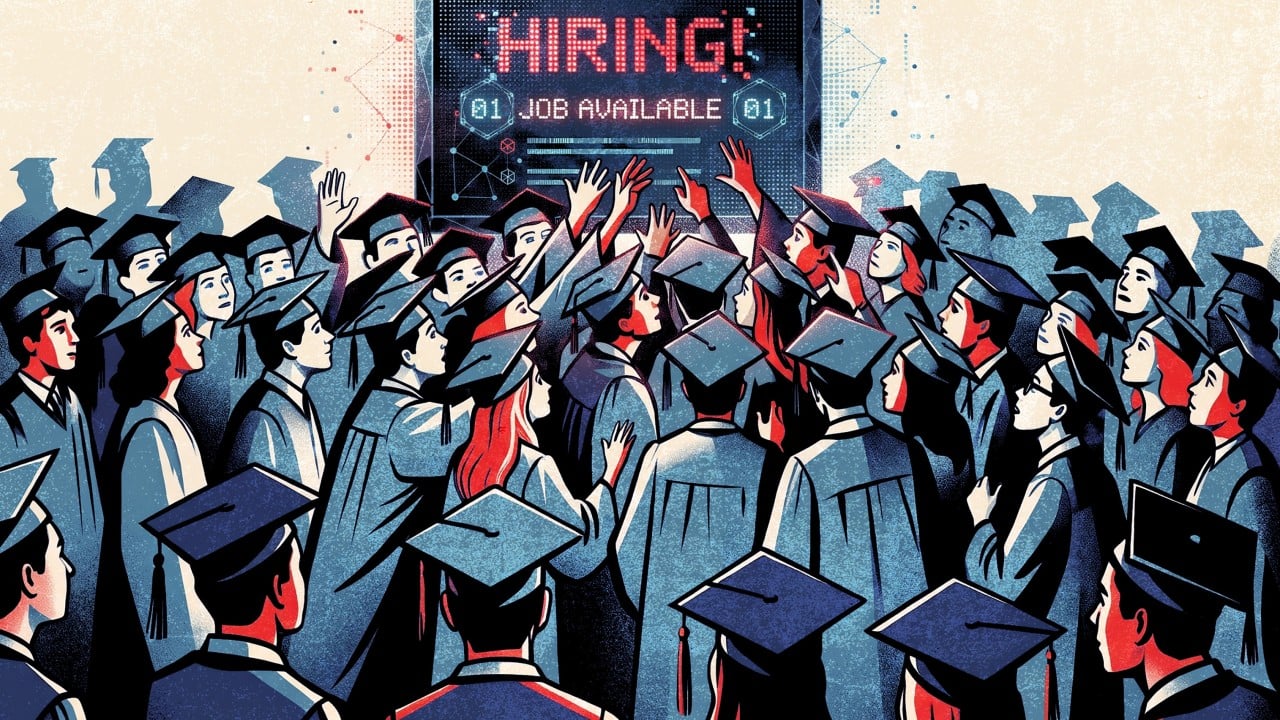
For three decades, the implicit social contract in urban China was simple: endure extreme academic and workplace pressure, and you will be rewarded with upward mobility, appreciating real estate, and rising purchasing power. Today, that ladder has been pulled up. Youth unemployment has hovered near historic highs, entry-level salaries in tech and finance have compressed, and the property market—historically the primary vehicle for household wealth—has undergone a massive, painful correction.
When hard work no longer buys a down payment on an apartment, the middle-class consumption script collapses. Why buy a 35-yuan specialty coffee or a 2,000-yuan designer jacket to signal status in a game you can no longer win?
"Zero-cost" living isn't therapy. It is capital preservation disguised as a social media aesthetic.
The Economics of Rational Apathy
To understand what is actually happening on the ground in Shanghai, Shenzhen, and Chengdu, you have to stop reading lifestyle blogs and start reading balance sheets.
I have spent over a decade advising consumer brands entering East Asia, and I have watched companies burn millions of dollars trying to market "aspirational luxury" to a demographic that has quietly opted out of aspiration. Marketing executives sit in boardrooms assuming this is a temporary belt-tightening phase—a cyclical dip that will bounce back once consumer confidence returns.
They are misreading a structural shift. Economists call this balance sheet recession behavior, a concept popularized by Richard Koo when analyzing Japan’s lost decades. When asset prices fall and future income feels uncertain, rational actors shift their primary financial goal from profit maximization to debt minimization and cash hoarding.
Look at the macro data from the People's Bank of China over the past several years: household deposits have surged by trillions of yuan even as interest rates on savings accounts have been repeatedly cut. People are aggressively stuffing cash into low-yield bank accounts rather than spending or investing it.
The "zero-cost" lifestyle is simply the micro-level, street-view manifestation of that exact macro data.
When a 24-year-old graduate posts a viral Xiaohongshu (RedNote) guide on how to spend an entire weekend in Beijing without spending a single fen—using free museum passes, library Wi-Fi, and homemade cold noodles—they aren't rejecting materialism out of spiritual purity. They are executing a defensive liquidity strategy. They are lowering their personal burn rate so they aren't forced to take a toxic, underpaying job just to pay rent and credit card bills.
Frugality is leverage. If your monthly living expenses are 1,500 yuan instead of 8,000 yuan, your boss owns significantly less of your soul.
Why "Revenge Spending" Was a Mirage
Remember the post-pandemic predictions? Every major consultancy predicted a massive wave of "revenge spending" across China once lockdowns lifted. The assumption was that pent-up demand would explode into retail, travel, and luxury goods.
It fizzled out in months. Why? Because you cannot have revenge spending without income security.
Instead of revenge spending, we got "revenge saving" and "flat-lying" (tang ping). The zero-cost movement is the tactical evolution of tang ping. Lying flat was passive; it was about doing the bare minimum at work. Zero-cost living is active; it is about starving the commercial ecosystem of your money while extracting maximum utility from public infrastructure.
Consider how young consumers are actually interacting with the economy right now:
- From Ownership to Access: Why pay for a gym membership when municipal parks have free outdoor fitness equipment? Why buy books when provincial libraries offer climate-controlled workspaces and free digital archives?
- The Death of Brand Premiums: In the 2010s, paying a 300% markup for a Western logo was standard practice. Today, the coolest flex on Chinese social media isn't showing off what you bought—it's showing off how little you paid. "Pinduoduo" (the ultra-discount e-commerce giant) didn't overtake traditional retail incumbents by accident. It won because frugality became a badge of intelligence, while full-price retail became a mark of a sucker.
- Micro-Indulgences Over Macro-Commitments: When these consumers do spend, they buy cheap, high-dopamine items—a 6-yuan Mixue ice cream cone, a blind-box figurine, or a discount movie ticket. They have abandoned big-ticket items (cars, luxury watches, apartments) entirely.
Answering the Wrong Questions About Gen Z Frugality
Whenever this topic surfaces in Western business circles, the same predictable questions follow. Most of them are built on completely broken premises.
"How can brands convince zero-cost youth to start spending again?"
You can't. Stop trying to manipulate people into buying things they have realized they don't need with money they don't have. If your business model relies on convincing cash-strapped 25-year-olds to go into debt for status symbols, your business model is obsolete. You don't persuade a boycotter; you either drop your price point to match their new reality, or you pivot to an entirely different demographic—like China's silver-haired retirees, who actually hold the pensions and property wealth.
"Is this trend actually good for their mental health?"
Yes and no—and pretending it’s pure bliss is dishonest. Escaping the consumer treadmill undeniably lowers cortisol levels. When you stop tying your self-worth to your wardrobe or your brunch spots, the crushing anxiety of keeping up with peers evaporates.
However, there is a dark underbelly to forced austerity. When frugality is a choice made from a position of wealth, it feels empowering. When frugality is the only way to survive economic stagnation, it breeds quiet despair. You cannot build a family, fund medical emergencies, or secure a retirement on "good vibes" and free park walks. Celebrating zero-cost living as a purely positive wellness movement ignores the underlying grief of a generation forced to downsize their dreams.
"Will this spread to the US and Europe?"
It already has—it just wears different branding. In the West, we call it "loud budgeting," "de-influencing," and "underconsumption core." The triggers are identical: inflated housing costs, stagnant real wages, crushing student debt, and skyrocketing grocery prices. Whether you are a 26-year-old in New York bringing a thermos of home-brewed coffee to Central Park or a 26-year-old in Guangzhou eating homemade dumplings by the Pearl River, the economic physics are the exact same. Young people globally are realizing that the traditional middle-class lifestyle has become a mathematically negative bet.
The Structural Vulnerability of the Zero-Cost Playbook
I am not here to romanticize extreme frugality as a permanent solution. Anyone preaching that you can hack your way to financial freedom purely by cutting expenses is selling you a fantasy.
There is a hard mathematical floor to cutting costs. You can reduce your discretionary spending to zero, cancel every subscription, and never eat at a restaurant again—and you will still hit a wall. You cannot frugal your way out of structural wage stagnation or inflation in essential goods like healthcare and housing.
Worse, extreme thrift carries an invisible opportunity cost: social contraction.
Commerce is the grease of human connection. Grabbing dinner with friends, traveling to new cities, attending concerts, or taking a course are how young adults build networks, stumble into serendipitous career opportunities, and find romantic partners. When an entire cohort retreats into isolated, zero-cost routines to protect their bank accounts, social capital dries up. Birth rates plummet further. Innovation slows down because risk-taking requires a financial safety net that extreme austerity merely simulates, rather than builds.
What Smart Operators Do Next
If you are an individual navigating this economic climate, or a founder trying to survive it, stop treating frugality as a passive coping mechanism and start treating it as an aggressive reallocation of capital.
- Weaponize your low burn rate. Do not use zero-cost living just to survive in a dead-end job. Use the cash buffer you build from eliminating frivolous spending to buy yourself time—time to learn high-leverage skills, build independent income streams, or relocate to markets where labor is still scarce and valued.
- Audit status signaling ruthlessly. Every dollar spent to impress strangers on the internet or coworkers you don't like is a direct theft from your future autonomy. Kill those expenses permanently, even when the economy eventually recovers.
- Invest in asymmetric upside, not defensive cash. Hoarding cash in a zero-cost lifestyle protects you from going broke today, but inflation guarantees it erodes your purchasing power over a decade. Keep a lean six-month emergency fund, then deploy every saved yuan or dollar into cash-flowing assets or skill acquisition.
- If you run a business, strip out the fat. Stop charging luxury margins for mediocre products wrapped in pretty packaging. Modern consumers have X-ray vision for artificial markups. Deliver undeniable, utilitarian value at an honest price, or get wiped out by competitors who will.
The "zero-cost" generation isn't broken, lazy, or spiritually enlightened. They looked at a rigged casino, counted the odds, and walked away from the table.
Until the house offers a fairer game, the smartest move in the room is refusing to play.