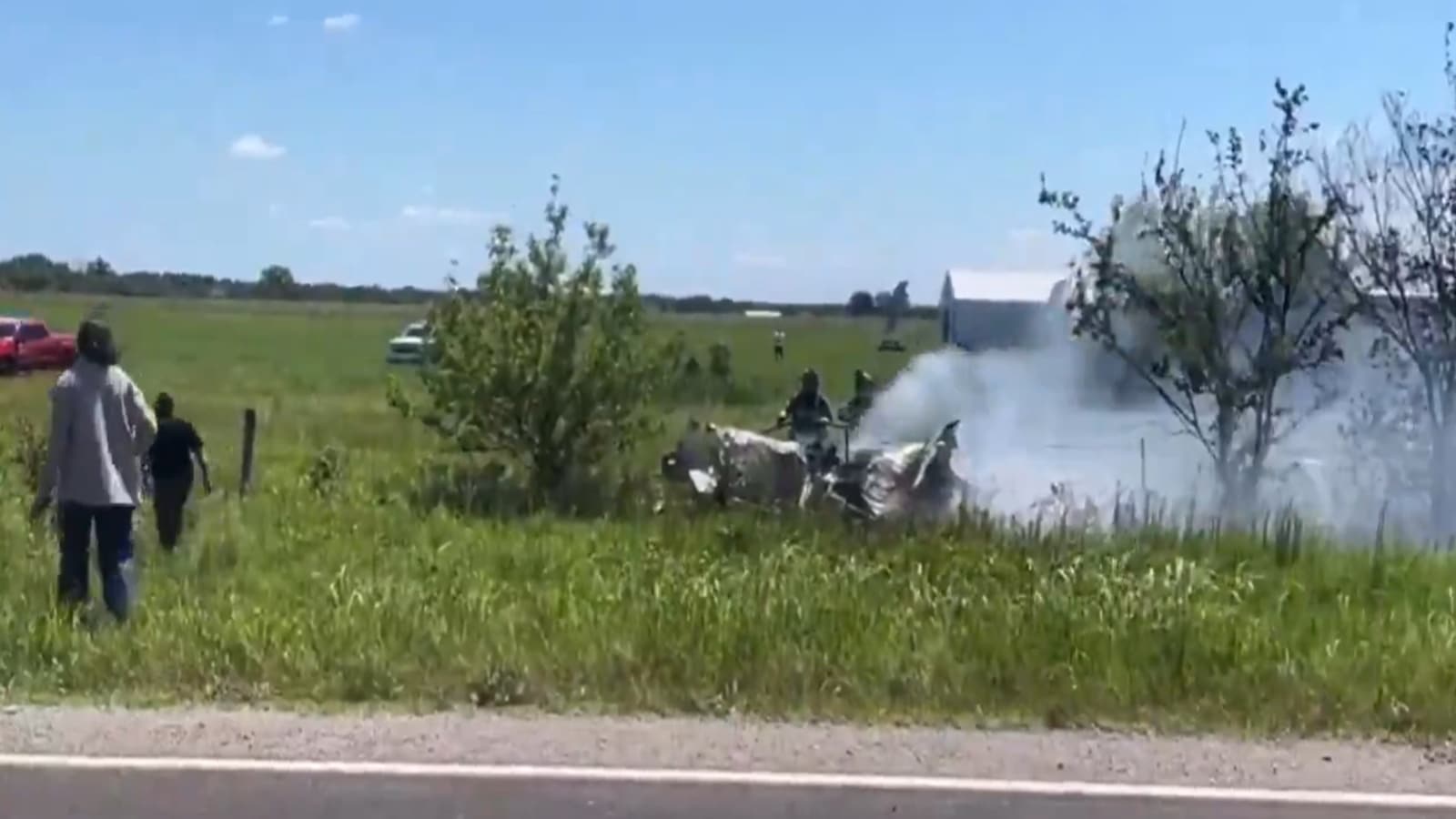
The mainstream media follows a predictable, lazy script every time a small aircraft goes down. Within hours of the tragic crash in Butler, Missouri, that claimed 12 lives, the headlines practically wrote themselves. They focused entirely on the gruesome body count, the shock value, and the unspoken, fear-mongering insinuation that general aviation is a lawless wild west of skybound death traps.
They are asking all the wrong questions.
The public reacts with knee-jerk demands for tighter regulation, assuming that charter flights and private pilots operate in a vacuum of oversight. But if you actually understand the mechanics of aviation safety, you know that more red tape wouldn't have rewritten the physics of what happened over Missouri. The cold truth about small-aircraft safety isn't that the rules are too loose. It's that the human brain is fundamentally unequipped to calculate the true nature of risk in the skies, and the media actively exploits that malfunction.
The Body Count Bias: Why 12 Fatalities Blind Us to the Real Data
When a commercial airliner crashes, it makes global news because it happens so rarely. When a small private or charter plane crashes, it makes news because it validates a deeply ingrained cultural phobia.
Mainstream coverage treats every general aviation accident as proof of systemic failure. I have spent two decades analyzing transportation safety data, and the most glaring flaw in the public narrative is the refusal to separate asset class from operational risk. A twin-engine turboprop or a light piston aircraft flying under Federal Aviation Administration (FAA) Part 135 (charter) or Part 91 (general aviation) regulations is a completely different beast than a commercial Boeing 737 operating under Part 121.
To understand why the Butler, Missouri crash is a statistical anomaly rather than a trend, we have to look at the actual numbers provided by the National Transportation Safety Board (NTSB).
| Aviation Sector | Average Accidents per 100,000 Flight Hours | Fatality Rate | Primary Cause |
|---|---|---|---|
| Commercial Airlines (Part 121) | 0.15 | Near Zero | Systemic/Rare Environmental |
| Commuter & Charter (Part 135) | 1.30 | Low to Moderate | Pilot Spatial Disorientation / Weather |
| General Aviation (Part 91) | 5.50 | High per Accident | Loss of Control / Fuel Management |
The media conflates everything non-commercial into one terrifying bucket. By shouting about 12 dead in Butler, they obscure the reality: flying on a certified charter or a well-maintained private aircraft is still safer than driving the same distance on any interstate in America. You are doing the math wrong because you weigh the drama of a single catastrophic event against the mundane, daily slaughter on our highways.
Dismantling the People Also Ask Premise: Is Private Flying Actually Unsafe?
Go look at the search trends following the Missouri crash. People are asking: Are small planes safe? Why do private planes crash so often? Should the FAA ban small aircraft over populated areas?
The premise of these questions is completely broken.
Small planes do not crash "so often." They crash at a higher rate relative to commercial airliners, which represent the safest mode of transportation ever devised by humanity. Comparing a private turboprop to a commercial Airbus is like comparing a local delivery van to a bullet train. They serve different utility functions under completely different operational parameters.
When you ask "Are small planes safe?", you are asking a lazy question. The real question is: Is the pilot operating within their personal minimums, and is the aircraft maintained to standard? In general aviation, the hardware rarely fails on its own. The engine doesn't just quit because it feels like it. Modern aviation powerplants, especially the Pratt & Whitney PT6 turboprops commonly found in high-capacity utility aircraft, are astonishingly reliable. When a mechanical failure does occur, it is almost always traceable to a human skipping a pre-flight inspection or deferring critical maintenance to save a buck.
If you want to survive private aviation, stop looking at the brand of the plane. Look at the culture of the operator.
The Cognitive Trap of Aeronautical Decision Making
Let's run a thought experiment. Imagine a scenario where a pilot is flying a group of 11 passengers to a high-stakes business meeting or a family gathering. The weather at the destination—in this case, Butler, Missouri—is deteriorating rapidly. The cloud ceiling is dropping, and visibility is worsening.
The pilot feels the weight of 11 pairs of eyes staring at the back of their head. They know that diverting to an alternate airport means missed connections, expensive hotel rooms, and angry clients.
This is where the real killer emerges: Get-there-itis.
Aeronautical Decision Making (ADM) is the formal term for how a pilot processes risk under pressure. The NTSB files are littered with accidents where perfectly functioning aircraft flew directly into the ground because the pilot suffered from spatial disorientation or pushed past the boundaries of Visual Flight Rules (VFR) into Instrument Meteorological Conditions (IMC).
The industry consensus says we need better cockpit technology to solve this. They want more synthetic vision displays, better radar, and automated warning systems.
They are wrong.
Adding more gadgets to a cockpit often has the opposite effect: it breeds a dangerous phenomenon known as risk homeostasis. When pilots feel safer because their tech is advanced, they take higher risks. They fly into worse weather. They push closer to the edge. The technology doesn't save them; it just gives them a more precise view of the disaster they are flying into.
The Hard Truth of the Industry: What I Have Seen in the Field
I have walked through hangars where multi-millionaires treat their aircraft maintenance like an optional oil change on a 2012 Honda Civic. I have seen charter operators cut corners on pilot rest cycles, exploiting legal loopholes to keep crews in the air longer than they should be.
The baseline hypocrisy of the aviation industry is stunning. On one hand, operators preach an absolute culture of safety. On the other hand, the financial realities of running a non-commercial aviation operation create intense pressure to fly when the smart move is to stay on the ground.
If you are going to fly private or use smaller regional charters, you need to accept the downside of your convenience:
- You do not have a team of 50 corporate safety officers auditing every flight leg like you do at Delta or United.
- You are often relying on a two-person crew—or worse, a single pilot—who must act as the navigator, weather forecaster, mechanic, and pilot all at once.
- The margin for error is razor-thin. A sudden microburst or a critical shift in weight and balance during takeoff can overwhelm a small aircraft before the pilot can mentally process the failure state.
Instead of crying for more federal regulations that will only burden the compliant operators while the rogue actors ignore them, the market needs to police itself. Passengers must become ruthless auditors.
Stop Asking for Regulations and Do This Instead
If you are terrified by the news out of Missouri but still need to fly regional or private routes, stop reading the useless analysis pieces from mainstream pundits who don't know a flap from an aileron. Take control of your own risk profile.
First, demand to see the operator's ARG/US or Wyvern rating. These are independent, third-party safety auditing firms that actually dig into the operational guts of a charter company. If an operator cannot produce a current, clean audit report from one of these entities, do not step foot on the aircraft. Period.
Second, ask for the pilot’s total time in type. A pilot might have 5,000 total flight hours, but if only 50 of those hours are in the specific make and model of the aircraft you are boarding, they are effectively a novice when things go sideways.
Third, establish your own hard line on weather. If the destination airport is reporting low ceilings or convective activity, and the operator tells you "we can probably squeeze through," cancel the trip. The word "probably" has killed more people in general aviation than engine failure ever will.
The tragedy in Butler, Missouri wasn't a failure of the aviation system at large. It was a brutal reminder that the sky does not care about your schedule, your wealth, or your optimism. If you treat small-aircraft flight like a casual Uber ride, you are playing Russian roulette with physics. Respect the environment, audit the operator, or stay on the highway. Your illusions of safety won't keep you airborne.