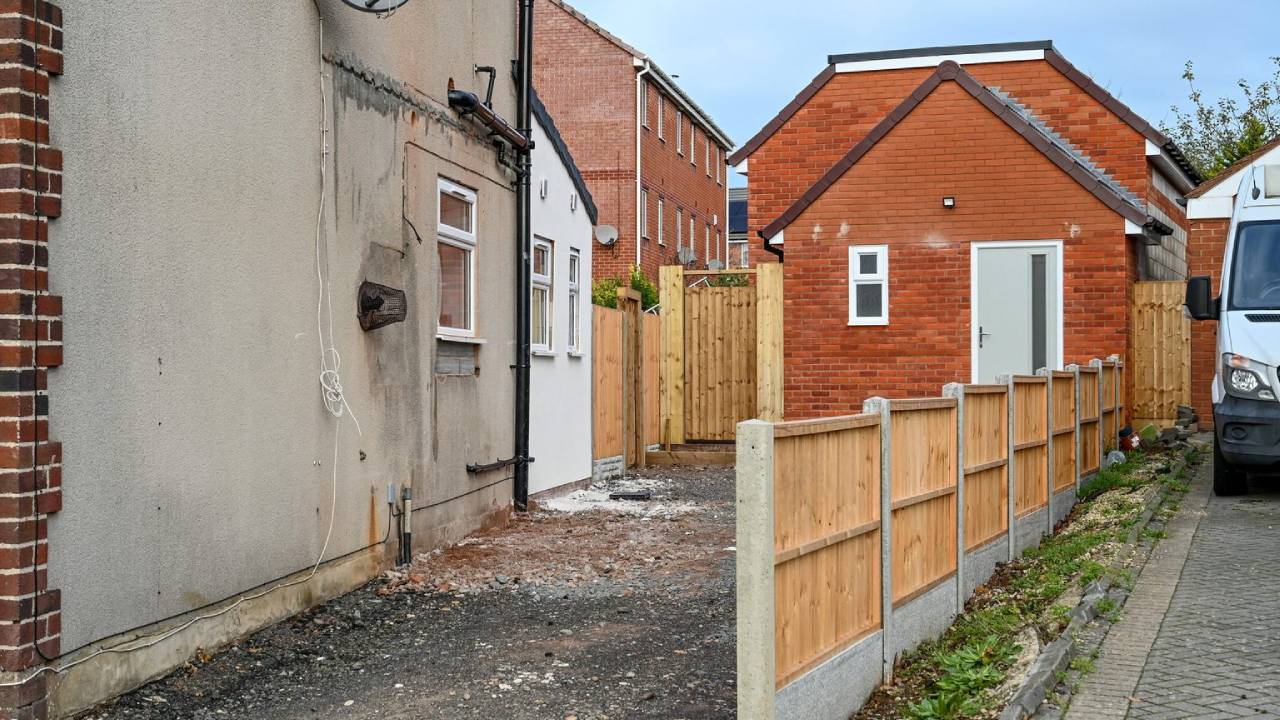
The dream of building a custom space for a loved one is powerful. You want them close. You want them independent. But as the recent case of a Worcester mother proves, that dream can quickly turn into a £170,000 nightmare.
Clair Birch spent a small fortune building a two-storey annexe in her garden to help her disabled daughter. She did it in good faith. She thought she had the right paperwork. Now, she faces the soul-crushing prospect of tearing the entire structure down after losing her planning appeal. If you liked this piece, you might want to check out: this related article.
It’s easy to look at this and think it’s just bad luck. It isn't. It’s a harsh reminder that property law doesn't care about your intentions. It cares about boundaries, aesthetics, and due process. If you’re planning a garden structure, you need to understand exactly where the line is drawn.
Why good intentions don’t win planning appeals
People often assume that if a building serves a "good" purpose—like housing a disabled family member—the council will simply look the other way. That’s a dangerous misconception. The planning system is rigid. For another perspective on this event, check out the recent coverage from TIME.
In the Worcester case, the council wasn't just being difficult for the sake of it. Neighbours complained. They cited privacy issues, light obstruction, and the sheer scale of the building. Once a project hits that level of friction, the council’s planning department isn't looking at your daughter’s needs. They are looking at the impact on the neighbourhood.
When you build without permission, you are forcing the council to make a retrospective decision. You’ve already poured the concrete and finished the roof. If they reject it, you aren't fighting to build; you’re fighting to keep something that, in their eyes, shouldn't be there. The Planning Inspectorate is rarely sympathetic to the financial loss you’ve already incurred. As the inspector noted in this case, personal circumstances simply don't override planning merits.
The trap of the retrospective application
Many homeowners get bad advice. They’re told that they can just "sort it out later" or that a project falls under permitted development. But "permitted development" is a precise legal status, not a general suggestion.
If you build an annexe that is two storeys high, or that sits too close to a boundary, you’ve likely stepped outside the boundaries of what’s allowed without formal approval. Once you’re in that territory, you need a full application.
Here is what often goes wrong:
- Poor planning submissions: A bad planner or builder might file the wrong paperwork. They might mislabel the project as an Airbnb or a standard outbuilding, which immediately raises red flags.
- Ignoring the neighbours: A large, two-storey structure in a suburban garden is a massive change. If you don't consult your neighbours first, you’re basically inviting them to report you to the council.
- Over-building: People often push the limits on height and size, thinking they can "blend in." A two-storey garden building is rarely subtle.
Don't rely on your builder for legal advice
The most frustrating part of this story is the mother’s reliance on her builder and planner. You might be the expert in your family’s needs, but your builder is not a planning consultant. If they tell you, "Don't worry, we don't need a permit," ask them to put that in writing—and then hire a real planning consultant to verify it anyway.
I’ve seen this time and again. Homeowners spend a fortune on materials and labour, only to find out the structure is illegal. You wouldn't perform surgery on yourself because a friend said it looked easy. Why would you handle complex property law without a professional?
Practical steps to take right now
If you’re considering an annexe for a disabled or elderly relative, you have to be tactical.
- Start with a pre-application enquiry: Most local councils offer this. You pay a fee, and they tell you whether your project has a chance of success. It is the best money you will spend.
- Consult a planning professional: Don't just ask your builder. Hire someone who specialises in local planning policy. They know the "hot buttons" for your specific council.
- Be transparent with neighbours: It’s much harder for someone to complain about a project when they’ve already seen the plans and had a chance to ask you questions.
- Get everything in writing: If a council official tells you something is "fine," that means nothing. You need formal approval or a Certificate of Lawfulness before you break ground.
- Consider the "Caravan" loophole carefully: Some people look at the Caravan Sites Act to build semi-portable annexes. This is a highly technical area of law. Do not attempt this without a solicitor who knows this specific legislation inside out.
The Worcester case is a warning. Building a home for your child shouldn't end in a demolition order. Do the work, get the paperwork, and get it signed off before you spend a single pound on construction.