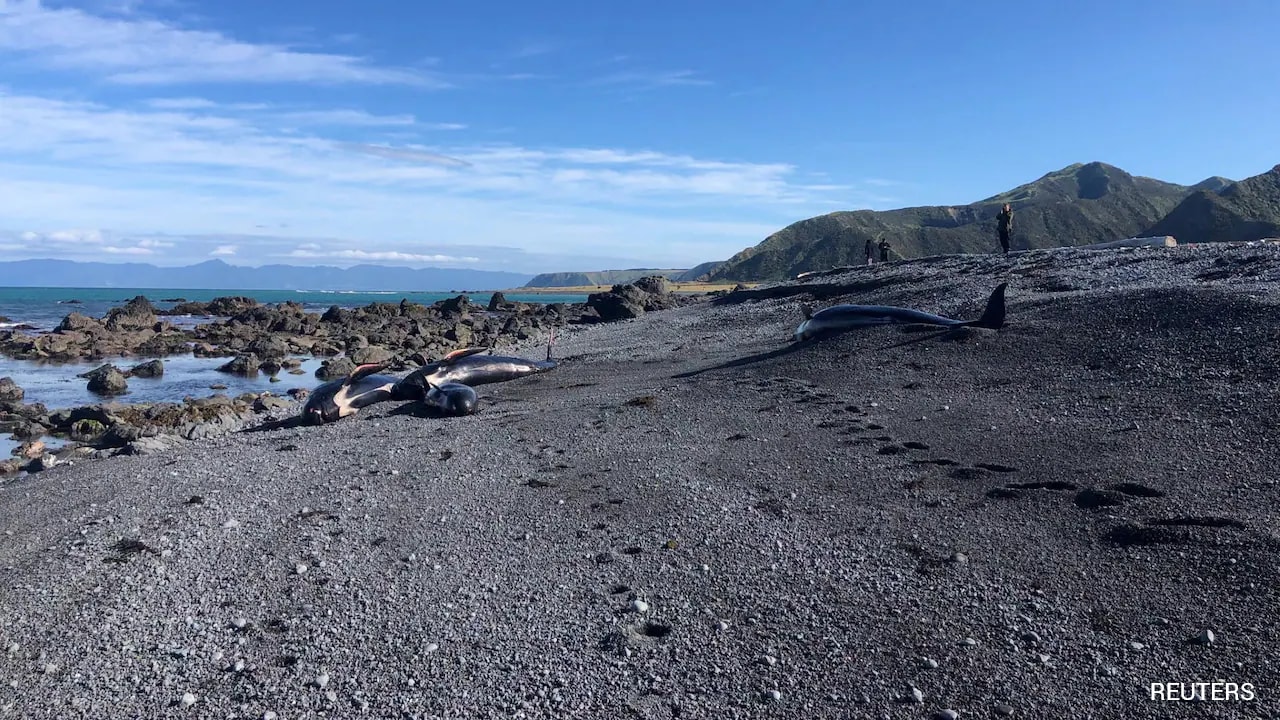
Fifty whales stranded on a beach sounds like a headline that calls for heavy cranes, giant slings, and a fleet of boats. Often, the most lifesaving tool in the sand is a five-dollar plastic bucket.
When pilot whales or other cetaceans wash ashore along New Zealand's rugged coastline, time runs out fast. Out of the water, gravity crushes internal organs and restricts blood flow. Exposed skin dries out, cracks, and overheats under the sun or wind. You can't just grab a tail and yank a one-ton animal back into the surf without risking severe injury to the whale or yourself.
That's why bucket brigades, wet sheets, and calm coordination show up again and again in New Zealand stranding responses. People see photos of volunteers hauling seawater in buckets beside dozens of beached whales and think it looks improvised. Honestly, it isn't. When mechanical gear can't reach soft sand or shallow flats in time, steady cooling and hydration keep animals alive until the tide turns and trained crews can attempt a safe refloat.
Why Stranded Whales Face Immediate Danger on Land
Picture a pod of fifty whales lying side by side on a low-gradient sandbar. In the open ocean, water supports their weight so muscles, lungs, and circulation work effortlessly. On dry sand, that buoyancy vanishes in seconds.
A whale's body isn't built for terrestrial load-bearing. Heavy pressure presses against the chest and abdomen, making breathing harder and straining the heart. Overheating is another silent killer. Cetaceans rely on water to shed metabolic heat, and thick blubber designed to trap warmth in cold seas turns into an oven once the animal is stranded.
Sunburn and skin dehydration start quickly, too. Cetacean skin lacks the outer keratin layer many land mammals have, which makes it sensitive to drying and abrasion. Pouring cool seawater over backs and keeping wet sheets or towels draped carefully away from blowholes helps lower thermal stress and stops skin from baking.
I've seen well-meaning folks rush up to a stranded whale and make things worse within minutes. Pushing on a flipper, sitting on a body, or splashing water directly into the blowhole can cause panic, injury, or water inhalation. Keeping noise low and leaving the blowhole completely clear isn't just polite—it's basic survival math for the animal.
Why New Zealand Sees So Many Mass Strandings
New Zealand has one of the highest rates of whale and dolphin strandings in the world. Long-finned pilot whales make up a huge share of large mass strandings there.
Geography plays a major role. Gently sloping beaches, wide sandspits, and shallow bays—such as those around Golden Bay and Farewell Spit at the top of the South Island—create tricky conditions. To an echolocating whale using sound pulses to map its surroundings, a shallow, gently sloping sandy bottom can return faint or confusing echoes compared to a steep rocky drop-off.
Social bonds add another layer. Pilot whales live in tight-knit pods with strong group cohesion. If one animal becomes disoriented, sick, or caught on a sandbar, others often stay close or follow distress calls right into shallow water. What starts as one whale in trouble can turn into a pod of fifty or more stranded together.
Researchers and marine agencies still debate the exact trigger in many events. Illnesses, navigation errors, predator avoidance, storms, or shifts in local marine conditions can all play a part. Anyone claiming a single neat explanation for every stranding is oversimplifying a complex biological puzzle.
What Volunteers Actually Do With Buckets and Sheets
When a mass stranding hits, the work looks simple from a distance and feels grueling up close. Cold seawater, shifting sand, windburn, and hours of standing or kneeling take a toll fast.
Rescuers typically focus on a few practical priorities while waiting for high tide and specialist coordination:
- Keep skin cool and damp: Carry seawater in buckets to wet down exposed bodies steadily, avoiding the blowhole so the whale can breathe freely.
- Shield sensitive areas: Use light, wet fabric or sheets over parts of the body to slow drying without trapping heat or covering breathing openings.
- Support posture gently: Dig shallow trenches under flippers or use supportive slings under guidance from trained leads so pressure points ease without twisting the spine.
- Control the crowd: Keep dogs away, hold back curious onlookers, and give animals space so stress hormones don't spike further.
Buckets aren't a cure-all, and nobody pretends they replace veterinary assessment or coordinated refloating lines. Still, on a stretch of beach where fifty whales are waiting out a low tide, a steady line of people moving water buys precious hours.
Coordination Matters More Than Heroics
Big rescues look dramatic on camera, yet the best outcomes usually come from discipline rather than impulse. In New Zealand, the Department of Conservation works alongside trained community networks such as Project Jonah to manage stranding responses, assess animal health, and decide when refloating is safe or when humane euthanasia is the compassionate choice for suffering animals.
Not every stranded whale can be saved. Some arrive already weak, injured, or too exhausted to swim clear of shallow surf even after being turned seaward. Refloating a sick whale just to watch it re-strand a mile down the beach doesn't help the pod.
That's a hard truth people sometimes resist when emotions run high on a beach. Good rescue work balances hope with realism. You do everything practical to keep viable animals stable, follow safety rules around heavy tails and shifting tides, and listen to wildlife officials on the ground.
Practical Steps If You Ever Find a Stranded Whale
If you're walking a coastline and spot a stranded whale or dolphin, don't try to wrestle it back into the water on your own.
- Call local wildlife authorities right away: In New Zealand, report strandings immediately to the Department of Conservation emergency hotline so trained teams and medics can mobilize.
- Keep a safe distance: Stay clear of the tail and head, keep pets on a lead or well away, and avoid crowding the animal.
- Protect the blowhole at all costs: Never pour water, put towels, or apply sunscreen or lotions near the blowhole.
- Wait for trained guidance before cooling: If safe and instructed by wildlife responders, use buckets of seawater to keep exposed skin moist while keeping noise down.
- Sign up for training ahead of time: If you want to help during future events rather than just watch, take a formal marine mammal medic course with an accredited group like Project Jonah so you know the protocols before an emergency happens.