More than 390 people are dead and nearly 1,500 remain missing across the Nepal-Tibet border following a catastrophic flash flood that obliterated entire valleys on Wednesday. The numbers are staggering. Among the unaccounted for are roughly 177 citizens from India, 90 from the United States, 39 from Australia, and 33 from the United Kingdom. In total, foreign nationals from 35 countries have vanished into the mud and debris. While competing headlines obsess over tallying the missing by their passport colors, they miss the fundamental failure that led to this moment. This was not simply a tragic act of nature. It was a predictable disaster amplified by an unchecked tourism industry and severe gaps in high-altitude risk management.
For decades, the Himalayan tourism machine has sold a sanitized version of danger. Travelers pay thousands of dollars for spiritual pilgrimages and extreme trekking, expecting that modern logistics offer a safety net. The events at the Rasuwagadhi border crossing prove that net does not exist.
The Anatomy of an Unwarned Catastrophe
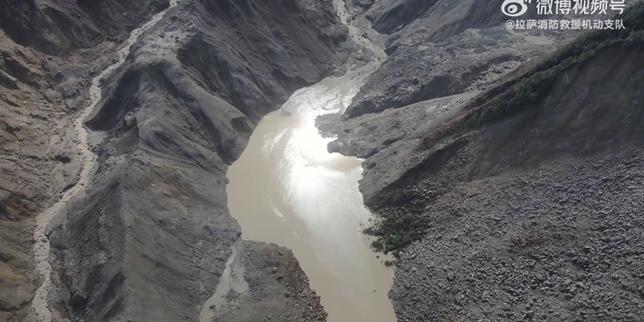
The initial reports heavily suggested a seismic event triggered the devastation. This was incorrect. The United States Geological Survey and subsequent analysis of Planet Labs satellite imagery confirmed there was no earthquake. Instead, a massive landslide of ice and rock collapsed into the Lhende River, located roughly 12 miles northeast of the Nepal-China border.
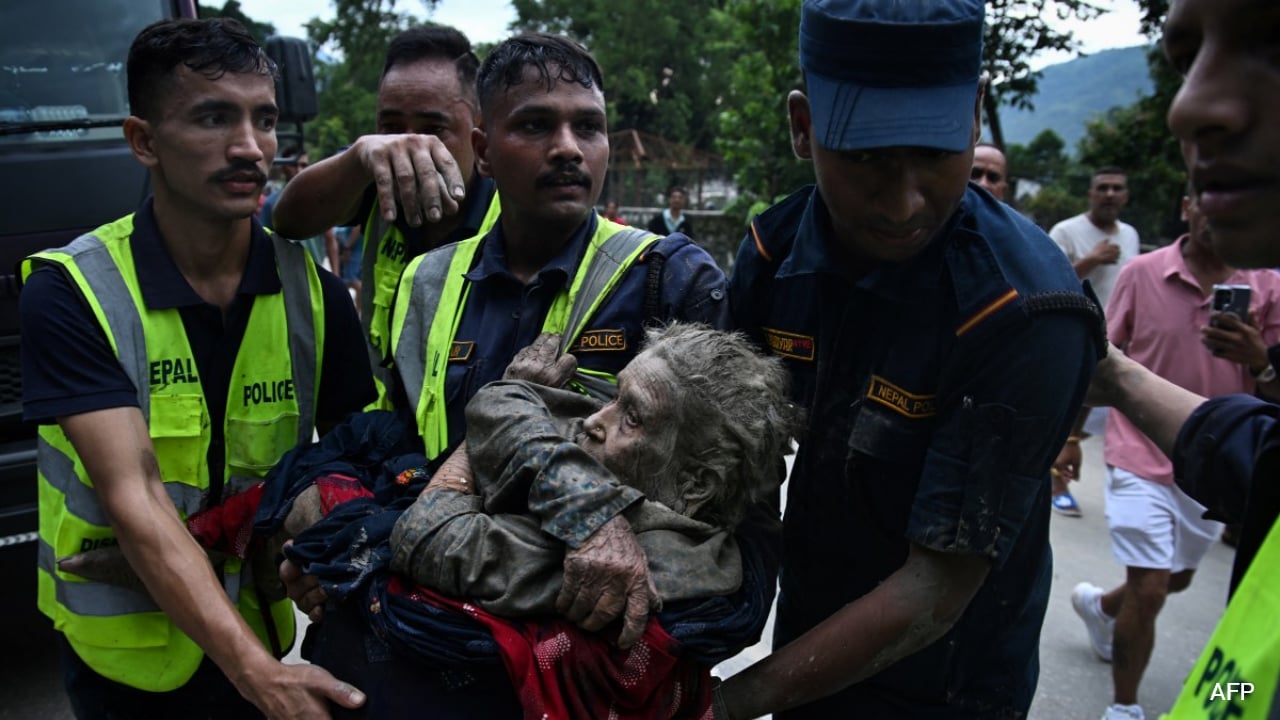
When millions of tons of glacial ice and rock plummet into a constricted river system, it creates a localized tsunami of debris. The resulting wall of mud, water, and pulverized infrastructure moved with such speed and volume that it gave residents and tourists zero time to evacuate. Keshav Prasad Baral, a 68-year-old survivor treated at a local hospital, described the event not as a flood, but as a "huge gush of mud coming straight towards us".
This distinction matters. A traditional flood rises. A debris-laden flash flood driven by glacial collapse acts like a liquid bulldozer. It scours the valley floor, upending trucks, ripping power plants from their foundations, and wiping out settlements like the 25-home village of Soley in the Nuwakot district. The destruction of dozens of bridges and 25 miles of essential roadways instantly trapped anyone who managed to survive the initial impact.
We have known about the compounding risks of melting glaciers and unstable mountain geology for years. The International Centre for Integrated Mountain Development (ICIMOD) has repeatedly published data on the fragility of these high-altitude corridors. Yet, early warning systems in the region remain woefully inadequate. A satellite picking up a debris flow after the fact is useless to the people standing in its path.
The Business of Altitude and Pilgrimage
To understand why citizens from 35 countries were caught in this specific chokepoint, you have to look at the economics of Himalayan travel. The victims were not just scattered backpackers. Hundreds were part of highly organized, lucrative tour groups.
The most significant demographic among the missing foreigners are Indian nationals. According to the Nepal Tourism Board, at least 177 Indians are missing. Many of these individuals were undertaking the Kailash Mansarovar Yatra. Mount Kailash and Lake Mansarovar, located in Tibet, are deeply revered in Hinduism, Buddhism, and Jainism. Because direct access from India is often logistically and politically complicated, tens of thousands of pilgrims travel through Nepal, crossing into China via land borders like Rasuwagadhi.
Travel operators funnel massive groups through these narrow geographical bottlenecks. Agencies like Samrat Tours, Leaf Holiday, and Himalayan Glacier manage the logistics, moving groups of 30 to 50 people at a time. The Isha Foundation, which organizes large-scale spiritual journeys, also had members caught in the disaster.
The problem is the assumption of safety in numbers. Tour operators build itineraries based on border crossing schedules and weather windows, not real-time geological stability. When a disaster strikes, the sheer density of tourists in remote, high-risk zones turns an emergency into a mass casualty event.
Sagar Pandey, the chief executive of a Himalayan tourism operator, flew over the disaster zone in a helicopter shortly after the flood. His assessment was grim. "There are no human-made things, no human settlement left," he reported. "Everything is just flat. So anyone in the hotel, the restaurant, or the car, I believe that everybody is gone".
These are the sobering realities of the adventure tourism economy. Companies market the majesty of the Himalayas but often offload the ultimate risk onto local authorities who lack the infrastructure to mount mass rescues in a decimated landscape.
Geopolitical Friction in the Rescue Zone
A disaster of this scale requires immediate, coordinated response. However, the geographic reality of the Lhende River valley complicates everything. The flood originated in Tibet and smashed through into Nepal. This means the rescue and recovery operations are inherently split across a heavily militarized and strictly controlled international border.
On the Chinese side, state media reported at least 558 people missing, including 260 foreign nationals. Chinese authorities deployed 800 emergency workers, sniffer dogs, and speedboats to the Gyirong land crossing. Premier Li Qiang traveled to the affected area to oversee the search efforts.
On the Nepali side, the National Disaster Risk Reduction and Management Authority faces a logistical nightmare. With 25 miles of roads gone, ground access is nearly impossible. The Nepali army has resorted to helicopter rescues, pulling more than 100 survivors from affected areas by Thursday morning. Families of the missing gather outside military barracks in Nuwakot and Dhading, desperate for updates that authorities simply do not have. The disruption of cellular and satellite communication links leaves consulates flying blind.
The International Federation of the Red Cross launched a $31 million emergency appeal, noting that up to 93,000 people may be affected across the region. But money cannot immediately rebuild washed-out bridges. Rescue teams are finding bodies hundreds of miles downstream in the Chitwan district. The physics of a debris flow mean that many of the missing will likely never be recovered.
Furthermore, the danger has not passed. Experts like Qianggong Zhang from ICIMOD warn that massive debris blockages remain lodged upstream on the border. If that blockage fails, a secondary flood will wipe out whatever recovery efforts are currently underway.
Reassessing High-Risk Tourism Infrastructure
The international response so far has followed a predictable script. Embassies set up hotlines. Politicians issue statements of solidarity. The US government pledged $500,000 in emergency assistance, while nations from Australia to the UK scramble to track down their citizens through fragmented tour agency logs.
But tracking the dead and missing is reactive. The industry needs a fundamental restructuring of how it operates in the Himalayas.
First, the concept of carrying capacity must be strictly enforced. The Rasuwagadhi border cannot safely process the volume of pilgrims and trekkers pushed through it during peak season. When you have hundreds of people waiting in hotels and staging areas directly adjacent to volatile river systems, you are staging a tragedy. Quotas on daily crossings must be lowered and rigidly enforced by both Nepali and Chinese border authorities.
Second, the reliance on historical weather patterns is obsolete. Climate shifts are aggressively destabilizing glacial structures. Real-time, localized monitoring systems—acoustic sensors, ground-penetrating radar, and upstream water volume gauges—must be mandatory near all major tourist bottlenecks. Tour companies pulling in millions of dollars in revenue should be heavily taxed to fund these early warning grids. If a valley cannot be actively monitored, it should not be sold as a tourist destination.
Finally, operators must face stricter liability requirements. Selling a high-altitude expedition requires more than securing permits and booking hotels. Agencies must be required to maintain independent satellite communication devices for every group, ensuring that a severed cell tower doesn't result in total blackout.
The Nepal border floods expose a bitter truth about the modern adventure economy. We have commodified the world's most dangerous environments without investing in the infrastructure required to survive them. Tourists from 35 countries trusted a system that was fundamentally broken. Until the governments and agencies profiting from these routes take the physical realities of the mountains seriously, the next catastrophe is already waiting in the ice. Stop selling the illusion of safety, and start building the mechanics of survival.