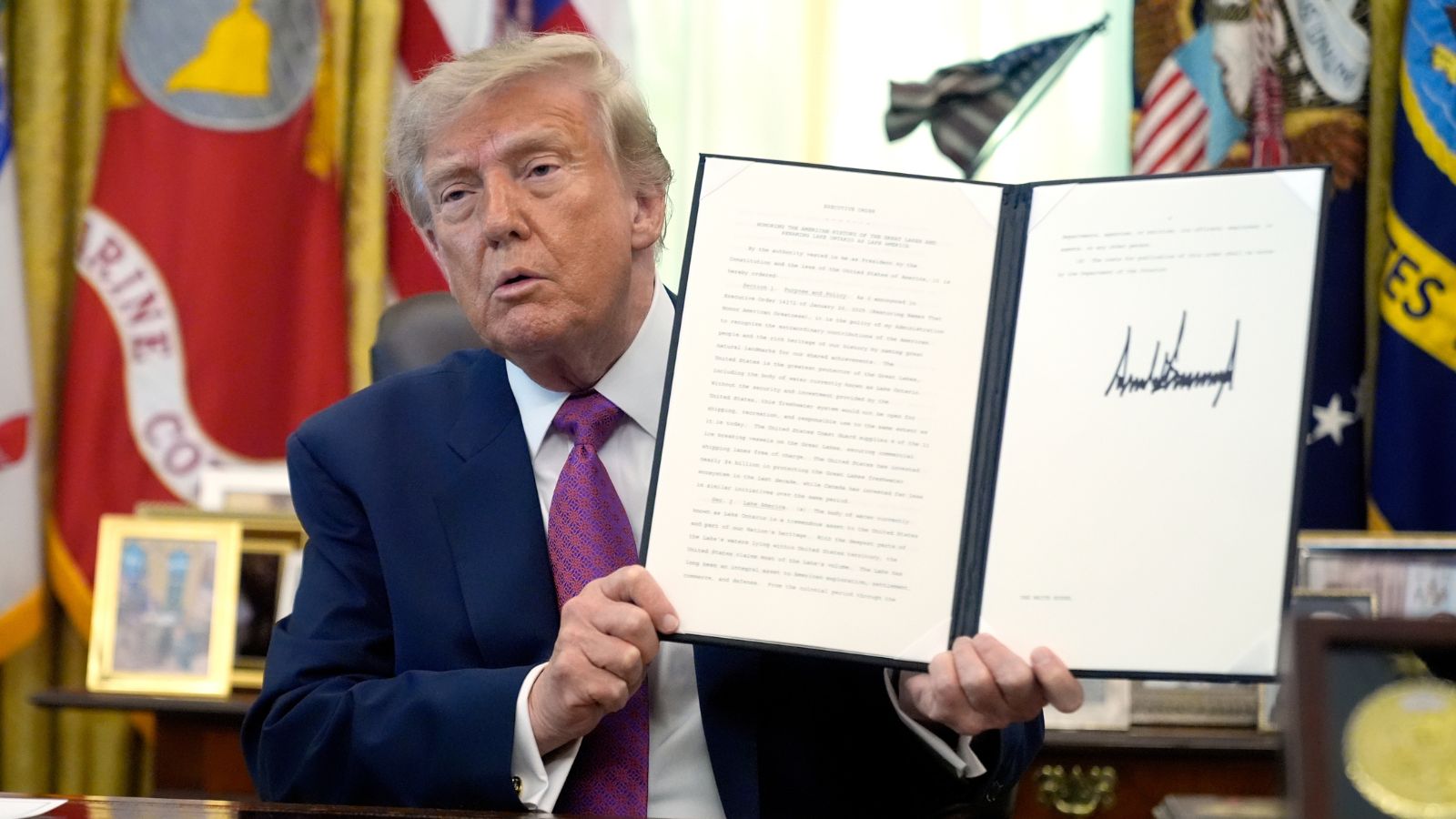
The foreign policy establishment is having a collective meltdown over Donald Trump’s assertion that Vladimir Putin will not attack NATO territory. Washington thinks tanks are hyperventilating. Cable news pundits are dusting off their maps of the Suwalki Gap. European diplomats are drafting emergency communiques while clutching their pearls.
Everyone agrees on the lazy consensus: Trump is naive, reckless, and playing right into the Kremlin's hands.
They are wrong. Not just slightly mistaken, but fundamentally misunderstanding the basic mechanics of modern statecraft and deterrence.
Strip away the emotional hysteria, look at the actual incentives driving Moscow, and a different reality emerges. Putin is not a comic book villain plotting random global domination. He is a rational, risk-averse actor operating within strict resource constraints. Attacking a NATO member does not advance his strategic goals. It achieves the exact opposite.
The Dogma of Automatic Escalation
For three decades, the security establishment has peddled a singular, unyielding dogma: Article 5 is a magical force field, but if Russia pokes even an inch past it, the entire international order collapses into nuclear ash unless America immediately responds with overwhelming force.
This view treats deterrence as a binary switch. Either you have absolute protection or total vulnerability. Real life does not work that way.
Deterrence is about cost-benefit analysis. Putin’s entire playbook in Ukraine, Georgia, and Syria relies on operating in the gray zone—below the threshold that triggers a collective military response. He pushes until he meets immovable resistance, then he stops.
NATO represents absolute immovable resistance. Russia’s conventional military apparatus is currently grinding through an attritional meat grinder in the Donbas. They have lost thousands of pieces of heavy armor, vast stores of precision munitions, and hundreds of thousands of experienced personnel. Rebuilding that force to a standard capable of threatening the Polish border or the Baltic states will take a decade of heavy economic mobilization, assuming sanctions do not permanently strangle their industrial base.
Suggesting that a depleted Russian military exhausted by a regional conflict is going to pivot and march on Berlin or Riga is military fantasy. It is designed to keep defense budgets bloated and bureaucratic relevance high.
The Real Threat Is Not Tanks Rolling Across Borders
By obsessing over a conventional Russian invasion of Western Europe, the foreign policy apparatus is fighting the last war. They are preparing for 1989 while ignoring 2026.
Moscow does not need to send a single tank across the Estonian border to achieve its objectives. Modern competition happens in domains that Article 5 was never built to stop:
- Subsea fiber-optic cable sabotage
- GPS spoofing over the Baltic Sea
- Weaponized migration flows pushed across Finnish checkpoints
- Sophisticated ransomware campaigns targeting critical infrastructure
- Political subversion financed through opaque shell companies
These tactics work precisely because they sit below the threshold of war. Trump’s critics focus entirely on military invasion because it fits their theatrical worldview. Meanwhile, they ignore the gray-zone attrition happening right now because it requires actual administrative competence to fight, rather than just shouting about Article 5 on television.
Why Saying It Out Loud Works
The establishment believes Trump’s rhetoric undermines deterrence because it signals weakness to Moscow. They think deterrence only functions if you maintain a posture of constant, breathless panic about the next imminent invasion.
History suggests the opposite. Credible deterrence requires clarity about what you will defend, combined with a recognition of what your adversary actually wants.
Putin understands power, not press releases. When Trump says Moscow will not touch NATO territory, he is not giving a green light. He is stating a hard geopolitical calculation: the juice is not worth the squeeze. Russia's strategic priorities lie in securing its southern and western flanks, maintaining regime survival, and extracting economic value from non-Western partners like China and India. Getting into a direct kinetic war with a thirty-nation alliance possessing a combined GDP tens of times larger than Russia's is a quick route to national suicide.
Pretending that Putin is an irrational actor bent on destroying the world forces unnecessary escalation and crowds out diplomatic off-ramps. It treats every local dispute as an existential test of Western survival. That is how regional conflicts turn into global catastrophes.
Stop listening to the architects of past foreign policy failures who treat every foreign leader as Hitler reborn. Look at the balance sheets, the logistics, and the stark limits of Russian power.
Putin isn't touching NATO territory. Not because he loves the West, but because he likes breathing.