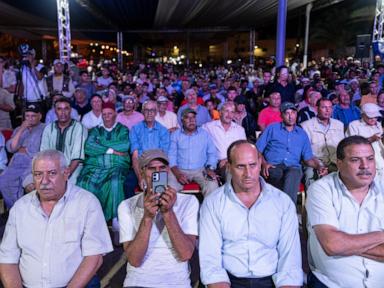
When millions of Moroccans were invited to cast ballots for a new parliament, the most striking feature of the exercise was not who won or lost. It was the vast, echoing silence of the streets. Voter turnout collapsed to roughly 38 percent, painting a stark portrait of a population that has largely detached itself from formal political machinery. To understand why this legislative contest failed to capture the imagination of the public, one must look backward to the smoke of the previous year's youth-led demonstrations and outward toward the heavily guarded fences of northern border enclaves.
For months, the North African kingdom has walked a tightrope between macroeconomic success and severe microeconomic distress. On paper, the numbers tell a story of regional ambition. Gross domestic product growth projections hover above four percent, the country remains a magnet for foreign direct investment, and massive infrastructure projects are transforming coastal hubs. Yet this high-level momentum has failed to trickle down to the street level where ordinary citizens navigate persistent inflation, stagnant wages, and high unemployment rates, particularly among the under-30 demographic. Also making waves recently: The UN Human Rights Report on Nicaragua Misses the Real Trap.
The frustration boiled over in previous months when youth-led demonstrations erupted across urban centers like Casablanca and Rabat. Protesters demanded meaningful reform in healthcare, education, and public administration. Unlike the broader regional uprisings of the past decade, these movements did not challenge the foundational architecture of the state, but they did sharply target the competence and responsiveness of elected officials. The state response relied heavily on security measures and subsequent crackdowns, leaving deep scars of distrust between the younger generation and the governing class.
Parallel to this domestic pressure cooker, a desperate impulse toward migration has continued to grip the nation's youth. Mass attempts to breach the borders of Spanish enclaves like Ceuta highlighted a profound sense of economic claustrophobia. When young people view swimming toward a razor-wire fence or hiding in container trucks as a more viable path to upward mobility than casting a ballot, the social contract is fractured. These migration surges are not merely legal or security infractions for Madrid and Rabat to manage; they are referendum votes cast with human feet against domestic opportunity structures. More details on this are detailed by TIME.
Against this backdrop, the political parties rolled out campaigns that felt remarkably disconnected from the street's raw anger. More than seven thousand candidates from dozens of political formations vied for the 395 seats in the lower house of parliament. Yet the structural limits of Moroccan governance mean that winning an election does not translate to total control over state policy. The executive authority remains anchored in the monarchy, which retains direct control over sovereign domains including national security, foreign policy, and strategic long-term development. Parties can manage social services or municipal budgets, but they cannot rewrite the economic fundamentals on their own.
This institutional reality fosters a deep cynicism among voters. If parliament cannot fundamentally alter the distribution of wealth or guarantee employment, why queue at a polling station? For many citizens, staying home was not apathy, but an intentional act of protest. Voter registration numbers dropped significantly compared to previous election cycles, with youth participation registering in the low single digits relative to their share of the population. The bureaucratic hurdles required just to get on the electoral rolls only compound the friction, acting as a deterrent for a population already skeptical of state institutions.
The incoming government inherits a country racing toward a massive international spotlight. Preparations are already underway for Morocco to co-host the 2030 FIFA World Cup alongside Spain and Portugal. Billions of dollars are flowing into stadiums, high-speed rail lines, and hospitality infrastructure to showcase the nation to a global audience. Government planners view the tournament as a historic accelerator for economic diversification and tourism receipts.
However, mega-events do not automatically cure structural inequality. Stadiums and luxury hotels do not employ the millions of informal workers or fix crumbling rural schools where children walk miles daily through difficult terrain just to reach a classroom. If the wealth generated by international partnerships and tournament preparation remains concentrated at the top, the underlying pressures that drove youth into the streets and toward the border fences will only intensify.
The low turnout numbers serve as an early warning indicator for the administration that takes the reins of parliament. Fixing the disconnect requires far more than cosmetic cabinet reshuffles or polished campaign slogans delivered from party headquarters. It requires structural changes to job creation, transparent delivery of public services, and a genuine acknowledgment that economic growth means little if it bypasses the majority of the citizenry. Until those fundamentals shift, the tension between the state's ambitious modernization plans and the gritty reality of everyday life will remain the defining friction point of Moroccan politics.