The air in Salvador da Bahia often smells of salt, dendê oil, and the quiet, simmering dread of a city caught in a crossfire. This is a place where history runs deep, where Afro-Brazilian culture pulses through every cobbled street and hillside neighborhood. It is also the historic heartland of Luiz Inácio Lula da Silva. When Brazil went to the polls, Bahia was supposed to be a sure thing, a loyal bastion where the president could reliably count on overwhelming margins of working-class gratitude.
Instead, the asphalt has grown stained and heavy with a different kind of inheritance.
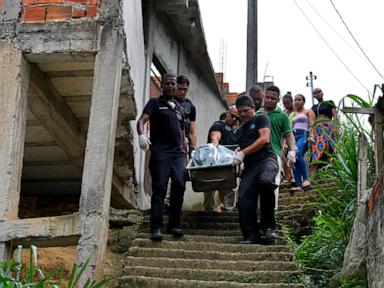
Consider the afternoon Evilásio Santos da Silveira Júnior stepped out to run a simple errand. He was thirty-three years old. He did not return. He bled out on a favela pathway in Salvador after a bullet shattered his arm, cutting through tissue and bone with casual cruelty. What happened next is a bitter dispute that repeats itself across the state with numbing frequency. State authorities claim he was caught in the middle of a brutal turf war between heavily armed trafficking factions, hinting at complicity. His family—grieving, furious, and deeply distrustful—insists he had no connection to the underworld. They point accusatory fingers at the police, claiming state forces turned a routine raid into an unprovoked execution.
"I can't say I feel protected by the police," his sister, Magnólia Nascimento, told reporters, her voice flat with a exhaustion that transcends politics. "Unfortunately, they are often the perpetrators."
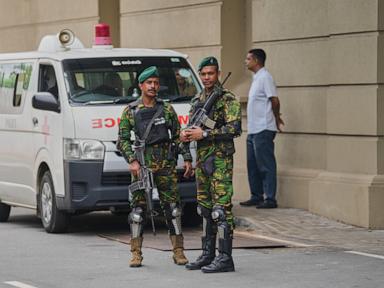
This is the human cost of a macro-level transformation that caught the country flat-footed. Over the past decade, transnational crime syndicates expanded their reach into Bahia not merely to feed local drug markets, but to secure a pipeline. With its expanding container ports and coastal geography, Bahia sits squarely at the crossroads of international shipping routes leading to Europe and Asia. Cocaine cartels recognized the strategic value of the coastline. Gang wars followed, vicious and territorial. And when the gangs moved in, the state responded with a militarized heavy hand, turning residential alleys into combat zones.
For years, Lula’s political dominance in Bahia rested on a foundation of profound social investments. Federal welfare programs, lifted living conditions, and historical alignment with the aspirations of ordinary baianos meant the Workers' Party could rely on staggering margins—capturing roughly seventy-two percent of the vote here in past runoffs.
Bullets, however, pierce social programs.
When public safety collapses into an everyday crisis, loyalty faces a severe test. Voters who once felt seen by leftist economic policies now find themselves staring down boarded-up storefronts, avoiding dark alleys, and calculating risks every time a child walks to school. The fear is palpable, and political opponents have been quick to weaponize it. Figures aligned with the far-right opposition seized on the soaring homicide rates and heavy-handed police tactics to challenge the federal government's competence, arguing that Lula’s administration was out of touch with the bleeding reality on the ground.
The anxiety has trickled down to individual voters who find themselves trapped between competing loyalties. Jane Souza, a resident of Salvador, captured the mood of weary hesitation ahead of the vote.
"I voted for Lula last time, but I'm not convinced now," she admitted, echoing a sentiment vibrating through many working-class kitchens. Yet, the alternative feels equally murky to many, driven more by polarized vendettas than local healing.
The federal government scrambled to respond, injecting resources and trying to rebrand its security posture. But trust, once eroded by the sound of nightly gunfire, cannot be easily paved over with campaign promises. The tragedy in Bahia reveals a harsh truth about modern political strongholds: loyalty is elastic, but continuous bloodshed stretches it to its absolute limit.
Night falls over Salvador. The Atlantic breeze rolls in, carrying the distant hum of traffic and the quiet, persistent hum of helicopters cutting across the dark sky, watching over streets that belong to no one, and everyone, at once.
Street violence in Bahia threatens Lula's support ahead of Brazil election
This article provides an in-depth look at how escalating security crises in Bahia directly threatened political loyalties during the Brazilian election cycle.