Salt crusts on everything. It coats the gray steel of the bulkheads, stiffens the laces of leather boots, and settles into the corners of tired eyes after a twelve-hour watch in the Combat Information Center.
Out here, in the sweltering, unpredictable waters of the Fifth Fleet—the Arabian Gulf, the Red Sea, the Gulf of Oman—time does not move in neat, civic cycles. It moves in fuel replenishments, flight deck recoveries, and the low, constant hum of gas turbine engines vibrating through the soles of your feet.
Yet every two years, a quiet miracle interrupts the routine of warfighting.
Imagine, for a moment, a hypothetical young sailor we will call Petty Officer Second Class Elena Vance. She is twenty-four years old, a radar technician from a town in Ohio where the biggest traffic jam happens behind a combine harvester. Right now, she is standing in a narrow passageway aboard a guided-missile destroyer, sweating through her navy-blue coveralls. Above her, the ship is tracking drone trajectories and keeping commercial shipping lanes open in one of the most volatile maritime corridors on earth.
In her hand, she holds a piece of paper. Not a tactical directive. Not a maintenance log. A ballot.
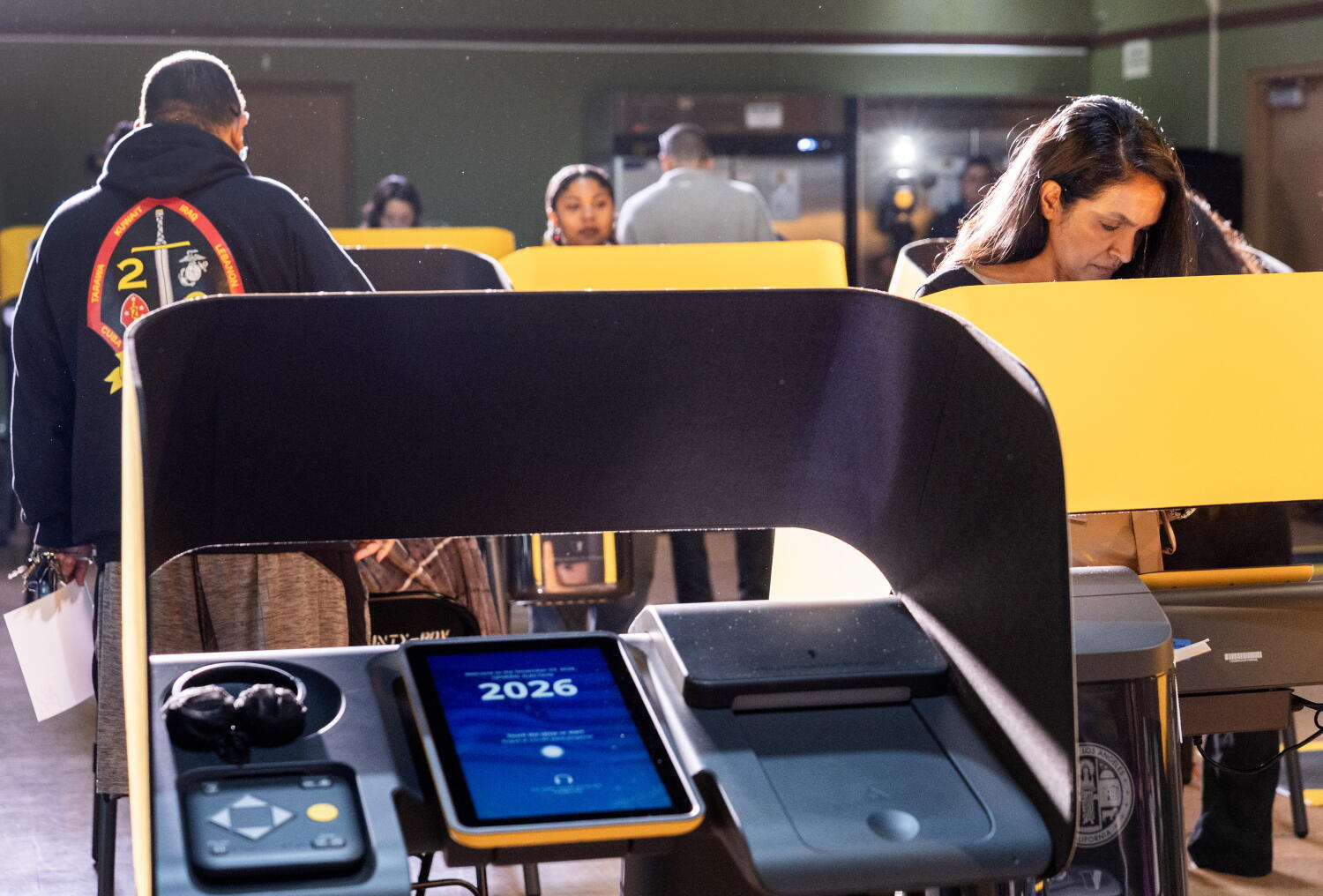
Most people back home think of voting as a minor Tuesday errand. You drive to a local elementary school gymnasium, wait in line behind your neighbors, complain slightly about the parking, fill in a few bubbles with a felt-tip pen, and walk out with a sticker to slap onto your lapel. It is effortless. So effortless, in fact, that millions of people sitting ten minutes away from a polling station simply decide not to bother.
Out here, nothing is effortless.
The Invisible Weight of the Envelope
To understand what it takes for a sailor on deployment to cast a vote, you have to strip away the romanticized posters of smiling recruits and look at the sheer logistical grit required to move a single piece of mail across an ocean.
When you are operating in the Middle East, you do not have a street address. You have an Fleet Post Office box—an FPO AE designation—that acts less like a mailbox and more like a moving target. Your destroyer might be patrolling the Bab el-Mandeb Strait on Monday, pulling into Bahrain for emergency repairs on Thursday, and steaming back out into the North Arabian Sea by Sunday.
Think of the military postal system as a relay race run blindfolded across shifting sand.
A ballot printed in a county clerk’s office in Michigan or Texas has to travel to a stateside military mail hub, get sorted onto a military transport flight to the Middle East, clear regional customs, land at a naval support base, get loaded onto a supply ship or a twin-engine C-2A Greyhound cargo plane, and finally drop onto the pitching flight deck of an aircraft carrier—before being ferried via helicopter to the smaller destroyers steaming miles away.
And that is only half the journey. Once Elena fills in her choices, that envelope has to make the exact same trip in reverse, beating a strict, unforgiving statutory deadline set by state election boards that do not pause their clocks for rough seas or operational security.
I remember the first time I watched this happen during an autumn deployment. I wasn't thinking about grand constitutional theory. I was exhausted, nursing a lukewarm cup of burnt coffee on the mess decks, watching our ship's Voting Assistance Officer—an overworked supply lieutenant who had volunteered for the collateral duty—spread stacks of white and blue envelopes across a bolted-down steel table.
The sailors lining up didn't look like political pundits. They looked like kids who needed a haircut and eight hours of uninterrupted sleep. Some were twenty-year-old seamen voting for the very first time in their lives. Others were salty Senior Chiefs who had cast ballots from the Persian Gulf during the nineties, from the Mediterranean in the two-thousands, and from the South China Sea a decade later.
Watching them lean over those tables, squinting under the harsh fluorescent lights as the ship rolled gently beneath their elbows, something shifted in my chest. Back home, politics feels like noise—an endless, exhausting shouting match on cable news and social media feeds. Out here, stripped of campaign yard signs and television attack ads, the act of voting feels entirely different. It feels sharp. Real. Heavy.
Why the Uniform Changes the Math
There is an old, cynical assumption among people who have never served that military members are a political monolith, or that deployed troops are too distracted by immediate survival to care about local school board races and congressional seats back home.
Both assumptions miss the mark completely.
A Navy warship is one of the most radical social experiments in modern society. Inside a hull roughly the length of two football fields, you compress three hundred or five thousand people from every conceivable background—rural farm towns, inner-city neighborhoods, wealthy suburbs, border communities—and tell them their lives depend entirely on trusting the person standing watch next to them. They argue fiercely about sports, music, and politics on the mess decks, and then five minutes later, they stand shoulder-to-shoulder fighting a simulated engine room fire.
They care deeply about the country they left behind because they are the ones paying the upfront cost for its foreign policy.
When politicians in Washington debate defense budgets, Middle Eastern alliances, veteran healthcare, or the economy back home, those aren't abstract policy papers to a sailor standing watch in the Red Sea. Those decisions dictate how long their deployment gets extended. They determine whether their spouse back in Norfolk or San Diego can afford groceries and childcare on a junior enlisted paycheck. They decide whether the ship they are sailing on has the spare parts it needs to come home safely.
Silence is a luxury you cannot afford when your life is literally on the line.
Yet for decades, the system seemed almost designed to silence them. During the 2000 presidential election, thousands of military absentee ballots were famously disqualified or arrived too late to be counted, sparking national outrage and exposing how fragile the lifeline between deployed troops and their hometown precincts really was.
It took years of legislative overhaul—most notably the Military and Overseas Voter Empowerment (MOVE) Act of 2009—to force states to send out blank ballots at least forty-five days before a federal election and to allow electronic transmission of registration forms and blank ballots.
Even with modern upgrades, the friction hasn't vanished. It has merely changed shape.
The Anatomy of a Sea-Bound Vote
Consider what happens when a sailor like our hypothetical Petty Officer Vance decides she wants to vote while steaming through the Gulf of Oman.
First, she has to navigate a labyrinth of fifty different state laws. America does not have one unified election system; it has thousands of county-level systems, each with its own rules on witness signatures, ink colors, envelope sealing, and postmark deadlines. If Elena comes from a state that requires a physical signature on an oath printed on the back of a security envelope, she cannot simply click a button on a laptop.
She has to find her ship’s Voting Assistance Officer.
Every single command in the U.S. Navy—from massive nuclear-powered aircraft carriers down to coastal patrol boats—is required by federal law to designate and train Voting Assistance Officers. During election years, these officers become part-time election lawyers, part-time logistics coordinators, and full-time troubleshooters.
They set up makeshift voter registration drives on the mess decks. They tape posters near the ship's barber shop and the GEDUNK—the onboard convenience store where sailors buy energy drinks and snacks. They track down sailors who moved three times in four years due to military orders and have no idea which county actually considers them a resident.
Let’s trace the timeline of Elena’s vote:
- The Request: Months before November, Elena fills out a Federal Post Card Application (FPCA). This single form acts as both her voter registration and her absentee ballot request. Because internet bandwidth on a warship during active operations is heavily restricted—and occasionally cut off entirely during "River City" periods, when communications are darkened for operational security—she has to catch a window when the ship’s morale Wi-Fi or administrative computers are online to email or fax the form to her county clerk in Ohio.
- The Arrival: Forty-five days before the election, the clerk emails her a PDF of her local ballot. Elena prints it out on standard shipboard printer paper—often slightly warped from the humidity—and carefully folds it according to the strict assembly instructions required so the optical scanners back home won't reject it.
- The Backup Plan: What if operational tempo spikes? What if the ship enters a communication blackout and the email never comes through? Elena has an emergency parachute: the Federal Write-In Absentee Ballot (FWAB). It is a blank backup ballot kept in stock by her Voting Assistance Officer, allowing her to write in her choices for federal offices even if her official state ballot is sitting in a mailbag on a tarmac in Kuwait.
- The Return: Once sealed inside its security sleeve and outer envelope, Elena hands her ballot to the ship’s post office—a tiny, caged room buried deep in the hull where Navy Postal Clerks weigh packages and apply official military postmarks. That ink stamp is gold. In many states, a timely military postmark proves the ballot was cast before Election Day, even if rough weather delays the cargo plane carrying it home.
Look at that chain of custody. Think about how many hands touch that single piece of paper, how many miles of saltwater and airspace it crosses, and how easily the entire process could collapse if even one person along the chain treated it as just another piece of junk mail.
They don't.
What Democracy Looks Like Without the Noise
I have often wondered why the image of sailors voting at sea sticks with me so stubbornly years after leaving the fleet.
Maybe it is because, in the civilian world, we have grown deeply cynical about civic duty. We treat voting like a consumer transaction—something we do only if a candidate excites us, if the weather is nice, and if the line moves fast. We talk about democracy as if it is a finished building we simply inhabit, forgetting that it is actually a wooden ship on open water that leaks constantly and requires every hand on deck to keep bailing.
Out in the Middle East, nobody confuses democracy with a spectator sport.
When you are standing on the steel deck of a warship at two in the morning, watching the phosphorus glow in the wake behind the fantail while radar dishes spin silently above your head, the abstractions disappear. You realize that the country you love is not an idea floating in the clouds. It is a fragile agreement kept alive by ordinary people doing difficult, unglamorous things when nobody is watching.
In a cramped, windowless room below the waterline, a twenty-year-old sailor finishes filling in the ovals on a slightly damp sheet of paper, licks the glue on an envelope that smells faintly of diesel fuel and salt air, and drops it into a locked canvas mailbag bound for a helicopter waiting on the flight deck.