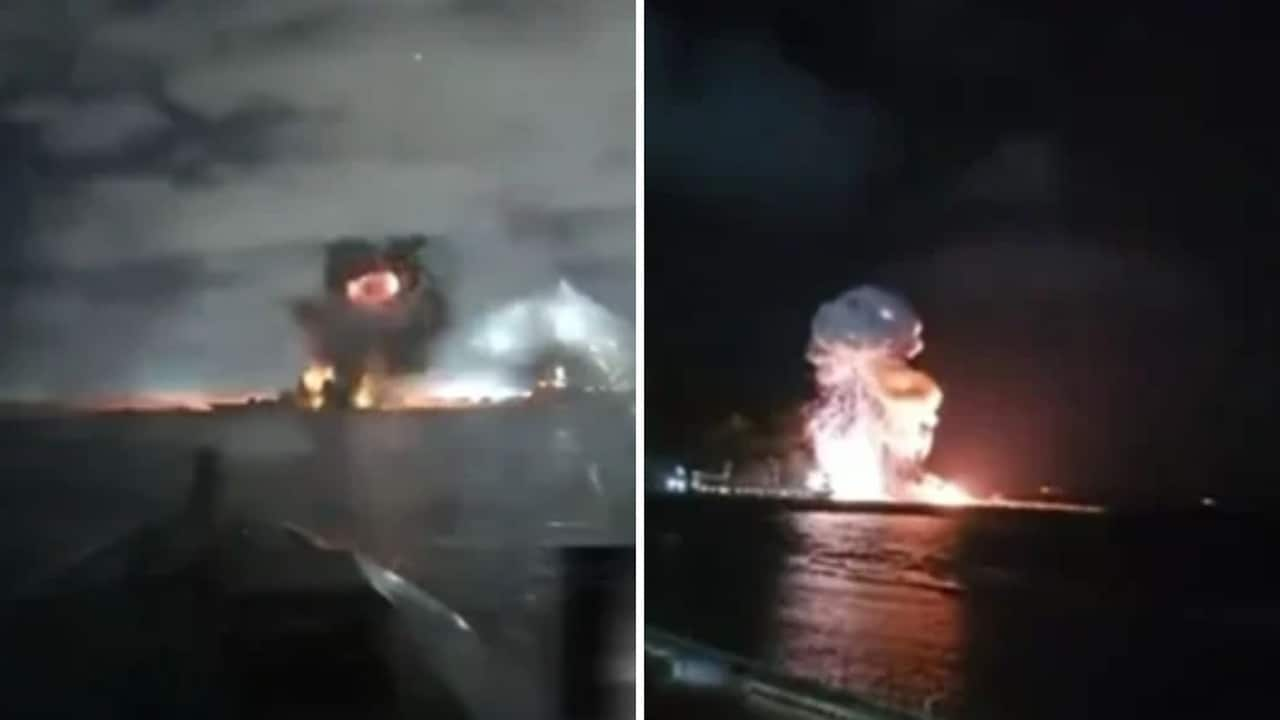
When Mexican soldiers are attacked in the immediate wake of a drug lord's arrest, it is rarely a chaotic burst of grief or blind rage. It is a calculated, pre-programmed military doctrine designed to paralyze the state before the prisoner can be transferred to a maximum-security facility or extradited to the United States. Cartels use coordinated blockades, heavy weaponry, and simultaneous assaults on military convoys to create overwhelming logistical friction, forcing commanders to choose between holding a high-value detainee and preventing civilian massacres in surrounding cities.
To understand why these retaliatory strikes happen within minutes of a capture, you have to look past the surface narrative of criminal revenge. Modern Mexican cartels do not operate like traditional street gangs or even twentieth-century mafia families. They function as decentralized paramilitary insurgencies with dedicated intelligence wings, rapid-response tactical units, and contingency plans drafted months in advance.
The Anatomy of a Cartel Counter-Offensive
The playbook is brutally consistent across regions, whether the target is in Sinaloa, Jalisco, Tamaulipas, or Michoacán. The moment a high-ranking plaza boss or cartel founder is detained by the Mexican Army (SEDENA) or the National Guard, an automated alert cascades through encrypted radio networks and commercial messaging apps. Within twenty minutes, the streets change.
Gunmen, known locally as sicarios, do not immediately charge the heavily armored military convoy holding their boss. Doing so would be suicide against trained infantry backed by air support. Instead, they execute a classic asymmetric warfare tactic known as area denial.
- Narco-blockades (Narcobloqueos): Armed cells hijack commercial semi-trucks, city buses, and delivery vans at major highway intersections and bridges. They slash the tires, douse the cabins in gasoline, and set them ablaze. This instantly cuts off reinforcements trying to reach the arrest site and traps the extraction team inside a shrinking perimeter.
- Diversionary Firefights: Secondary cells open fire on local police stations, municipal buildings, and patrolling military units miles away from the actual arrest. By creating multiple simultaneous emergencies, the cartel fractures the military's command-and-control focus and stretches medical evacuation resources thin.
- Civilian Infrastructure Attacks: Burning convenience stores, pharmacies, and bank branches—frequently OXXO stores and Banco del Bienestar locations—serves a dual purpose. It terrorizes the local population into sheltering indoors, clearing the streets of witnesses, while sending an unmistakable political message to federal officials in Mexico City that the economic cost of the arrest will be borne immediately by ordinary citizens.
When soldiers come under direct ambush during these operations, the attackers are typically using high-caliber weaponry smuggled south across the border. Standard-issue AR-15 and AK-47 variants are common, but shock troops deployed to rescue a top leader routinely carry Barrett .50-caliber anti-materiel rifles, belt-fed machine guns, and improvised armored vehicles known as monstruos. These vehicles are welded together from heavy steel plates over commercial truck chassis, capable of shrugging off standard 5.56mm military rounds while ramming through army checkpoints.
The Kingpin Strategy and Its Bloody Blowback
For nearly two decades, security policy in both Washington and Mexico City relied heavily on the Kingpin Strategy. The premise sounded logical on paper: decapitate the criminal organization by capturing or killing its top leadership, and the syndicate will fracture into weak, manageable pieces.
Decades of field reporting and hard data prove the exact opposite happens.
Removing a supreme leader does not dissolve the billion-dollar supply chains moving fentanyl, methamphetamine, and cocaine north. Instead, it creates a sudden, violent power vacuum. Subordinate commanders immediately turn their guns on one another to claim the vacant throne, while rival cartels invade the weakened territory to seize lucrative smuggling corridors.
More importantly, the Kingpin Strategy taught cartels how to survive decapitation. Organizations like the Sinaloa Cartel and the Jalisco New Generation Cartel (CJNG) evolved from rigid, top-down hierarchies into franchise networks. Local cells pay a tax to use the cartel's brand, weaponry, and supply lines, but they manage their own day-to-day violence and local extortion rackets.
Because the financial structure survives the loss of one man, the remaining lieutenants have every incentive to fight viciously when an arrest occurs. Demonstrating absolute loyalty during a crisis—even if the rescue attempt fails—secures a commander's standing in the post-arrest hierarchy. Conversely, failing to mobilize fighters when the boss is taken is a death sentence from internal enforcers.
Why Soldiers Are the Primary Target
A recurring question among observers outside Mexico is why cartels willingly engage the federal military, an institution with vastly superior training, artillery, and intelligence capabilities. Historically, organized crime groups avoided direct confrontation with national armies, preferring to bribe local police and operate in the shadows.
That unwritten rule died when the Mexican government deployed the armed forces directly into domestic policing roles.
Local and state police forces in many Mexican municipalities are chronically underfunded, poorly equipped, and deeply compromised by cartel payrolls. Faced with collapsed local institutions, consecutive presidents turned to SEDENA and the Mexican Navy (SEMAR) as the only forces capable of confronting heavily armed syndicates. When soldiers become the primary arresting officers, they naturally become the primary targets of cartel retaliation.
There is also a distinct psychological calculation behind attacking military convoys. Cartel leaders know that the Mexican public holds the armed forces in much higher regard than local police. By ambushing soldiers, burning military transports, and releasing slickly edited propaganda videos of the clashes on social media, cartels aim to shatter the image of state invincibility.
In the information war, a cartel does not need to defeat the Mexican Army on the battlefield. They only need to make the violence look uncontrollable. If television screens across the country show smoke billowing over major cities and soldiers pinned down behind patrol trucks, the public begins to question whether the government's security strategy is making them safer or putting them in the crossfire.
The Culiacán Precedent and Tactical Restraint
Any serious analysis of attacks on Mexican soldiers after an arrest must reckon with October 17, 2019. On that afternoon in Culiacán, Sinaloa, a joint military and National Guard patrol briefly captured Ovidio Guzmán López, one of the sons of imprisoned cartel boss Joaquín "El Chapo" Guzmán.
Within minutes, hundreds of heavily armed cartel gunmen converged on the city. They established nineteen roadblocks, trapped military patrols, surrounded residential housing complexes where soldiers' families lived, and opened fire with .50-caliber rifles. Faced with the prospect of mass civilian casualties and the slaughter of outnumbered troops, the federal government made the unprecedented decision to release Guzmán.
That single afternoon rewrote the rules of engagement across Mexico. It proved to every criminal syndicate in the country that overwhelming, immediate urban violence works. If a cartel can raise the humanitarian and political cost high enough within the first two hours of an arrest, the state might blink.
When the military returned for Ovidio Guzmán in January 2023, they corrected their tactical mistakes. They struck before dawn in a rural community outside the city, deployed Black Hawk helicopter gunships to suppress cartel convoys from the air, and immediately flew the detainee out of the state before roadblocks could trap the ground team. Even then, cartel gunmen attacked commercial and military aircraft at the Culiacán airport and waged a day-long battle across Sinaloa that killed ten soldiers and nineteen suspected cartel members.
The lesson from both operations is clear. Ground transport after a major arrest is the single most vulnerable phase of any law enforcement operation in Mexico. Every mile a military convoy drives with a high-value prisoner in the back is a mile where an ambush can be sprung from rooftops, drainage ditches, or hijacked semi-trucks.
The Economics of Retaliation
Sustaining a multi-hour assault against federal troops requires immense financial liquidity. Cartels can afford to lose dozens of trucks, burn hundreds of thousands of dollars in stolen merchandise, and pay overtime bonuses to hundreds of gunmen because their profit margins are astronomical.
Synthetic drugs changed the financial math of organized crime. Unlike marijuana or cocaine, which require vast agricultural land, specific climates, and vulnerable seasonal harvests, fentanyl and methamphetamine can be manufactured year-round in clandestine laboratories using imported chemical precursors. A single kilogram of precursor chemicals costing a few hundred dollars can yield synthetic opioids worth hundreds of thousands of dollars on the streets of North America.
This hyper-concentrated wealth allows cartels to absorb massive losses during a military clash without blinking. If ten armored trucks are destroyed by military helicopters during an ambush, the syndicate simply buys twenty more through front companies. If thirty gunmen are killed or arrested, recruiters pull desperate young men from impoverished rural communities or forcibly conscript migrants passing through cartel-controlled territory.
Furthermore, the weapons used to attack soldiers are often bought through decentralized straw-purchasing networks in the United States. Guns flow south in small batches hidden inside vehicle door panels and false floors, pooling into massive arsenals in Mexican border states. Because replacement weaponry is constantly moving across the border, cartels treat ammunition and firearms as disposable consumables during a high-profile rescue attempt.
The Trap of Reactive Security
Every time a major arrest triggers a wave of violence against Mexican troops, politicians demand tougher crackdowns, more deployments, and heavier weaponry. Yet sending thousands of additional soldiers into a flashpoint city after an ambush rarely addresses the underlying architecture of cartel power.
Military deployments are a blunt instrument. Soldiers are trained to close with and destroy an enemy, not to conduct long-term financial audits, dismantle money-laundering networks, or rebuild corrupt municipal court systems. When the army floods a city after an attack, cartel cells simply melt back into the civilian population, hide their rifles, and wait for the troop surge to subside.
Real dismantlement requires hitting the two pillars that make retaliatory violence possible: financial liquidity and political protection. High-ranking drug lords rarely survive for years without silent cooperation from local mayors, state prosecutors, customs officials, and banking insiders who wash their cash. Arresting the man at the top while leaving his accountants, logistics brokers, and political fixers untouched guarantees that the organization will have the money and coordination required to attack the next military patrol that comes knocking.
Until security strategy shifts from dramatic, high-risk tactical captures to the systematic dismantling of cartel financial networks and cross-border arms trafficking, every major arrest will remain a spark dropped directly into a powder keg.