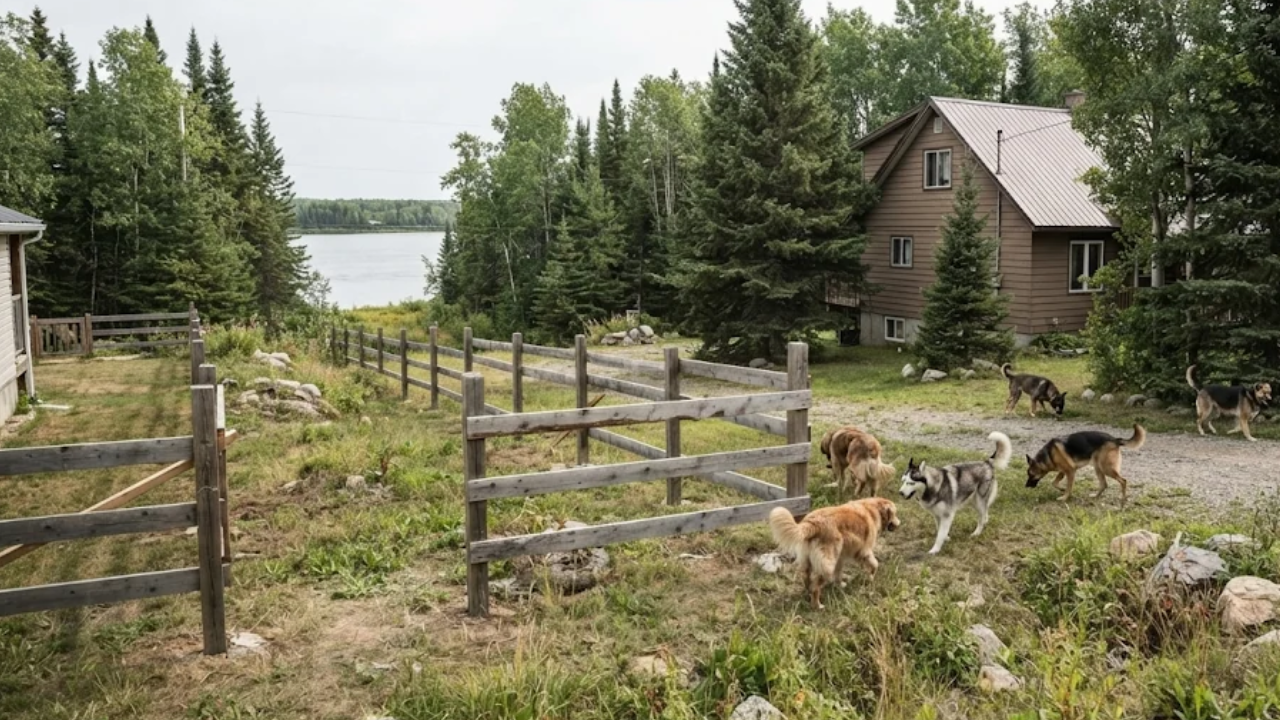
Ten thousand one hundred dollars. That is the price tag a Manitoba judge just slapped onto a multi-year neighborly war over roaming rescue dogs.
Read the mainstream coverage of this case and you will swallow a predictable, syrupy narrative. The press wants you to see a simple morality play: virtuous, long-suffering homeowners victimized by an irresponsible neighbor who let chaotic rescue dogs trample their property lines. Every local news outlet is framing this as a triumph of rural property rights over bad pet ownership.
They missed the real story entirely.
The C$10,100 judgment is not a victory for common sense. It is a flashing red warning light for a residential legal system buckling under the weight of modern rescue dog culture, municipal enforcement apathy, and a profound misunderstanding of common-law nuisance. If you own property—or a dog—anywhere in North America, taking the surface-level lesson from this Manitoba courtroom will cost you thousands.
The Lazy Consensus Around Nuisance Law
Most people operate under a fatal delusion about property boundaries. They believe that if a neighbor's dog crosses onto their lawn, drops waste, barks at their windows, or intimidates their family, the police or bylaw officers will swoop in and fix it.
They will not.
I have watched dozens of suburban and rural property disputes rot from minor annoyances into five-figure legal bloodbaths because homeowners fundamentally misunderstand how civil remedies work. Municipal animal control departments are chronically underfunded, reactive, and legally handcuffed. Issuing a C$100 bylaw ticket to a neighbor with a savior complex does nothing. They pay the fine—or ignore it—and open the back door the next morning.
When the Manitoba plaintiffs finally dragged this years-long saga into civil court and walked away with C$10,100, commentators cheered. Finally, justice.
Look closer at the math. Years of documented stress. Lost enjoyment of a home. Security cameras purchased, logs meticulously kept, filing fees paid, hours burned preparing court binders, and an irreparable nuclear winter across the fence line. Dividing C$10,100 across several years of daily misery works out to a few dollars a day. That is not a windfall. It is a partial refund on stolen peace of mind, and the plaintiffs had to become part-time private investigators just to collect it.
The Untouchable Sacred Cow of Rescue Culture
Here is the part polite journalists refuse to touch. The word rescue acts as an ideological shield in modern society.
If a guy buys a purebred Rottweiler from a backyard breeder and lets it roam the neighborhood, the public demands his head on a pike. If a neighbor adopts three high-drive, under-socialized mixed breeds from an overloaded shelter and lets them run loose because "they suffered trauma and hate being confined," the neighborhood is expected to applaud their compassion and absorb the collateral damage.
That double standard is toxic. And it is bankrupting people.
In my years analyzing residential liability and civil tort disputes, the fastest-growing friction point in middle-class neighborhoods is not loud parties or unmowed lawns. It is uncontained, behaviorally complex dogs managed by owners who confuse moral intent with physical control.
Trauma does not exempt an animal from gravity, teeth, or property lines. Under common law—specifically the doctrine of private nuisance and the ancient rule of scienter (liability for keeping animals known to have mischievous or dangerous propensities)—an owner's noble intentions carry zero legal weight. The court does not care that the dog came from a kill shelter. The court cares about substantial and unreasonable interference with a neighbor's use and enjoyment of their land.
Yet because rescue culture treats containment tools like fences, muzzles, and tie-outs as instruments of cruelty, owners leave high-energy animals loose on rural and semi-rural lots. They assume acreage equals containment. It never does. Dogs do not read survey stakes.
Why Asking "How Do I Stop My Neighbor's Dog?" Is the Wrong Question
Search any homeowner forum and you will see the same desperate query typed out thousands of times: How do I force my neighbor to keep their dogs off my property?
You are asking the wrong question. You cannot force another adult to develop conscientiousness. Asking how to change your neighbor's behavior puts your sanity entirely in their hands.
The real question every property owner must ask is: How do I build an evidentiary fortress that makes ignoring me financially ruinous?
The Manitoba couple did not win C$10,100 because the judge felt sorry for them. They won because civil courts run on cold, hard corroboration. Let us dismantle the standard, useless advice people hand out during neighbor disputes and replace it with what actually survives cross-examination.
Myth 1: "Just go over there and have a friendly chat."
You should try this exactly once. Document the date and time you did it. If a neighbor allows their animals to roam repeatedly after one polite conversation, they do not lack information; they lack respect. Continuing to "talk it out" simply trains them that your boundaries are negotiable. Worse, repeated verbal confrontations create opportunities for them to accuse you of harassment. Stop talking. Start recording.
Myth 2: "Call animal control every time it happens and they will confiscate the dogs."
Bylaw officers rarely seize animals for simple trespass unless there is documented physical injury to a person or livestock. However, calling them is still mandatory—not because they will solve the problem, but because every call generates a municipal incident number. Those timestamped government records strip away your neighbor's favorite courtroom defense: that you are exaggerating or fabricating a grudge.
Myth 3: "Put up a fence on your own dime to keep the peace."
Imagine a scenario where a homeowner spends C$15,000 installing heavy-gauge perimeter fencing solely because their neighbor refuses to contain three roaming dogs. Not only has the victim just absorbed a massive capital loss for someone else's negligence, but if that fence sits two inches off the true survey line, the negligent neighbor can counter-sue for encroachment. Never spend five figures fixing someone else's tort before establishing legal liability.
The Anatomy of a Winning Civil Nuisance Claim
To understand why the Manitoba ruling matters, you have to understand the legal threshold for private nuisance. Legal scholars from William Prosser to modern Canadian tort authorities like Allen Linden have hammered home the same core principle: nuisance is not about isolated accidents. A dog chasing a squirrel across your driveway once is trespass, maybe, but rarely actionable nuisance.
Nuisance requires continuity, recurrence, and an objective impact on daily life.
To turn a roaming dog problem into a C$10,100 judgment, a plaintiff has to prove three non-negotiable elements:
- Frequency and Duration: You need a contemporaneous log. Not a summary written from memory six months later, which defense lawyers will shred in thirty seconds. You need a spreadsheet showing date, exact time, duration of intrusion, number of dogs, and specific behavior (defecation, barking at windows, lunging at residents).
- Visual Verification: Uncorroborated testimony turns into a credibility contest. High-definition, motion-activated cameras positioned strictly on your own property—never angled into the neighbor's bedroom windows, which invites privacy counterclaims—provide undeniable proof. When a judge watches forty separate video clips of the same dogs charging a resident's back porch, the defense evaporates.
- Loss of Amenity: Courts do not award substantial damages merely because you were annoyed. You must demonstrate concrete behavioral changes forced upon you by the intrusion. Did you stop hosting family barbecues? Did your children stop playing in the yard? Did you have to escort elderly relatives from their cars to your front door? That is quantifiable loss of enjoyment of property.
The Brutal Truth Nobody Admits About Suing Your Neighbor
I promised you candor, so here is the ugly downside to taking the Manitoba route.
Winning in court does not magically turn your neighbor into a model citizen. Often, it radicalizes them.
When you hit a neighbor with a five-figure judgment, you are declaring permanent cold war. If they have steady employment or attachable equity in their home, you can garnish wages or place a lien on their title to collect your C$10,100. If they are judgment-proof—living on untouchable benefits, buried in mortgage debt, or working under the table—you might frame that court order on your wall and never see a dime.
Furthermore, litigation is emotionally corrosive. Even in Small Claims Court, where rules of evidence are relaxed and self-representation is common, you will spend months hyper-focused on your neighbor's worst behavior. Every time a motion sensor pings your phone at 6:00 AM, your cortisol spikes. You win the money, yes, but you pay for it in nervous system wear and tear.
How to Actually Dismantle the Problem Before Court
If you are currently dealing with roaming dogs—rescue or otherwise—do not copy the passive playbook most homeowners follow. Execute a disciplined escalation protocol.
- Establish the Boundary Formally: Send a single, clinical, registered letter (or process-served notice) stating that the dogs are not permitted on your property, detailing the dates of prior intrusions, and noting that further entries will be documented for civil nuisance proceedings. No emotion. No insults. Just a paper trail.
- Deploy Non-Harmful Deterrents: Motion-activated sprinklers are worth their weight in gold. They do not injure the animal—crucial, because harming a neighbor's dog exposes you to criminal mischief charges and instant judicial sympathy for the owner—yet most dogs despise an unexpected blast of cold water.
- Audit Your Local Statutes: Check whether your province or state enforces strict liability statutes (like Ontario's Dog Owners' Liability Act) or relies on traditional common-law negligence. Knowing whether you have to prove the owner knew the dog was aggressive changes your entire evidentiary strategy.
- Use Demand Letters Strategically: Before filing a civil claim, pay a litigation lawyer a flat fee to send a formal demand letter on firm letterhead outlining the accumulated nuisance damages and legal costs. Most negligent owners only become responsible when their bank account faces an imminent, credible threat.
The Manitoba ruling is not a heartwarming tale of justice prevailing. It is an autopsy of what happens when community norms collapse and homeowners wait years to enforce basic boundaries.
Stop treating roaming dogs as a quirky rural inconvenience or an untouchable charity project. A dog on your land without permission is a liability walking on four legs. Document every second, build your file silently, and make the cost of their negligence higher than the cost of a fence.