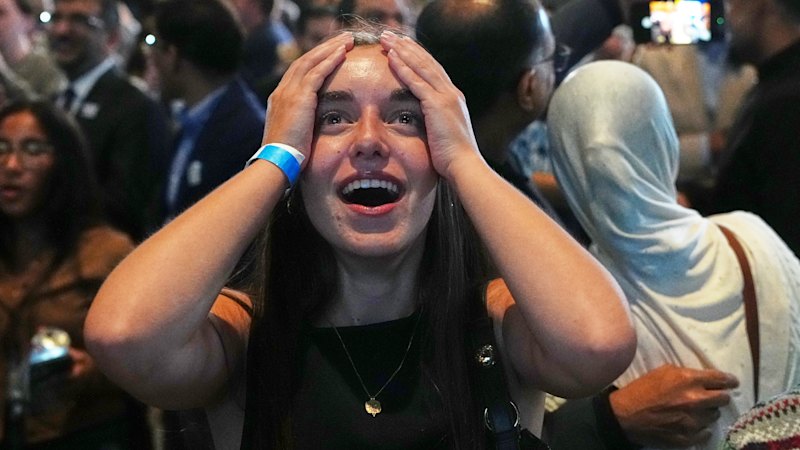
Twelve arrests. Hundreds of bylaw tickets. Millions of taxpayer dollars incinerated on tactical gear, overtime shifts, and mobile command centers.
Every autumn, local news outlets across Ontario run the exact same stenography. Police issue a press release boasting about "keeping the community safe" during an unsanctioned homecoming celebration, and reporters dutifully print the arrest tally like a box score. When Guelph Police announced 12 arrests following the unsanctioned University of Guelph homecoming street party, the local media machine treated it as a victory for law and order.
It was the exact opposite. It was a taxpayer-funded theater production that failed at its primary objective.
If you spend seven figures deploying riot-ready officers to Chancellor’s Way and thousands of twenty-somethings still shut down the street, climb onto roofs, and drink until dawn, you didn't contain the party. You subsidized it. You provided free security, crowd control, and viral marketing for the exact event you claimed to prevent.
I have spent over a decade analyzing municipal crisis response, event logistics, and crowd dynamics across North American college towns. I have sat in emergency operations centers watching mayors and police chiefs burn through entire annual overtime budgets in a single forty-eight-hour window, convinced that one more barricade or one more mounted unit will finally break the back of unsanctioned student gatherings. They are fighting human nature with a billy club, and human nature is undefeated.
The Anatomy of the Policing Illusion
To understand why the Guelph arrest numbers are a metric of failure rather than success, you have to strip away the press-release spin and look at the operational mechanics of crowd management.
Police departments measure success by enforcement outputs: tickets written, alcohol poured out, handcuffs clicked. Municipal leaders point to these numbers to prove to angry homeowners that they are "taking a hard line."
Here is the problem. Enforcement outputs do not equal behavioral outcomes.
When you flood a residential neighborhood like the Chancellor’s Way corridor with uniformed officers, you trigger a well-documented sociological phenomenon known as deviance amplification. Coined by sociologist Leslie Wilkins, this principle explains how aggressive social control actually increases the very behavior it attempts to suppress.
Think about what happens on the ground.
- The Prohibition Effect. By declaring an event "unsanctioned" and threatening mass fines under the Reopening Ontario Act or municipal nuisance bylaws, authorities instantly raise the social status of attending. You turn a mundane Saturday afternoon of day-drinking into an act of rebellion.
- Spatial Compression. When police erect perimeter fencing and block off side streets to "contain" the crowd, they artificially pack thousands of intoxicated people into a tighter physical footprint. Density breeds volatility. A crowd that might have dispersed across dozens of backyards is suddenly compressed into a single bottleneck, increasing the likelihood of property damage, medical emergencies, and physical altercations.
- The Performative Escalation. Modern street parties are filmed in 4K. When a line of officers marches down a residential street, smartphones go up. Students who would have quietly gone inside at 3:00 PM suddenly stay put to film the confrontation. The police presence becomes the main entertainment.
Twelve arrests out of a crowd estimated in the thousands is a statistical rounding error. It represents less than a fraction of one percent of the attendees. Yet those twelve arrests—and the massive police mobilization required to make them—will dominate the headlines, traumatize local taxpayers, and guarantee that next year’s incoming freshman class views Guelph Homecoming as a legendary rite of passage.
What Everyone Gets Wrong About Unsanctioned Parties
When local residents and university administrators ask, "How do we stop unsanctioned street parties?" they are asking a broken question. You cannot legislate away the biological and social drive of eighteen-to-twenty-two-year-olds to congregate in massive groups during the first month of the academic year.
Let's dismantle the lazy consensus surrounding these events by looking at the three biggest lies told after every homecoming weekend.
Lie 1: "We just need harsher penalties to deter them."
Deterrence theory relies on a foundational assumption: that the target audience is making a rational, sober cost-benefit analysis before acting.
Anyone who has ever stepped foot on a college campus knows this is absurd. An eighteen-year-old who has consumed six beers before noon is not calculating the marginal probability of receiving a $1,000 nuisance party fine. Even if they were, the perceived social reward of being at the center of the action vastly outweighs the abstract threat of a ticket that can be disputed in provincial court eight months later.
Cities like Kingston, London, and Waterloo have all tried the "zero tolerance" financial hammer. Queen’s University and the City of Kingston instituted the University District Safety Initiative, doubling fines and mandating court appearances. Did the parties stop? No. They simply fractured into smaller, harder-to-police pop-up gatherings across the city, stretching emergency services even thinner.
Lie 2: "The university can expel its way out of this."
Every Monday morning after a chaotic weekend, the university administration releases a statement expressing "deep disappointment" and threatening sanctions under the non-academic code of conduct.
It is an empty threat, and the students know it.
University codes of conduct are legally mine-ridden when applied to off-campus behavior in public streets. Proving beyond a balance of probabilities that a specific student committed a specific violation in a crowd of five thousand people—while navigating privacy laws and procedural fairness requirements—is a nightmare for campus judicial officers. Aside from a handful of egregious, viral cases (like jumping on a cruiser or throwing a bottle at a paramedic), the vast majority of attendees face zero academic consequences. Threatening punishments you cannot enforce only destroys institutional credibility.
Lie 3: "Canceling the official event reduces the chaos."
This is the single most destructive myth in higher education administration.
Over the past fifteen years, panicked university presidents across Canada and the United States have systematically gutted official homecoming programming. They canceled campus concerts, restricted tailgating, banned alcohol in campus venues, and pushed alumni events to quieter weekends.
They thought removing the spark would prevent the fire. Instead, they removed the fireplace and wondered why the living room burned down.
When you strip away structured, regulated, on-campus events—places with trained security, controlled alcohol service, paramedics on standby, and clear exit routes—you do not eliminate the demand for the party. You simply push that demand off-campus into unregulated residential neighborhoods where zero infrastructure exists to handle it.
The Counter-Intuitive Blueprint That Actually Works
If heavy policing fails and prohibition backfires, what is the alternative?
You have to stop treating homecoming like a riot to be suppressed and start treating it like a music festival to be engineered. You cannot beat the crowd, so you have to capture it.
Imagine a scenario where the University of Guelph and the city stop fighting the inevitable and instead execute a radical strategy of strategic co-optation. Instead of spending $500,000 on riot gear and overtime police shifts, they redirect that exact capital into hosting a massive, free, festival-style concert and tailgate directly on campus property—say, on Johnston Green or in the stadium parking lots—during the exact hours the street party normally peaks.
To pull this off, you have to understand the economics of attention and convenience. College students are fundamentally lazy consumers. Given the choice between walking two miles to a cramped, muddy residential street with no bathrooms, warm beer, and aggressive cops, OR walking three hundred yards to a massive campus festival with major musical acts, food trucks, portable toilets, and reasonably priced cold drinks, eighty percent of the crowd will choose the campus event every single time.
Step 1: Weaponize Convenience and FOMO
An unsanctioned street party thrives on Fear Of Missing Out (FOMO). Students go to Chancellor’s Way because that is where the critical mass of their peers is located. If you want to kill the street party, you have to starve it of oxygen by stealing its critical mass.
That means the official alternative cannot be a sanitized, lecture-hall-style "wellness fair" with free granola bars and acoustic guitar players. Administrators love designing events for the students they wish they had, rather than the students they actually have.
To compete with a street party, the official event must be louder, bigger, and cooler than anything happening off-campus. Bring in legitimate, high-draw headliners. Allow controlled, wet/dry zones where legal-age students can drink openly without being harassed. Make entry effortless for students with valid ID. Once the critical mass shifts to the campus venue, the street party collapses under the weight of its own irrelevance. Nobody wants to stand on an empty suburban street when the real party is happening on campus.
Step 2: Shift Policing from Confrontation to Perimeter Triage
Once you have created a massive, attractive gravity well on campus, the role of the Guelph Police changes completely.
Instead of marching phalanxes down residential streets to clear out stubborn holdouts, law enforcement shifts to behavioral nudging and perimeter triage.
- No mass marches. Keep tactical units out of sight unless a genuine life-safety emergency occurs. Visual escalation triggers crowd hostility.
- Targeted extraction. Use small, plainclothes liaison teams to identify and quietly remove the tiny minority of violent instigators—the people throwing bottles or climbing utility poles—rather than punishing the entire block.
- Frictionless transit. Run free, high-frequency shuttle buses directly from the residential neighborhoods to the on-campus festival gates. Make it easier to get to the safe zone than to stay in the danger zone.
Step 3: Brutal Honesty About the Trade-Offs
Let’s be completely transparent about the downsides of this approach, because pretending there are no risks is how bureaucrats get into trouble.
First, hosting a massive, alcohol-permitted campus event creates direct institutional liability. If a student gets hurt on university property, the lawyers come knocking at the president's door. Right now, by pushing the party onto city streets, the university effectively outsources its liability to the municipality and local homeowners. Administrators love the status quo because it keeps the mess off their balance sheet, even as it destroys town-gown relations.
Second, this strategy will infuriate moralists and local taxpayers in year one. The optics of spending public or institutional money to throw a massive party for students who have previously trashed neighborhoods will trigger outrage on local radio and city council floors. It takes immense political courage for a mayor and a university president to look angry voters in the eye and say, "We are buying them a concert because it is cheaper and safer than arresting them."
Third, it will not reduce arrests to zero. A hardcore fringe of troublemakers and out-of-town visitors—who often drive the worst behavior at these events—will still try to spark off-campus chaos. You will still need emergency response plans.
The Real Cost of Doing Nothing
Compare those trade-offs to the current reality in Guelph.
Right now, the city is paying top dollar for the worst possible outcome. Homeowners in the south end are prisoners in their own houses for a weekend, watching their lawns get trampled and their streets turn into open-air urinals. Paramedics and emergency room nurses at Guelph General Hospital are overwhelmed by preventable alcohol poisonings and fall injuries from students drinking dangerously fast before leaving their houses to avoid open-container tickets.
And the police? They are stuck in an unwinnable loop. Every year, they arrest a dozen kids, issue a few hundred tickets, declare a hollow victory, and quietly begin budgeting for an even larger deployment the following September.
Crowd psychology experts like Dr. Clifford Stott, who revolutionized football policing in the UK by replacing riot tactics with dialogue-based crowd management, have proved this repeatedly: when you treat a crowd as an irrational mob that must be beaten into submission, they will eventually behave like one. When you design environments that facilitate safe, self-regulated behavior, the violence evaporates.
Guelph doesn't have a student discipline problem. It has a municipal imagination problem.
Until the city and the university stop reading from the same failed enforcement playbook, next year's headlines are already written. Just change the date, swap out the names, and leave a blank space for the arrest count.