Most people assume the winner of an election automatically takes the prime minister's chair. That's not how it works in Israel. Not even close.
When Israeli voters cast their ballots, they aren't voting for a single leader. They're voting for party lists in a 120-seat parliament called the Knesset. Because Israel uses a pure proportional representation system with a 3.25% electoral threshold, no single party has ever won an outright majority of 61 seats in the nation's history. Every single government since 1948 has been a coalition. And when the math gets messy—or when party leaders dig into ideological trenches—the spotlight shifts immediately to the President's Residence in Jerusalem.
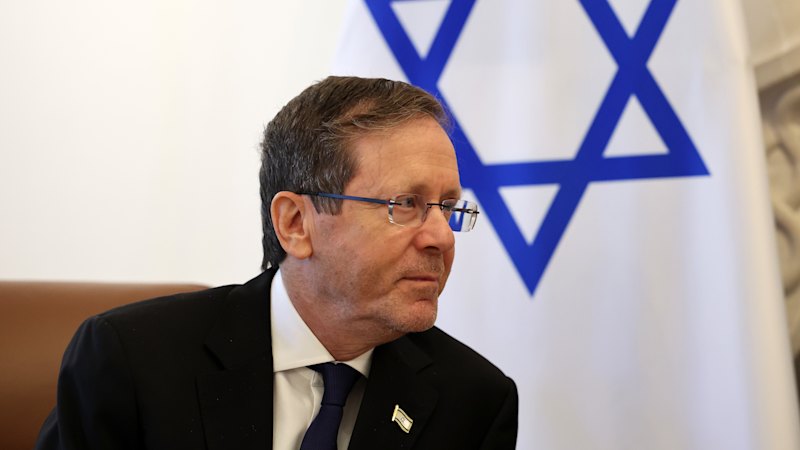
Isaac Herzog, serving as Israel's 11th president since 2021, holds a role that is largely ceremonial on paper. He doesn't pass laws. He doesn't command the military. He doesn't run ministries. Yet during the post-election window, the president becomes the single most important procedural gatekeeper in Israeli politics.
When a president tells party leaders it's "time to face reality" as consultations begin, it isn't just a polite greeting for the cameras. It's a blunt reminder that mathematical deadlock doesn't pay the bills, pass a national budget, or manage regional security.
The Math Behind the 61-Seat Threshold
To understand what the president actually does when initiating government formation, you have to look at the Knesset floor. There are 120 seats up for grabs. To form a stable government, a prospective prime minister needs the backing of at least 61 Members of Knesset (MKs).
If a bloc wins 64 or 65 seats cleanly, the president's job is straightforward. Party leaders walk into Beit HaNassi (the President's Residence), state their preference, and the president hands the mandate to the obvious frontrunner.
But what happens when the numbers split 59 to 56, with an undecided kingmaker sitting on 5 seats? Or worse, what happens when a bloc has 61 seats on paper, yet two of its component parties refuse to sit in the same cabinet?
That's where presidential leverage kicks in. Under Basic Law: The Government, the president isn't legally forced to pick the leader of the largest party. Instead, the law requires the president to assign the task of forming a government to the Knesset member who has the best chance of assembling a viable coalition. Sometimes that's the head of a 32-seat party. Other times, as Israelis saw in 2021 when Naftali Bennett formed a government despite his Yamina party winning just seven seats, the mandate goes to whoever can bridge the widest gap.
What Happens Inside the President's Consultations
Once the Central Elections Committee publishes the official results, the clock starts ticking. The president has seven days to hold formal consultations with representatives from every single faction elected to the Knesset.
In recent years, Israel made these meetings public, broadcasting them live so voters could watch party delegates make their pitch in real time. Honestly, it's fascinating political theater, though the real negotiations happen behind closed doors weeks before anyone sits across from the president.
Here is how those consultations play out in practice:
- The order of arrival matters. The president invites factions in descending order of size, starting with the largest party and working down to the smallest lists that barely cleared the 3.25% threshold.
- Recommendations aren't binding, until they are. Party delegates tell the president which MK they recommend for prime minister. Some parties decline to recommend anyone at all, effectively sitting out the first round to maximize their bargaining power later.
- The president probes for hidden vetoes. A party might publicly claim they're open to unity, only to whisper to the president's advisors that they'll never sit with a specific rival. Herzog and his predecessors use these sessions to separate campaign rhetoric from actual red lines.
When the president urges leaders to "face reality," he is usually reacting to parties clinging to campaign promises that make a 61-seat coalition mathematically impossible. If two major blocs refuse to talk to each other, and neither can reach 61 without the other, the country stares down the barrel of another election cycle. Between April 2019 and November 2022, Israel held five national elections in less than four years because political actors refused to blink.
Why Coalition Negotiations Drag Out for Weeks
Once the consultations wrap up, the president selects one MK and formally hands them the mandate. By law, that candidate gets 28 days to cobble together a coalition and present a government to the Knesset for a vote of confidence.
Twenty-eight days sounds like plenty of time. In reality, it's barely enough to draft the table of contents for a coalition agreement.
Israeli coalition deals aren't handshake understandings. They are massive, binding legal documents spanning dozens of pages. Every single detail gets hashed out before the new government takes its oath. Parties fight over senior cabinet posts—Defense, Finance, Foreign Affairs, and Justice are the usual battlegrounds—alongside committee chairmanships, deputy minister slots, and specific budget allocations for their voter bases.
If the 28 days run out and the candidate hasn't locked down 61 signatures, they can ask the president for an extension. Under the law, the president can grant up to 14 additional days.
Presidents don't hand out those extra two weeks automatically. They demand proof of progress. If a candidate has spent four weeks spinning their wheels without signing a single coalition partner, the president can refuse the extension and pass the mandate to someone else.
What Happens When the First Candidate Fails
Suppose the first nominee burns through their 28 days (plus any extension) and comes up short. Does Israel immediately go back to the polls? Not yet. The system has built-in pressure valves designed to force a deal before triggering another expensive, exhausting election.
First, the president can hand the mandate to a second Knesset member. That second candidate also gets 28 days, though without the option for a 14-day extension. Again, the president consults with party leaders to see if a different leader can unlock a coalition that the first one couldn't.
Second, if the second nominee also fails—or if the president decides right after the first failure that nobody can put together a government—the mandate transfers directly to the Knesset itself.
During this final 21-day window, the rules change completely. Any group of 61 MKs can sign a formal petition asking the president to assign the mandate to a specific Knesset member—even someone who already failed in an earlier round. If 61 lawmakers sign that letter, the president has no choice; he must give that candidate 14 days to present their government.
If those 21 days expire without 61 signatures, the Knesset dissolves automatically. New elections are then scheduled for roughly 90 days later, leaving the outgoing caretaker government in charge with limited authority to make major policy shifts or pass new budgets.
The Unspoken Rules of Israeli Coalition Building
Anyone watching Israeli politics from the outside tends to focus on left versus right, or secular versus religious. Those divides are real, obviously. Yet if you talk to veteran Knesset insiders and parliamentary advisors, they'll tell you that coalition building usually comes down to three practical realities that rarely make international headlines.
1. The Caretaker Government Trap
While negotiations drag on, the previous prime minister stays in office as head of a transitional government. That sounds harmless, except a caretaker prime minister holds massive institutional advantages. They control the cabinet agenda, chair security briefings, and represent the country abroad. Sometimes, a prime minister who lost their majority isn't in a huge rush to see a rival succeed, while opposition leaders grow desperate to take over the levers of power before the caretaker cabinet makes irreversible administrative appointments.
2. Small Parties Punch Above Their Weight
In a 120-seat parliament where margins hover around 61 or 62 seats, a tiny faction with five or six MKs holds total veto power. If they walk out, the government collapses. That structural quirk allows smaller sectarian or ideological parties to demand—and receive—budgets and policy concessions far out of proportion to their share of the popular vote. Major parties hate it, voters complain about it constantly, and yet every prime minister from David Ben-Gurion to Benjamin Netanyahu has had to play by those exact rules.
3. The High Court Watches Everything
Israel doesn't have a formal written constitution; it operates on a series of Basic Laws interpreted by the Supreme Court. During coalition talks, party lawyers constantly check whether a proposed ministerial appointment or legislative promise will survive a petition to the High Court of Justice. Agreements that trade away core democratic norms or hand sensitive portfolios to politicians facing criminal indictments frequently trigger immediate legal challenges the moment the government is sworn in.
How to Follow the Negotiations Without Getting Lost
Political coverage during Israeli coalition talks gets noisy fast. Leaks fly out of hotel conference rooms every hour, usually planted by negotiators trying to scare a stubborn partner into lowering their demands.
If you want to track whether a government is actually close to forming—or heading straight toward collapse—ignore the daily press briefings and watch four concrete indicators instead:
- Check the Knesset Speaker vote. Before a new government is sworn in, the incoming coalition almost always moves to replace the Speaker of the Knesset. You need 61 votes to install a new Speaker. When a bloc schedules that vote, it means they've locked down their majority.
- Watch the Finance Committee. Whoever controls the Knesset Finance Committee controls the flow of money to ministries and municipalities. When a party secures the chairmanship of this committee in preliminary talks, they've committed to the coalition.
- Track the "Norwegian Law" discussions. Israel's Norwegian Law allows cabinet ministers to resign their Knesset seats so the next person on their party's electoral list can enter parliament as a full-time legislator. When parties start calculating how many backbenchers they can bring in through this mechanism, they're finalizing the math to keep their faction members happy.
- Read the official filings at Beit HaNassi. Until a party leader formally notifies the president in writing—or a coalition agreement is deposited with the Knesset Secretariat at least 24 hours before the swearing-in vote—nothing is final.
Watch the official Knesset Secretariat filings and the president's formal announcements rather than anonymous leaks from party headquarters. In Jerusalem, a coalition isn't real until 61 hands go up on the Knesset floor.