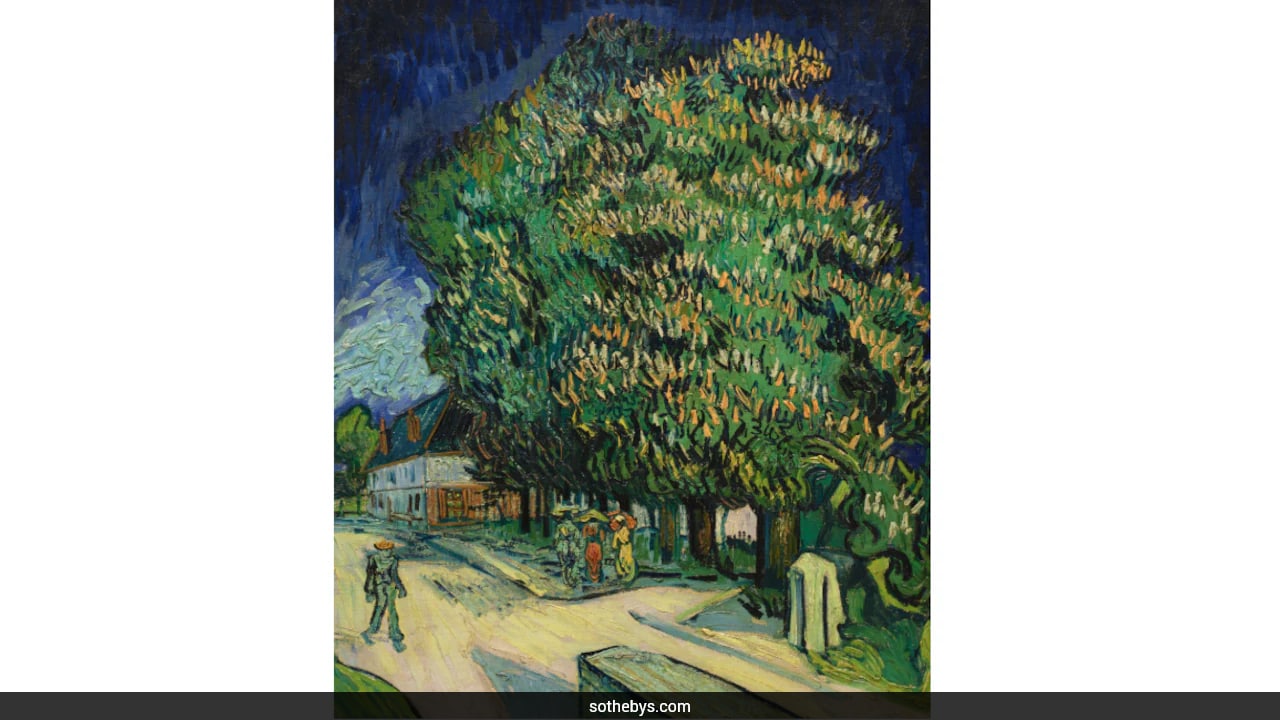
When a Vincent van Gogh canvas with a contested ownership history hammers down for a record $190 million, the press releases celebrate human genius and market resilience. They miss the point. That astronomical figure has very little to do with nineteenth-century brushwork and everything to do with modern liquidity, regulatory arbitrage, and the systematic scrubbing of inconvenient histories.
For decades, the upper tier of the fine art market has operated on a convenient fiction. Auction houses present themselves as neutral arbiters of cultural value, matching trophy assets with discerning patrons. In reality, a nine-figure sale of a work carrying a "complex past" is a masterclass in financial engineering. The phrase itself—complex past—is polite auction-house shorthand for provenance gaps spanning the mid-twentieth century, forced sales under authoritarian regimes, or protracted litigation over rightful ownership. When a painting carries that kind of baggage, its value should theoretically plummet. Risk depresses price in every rational asset class. Yet in the ultra-high-net-worth art sector, legal risk is routinely neutralized through confidential settlement agreements, transforming a toxic liability into a certified, liquid bearer asset.
The Anatomy of a Provenance Wash
To understand how a problematic canvas reaches a nine-figure valuation, you have to look at the mechanics of pre-sale restitution settlements.
In the standard lifecycle of a disputed masterpiece, an artwork surfaces after decades in a private vault or a quiet European collection. Researchers spot a suspicious gap between 1933 and 1945, or a murky transfer during a period of political upheaval. The heirs of a dispossessed collector step forward with a claim. In a transparent legal system, this triggers years of public discovery, title disputes, and potential seizure. The painting becomes unsellable. No legitimate lender will touch it, and no major institution will hang it without risking a PR disaster.
Enter the auction house specialists and a specialized cadre of art-law attorneys. Rather than letting the dispute play out in court, the current possessor and the claimants are brought to the negotiating table before the catalog ever goes to print. They reach a private financial settlement. The heirs waive all future claims to the physical object in exchange for a percentage of the upcoming hammer price.
Once the ink dries, the cloud on the title vanishes. The catalog entry is drafted with surgical precision, acknowledging the historical turbulence while reassuring prospective bidders that the matter has been "amicably resolved." The painting is no longer a disputed artifact. It is a pristine financial instrument backed by the implicit guarantee of a major auction house.
This process explains why provenance issues rarely stop a trophy sale at the top of the market. They merely delay it until the asset appreciates enough to pay off the claimants while still leaving a massive profit margin for the seller. A Van Gogh purchased for a few million dollars in the 1980s can easily absorb a thirty percent restitution payout when the market valuation hits $190 million. The math works for everyone except the historical record, which gets buried beneath non-disclosure agreements.
Why Van Gogh Remains the Ultimate Financial Vehicle
Not every artist can command this kind of financial alchemy. You cannot pull off a nine-figure title wash with an Old Master, no matter how museum-worthy the panel might be. Old Masters require too much scholarship, suffer from frequent condition issues, and lack the universal brand recognition required to serve as global collateral.
Vincent van Gogh sits at the absolute apex of blue-chip art liquidity. His biography is universally known. His visual signature is instantly recognizable to a tech founder in Silicon Valley, a sovereign wealth manager in Doha, and an industrialist in Seoul. More importantly, his output is strictly finite. Unlike contemporary artists whose markets are manipulated by dealer buy-backs and speculative flipping, the Van Gogh corpus is locked in. Every authentic canvas is cataloged, studied, and tracked.
When a masterpiece from his peak period—Saint-Rémy or Arles—hits the block, it triggers a specific market dynamic. Sovereign-level wealth does not buy art for decoration. It buys art because there are only a handful of assets on earth that combine extreme capital density, portability, and social prestige. A $190 million painting can be stored in a climate-controlled freeport in Geneva or Delaware, used as collateral for low-interest liquidity loans from private banks, and transferred across borders without triggering the scrutiny applied to wire transfers or real estate acquisitions.
Consider a hypothetical scenario illustrating how this capital efficiency works in practice. Suppose a billionaire acquires a Van Gogh at auction for $190 million, inclusive of the buyer's premium. Rather than leaving that capital tied up on a living room wall, the buyer immediately pledges the painting to the art-lending desk of a major global bank. Because the provenance has been freshly scrubbed via a pre-sale settlement and validated by a public auction record, the bank values the asset at its full hammer price. The buyer secures a revolving credit line at fifty percent loan-to-value—$95 million in cash—at an interest rate hovering just above the benchmark overnight rate. That $95 million is then deployed into private equity or commercial real estate yielding twelve percent annually. The painting pays for itself while sitting in a bonded warehouse, entirely exempt from sales and use taxes as long as it never exits the freeport zone.
The Illusion of the Public Auction
The theater of the evening sale is designed to obscure these mechanics. The packed saleroom, the rapid-fire bidding between phone specialists, the dramatic pause before the gavel falls—it all creates the impression of fierce, organic demand.
The reality behind the curtain is far more controlled. Nine-figure lots rarely go to the block without a safety net. Auction houses mitigate their exposure through irrevocable bids and third-party guarantees. Long before the auctioneer steps up to the rostrum, the house secures a binding commitment from an outside financier to buy the painting at a predetermined minimum price if no one else bids higher.
In exchange for assuming this downside risk, the guarantor receives a financing fee, typically a percentage of the auction house's buyer's premium, or a cut of the upside if the bidding surpasses the guaranteed threshold.
Let's break down what this means for a $190 million sale:
- The Seller gets a guaranteed floor price months before the auction, effectively cashing out or locking in a minimum return privately.
- The Guarantor either acquires a trophy asset at a discount (thanks to the fee offset) or walks away with millions in pure financial yield without ever taking possession of the canvas.
- The Auction House eliminates its balance-sheet risk while capturing massive headline prestige and lucrative commission spreads.
When you watch a bidding war push a Van Gogh past the $150 million mark toward $190 million, you are often watching the guarantor bid against a single rival, knowing that every incremental paddle raise increases their own payout if they lose. It is a closed-loop financial market masquerading as a cultural event.
Regulatory Blind Spots and the Freeports
The persistence of contested art reaching record valuations highlights a massive gap in global financial oversight. Over the past decade, regulators in the United States and Europe have tightened anti-money laundering rules for banks, real estate brokers, and cryptocurrency exchanges. The art market has largely dodged equivalent enforcement.
While the European Union's Fifth Anti-Money Laundering Directive and subsequent updates forced art dealers and freeport operators to conduct stricter customer due diligence, enforcement remains fragmented. In the United States, the art market still operates without comprehensive federal anti-money laundering regulations specifically tailored to high-value art transactions, despite repeated warnings from the Treasury Department and Senate investigative committees.
Ultimate beneficial ownership remains notoriously opaque. The entity wiring $190 million to an auction house is rarely an individual. It is almost always a shell company registered in the British Virgin Islands, Panama, or Delaware, represented by an art advisor or a law firm bound by attorney-client privilege. The auction house verifies the immediate source of funds to satisfy basic compliance checks, but the deeper layers of corporate ownership—and the true motivations behind the acquisition—remain hidden.
This opacity works hand-in-hand with the ambiguity of a painting's past. When a work has a complicated history involving mid-century seizures or murky private transfers, institutional museums often shy away from acquiring it directly, fearing the reputational fallout or the strict ethical guidelines enforced by organizations like the Association of Art Museum Directors. Private buyers face no such constraints. A shell company has no board of trustees to answer to and no public mandate to uphold. Once the title is legally cleared through a confidential settlement, the private buyer can warehouse the asset indefinitely, waiting for public memory to fade before eventually donating it to a museum for a massive tax write-off—or flipping it privately in another decade.
The Institutional Dilemma
Museums find themselves trapped in an impossible position by these nine-figure records. Public institutions cannot compete at the $190 million level. Even the wealthiest endowments, like the Getty or the Metropolitan Museum of Art, rarely deploy that kind of capital on a single acquisition without cannibalizing their budgets for years.
Consequently, museums rely entirely on the generosity of the very billionaires driving these market distortions. To secure long-term loans or eventual bequests of blue-chip works, museum directors are forced to maintain cozy relationships with private collectors and the auction houses that service them. This creates a structural conflict of interest. Institutions that should serve as rigorous gatekeepers of historical truth and provenance integrity are incentivized to look the other way when a collector's newly acquired masterpiece carries a scrubbed history.
We have seen this play out repeatedly. A painting with a questionable wartime pedigree is quietly settled, sold at auction for a record sum, and within three years appears as the centerpiece of a major museum retrospective, lent anonymously by "a private collection." The museum gets foot traffic and prestige; the collector gets institutional validation that further cements the asset's market value. The provenance footnote in the exhibition catalog is reduced to a single sentence noting the pre-sale settlement, effectively erasing decades of historical injustice from the public consciousness.
The True Cost of a Record Price
The art world loves a headline-grabbing number. A $190 million sale lifts the entire market, validating the valuations of lesser works by the same artist and reassuring collectors that their portfolios are appreciating. Auction house executives point to these records as proof of the enduring power of human creativity.
It is a seductive narrative, but it obscures a much harsher reality. The hyper-financialization of fine art has decoupled price from cultural stewardship. When a Van Gogh becomes a $190 million financial derivative, it ceases to function as a shared cultural inheritance. It becomes an instrument of wealth preservation, locked away in tax-advantaged vaults, traded via offshore entities, and sanitized through confidential legal settlements that prioritize market liquidity over historical accountability.
Until regulators force full transparency on ultimate beneficial ownership and require public disclosure of restitution settlements as a condition of clear title, these record-breaking sales will continue to serve the same dual purpose. They will remain the ultimate status symbol for the ultra-wealthy, and the most sophisticated laundromat for troubled assets on the planet.