The fluorescent lights of a big-box supercenter never really turn off. They hum at a steady, low frequency at two in the afternoon, and they hum at that exact same frequency at eleven at night, long after the dinner rush has faded and the parking lot has emptied out to a scattering of sedans under sodium-vapor lamps.
To a shopper grabbing a gallon of milk or a forgotten birthday card, that endless brightness feels like convenience. It feels like safety.
To a sixteen-year-old standing on concrete floors three hours past the legal curfew on a school night, that hum sounds very different.
Imagine, for a moment, a boy named Leo. Leo is a hypothetical composite, drawn directly from the cold, clinical pages of state labor filings, yet entirely real in the mechanics of his Tuesday night. He is sixteen. He plays junior varsity soccer, struggles a little with honors chemistry, and took a part-time stocking job at a local Walmart in Pennsylvania to save up for a used Honda Civic. His parents signed the work permit because they thought a job would teach him responsibility. They assumed the largest private employer in the United States had guardrails in place to keep a teenager safe.
It is 10:45 PM on a Wednesday. Leo is tired. His shifts were supposed to end at nine, back when he first applied, before the store got short-staffed and a shift manager asked if he could "just stay to finish pulling the pallets from the back." Under Pennsylvania's Child Labor Act, sixteen- and seventeen-year-olds are strictly barred from working past midnight during the school year, and they cannot work more than eight hours a day or twenty-eight hours a week while school is in session. More importantly, federal and state laws strictly forbid minors from operating or cleaning hazardous machinery—specifically the massive hydraulic cardboard balers and trash compactors that sit in the concrete belly of every retail warehouse.
The baler looks like a steel cage with a hydraulic ram capable of crushing five hundred pounds of corrugated boxes into a dense, wired cube. It has yellow warning stickers. It has a key switch.
And in dozens of backrooms across the Keystone State, teenagers were operating them anyway.
The Anatomy of a Seven-Million-Dollar Settlement
When the Pennsylvania Department of Labor and Industry announced that Walmart had agreed to pay $7.8 million following a sweeping investigation into child labor violations, the headlines treated it like another routine corporate fine. Numbers that large tend to anesthetize the human brain. Seven point eight million dollars sounds like a fortune to anyone paying a mortgage, yet to a retail titan that generates over six hundred billion dollars in annual revenue, it barely registers as a rounding error. Roughly six minutes of global sales.
Look past the dollar figure, however, and you find the human wreckage that forced the state's hand.
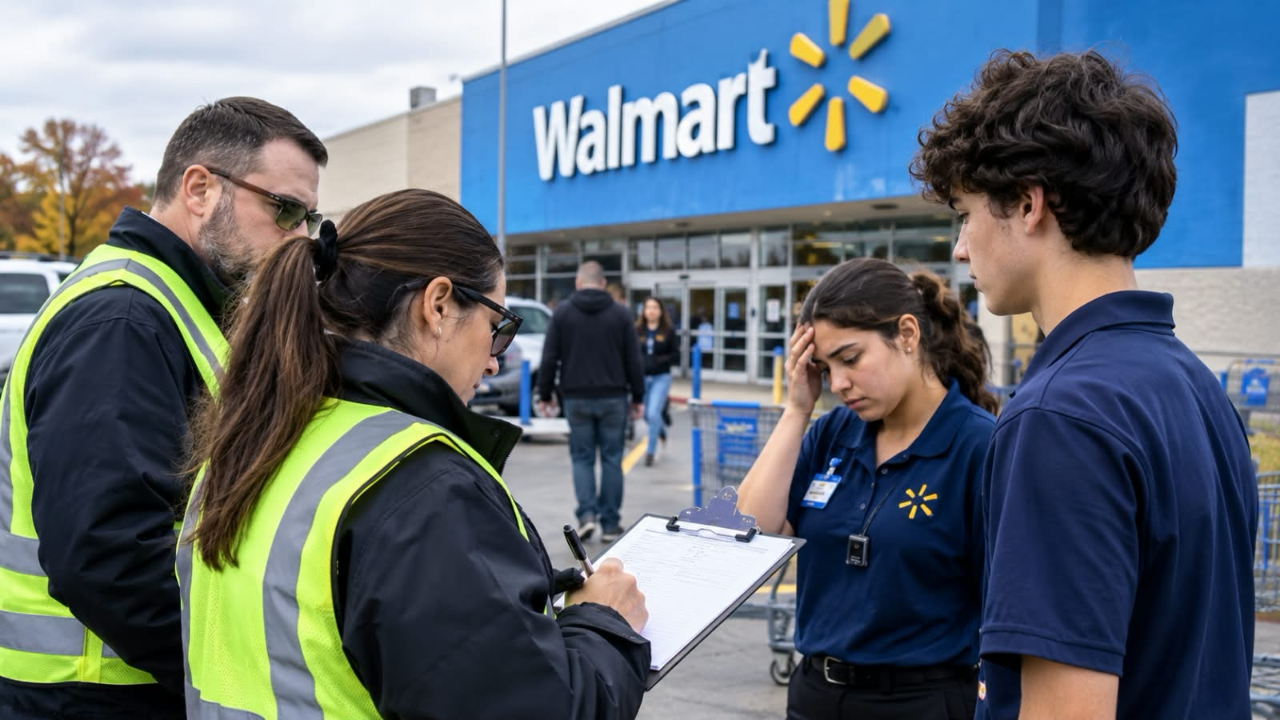
The investigation did not begin in a vacuum. It grew out of reports of actual, physical injuries sustained by minors on the clock—young workers hurt while handling equipment they were never supposed to touch, during hours they were never supposed to be working. State investigators dug into timecards, schedules, and incident logs across Pennsylvania stores, uncovering hundreds of violations involving dozens of underage employees.
Some of the infractions were scheduling failures. Teenagers were kept on the floor past legal curfews on school nights, or scheduled for shifts exceeding the maximum daily and weekly hour caps designed to protect their education and physical development. Other violations were far more visceral: minors loading, operating, or clearing jams in heavy-duty cardboard balers and compactors, tasks restricted to adults because a single moment of teenage distraction can cost a limb.
Walmart, for its part, neither admitted nor denied liability in the settlement—standard legal choreography in corporate enforcement actions—while agreeing to pay the $7.8 million penalty and overhaul its internal compliance systems.
Why Modern Retail Keeps Breaking the Same Rule
If you have ever worked a retail floor, an overnight warehouse shift, or the line of a fast-food kitchen, none of this surprises you. You know the gap between the pristine training modules on a breakroom computer and the chaotic reality of a Friday night when three people call out sick.
Corporate headquarters writes policy in ink. Store-level management survives in sweat.
When a regional manager demands that every pallet be cleared from the receiving bay before the morning delivery trucks arrive at four in the morning, the overnight lead looks at the warm bodies currently standing in front of them. In a tight labor market, an increasing percentage of those bodies belong to high school students. Automated scheduling software is supposed to flag a minor's shift before it crosses a statutory line, locking them out of the timeclock or alerting a manager. Yet software is easily bypassed when a supervisor manually overrides a punch, asks a kid to keep working off the clock, or hands over the key to the baler because the only adult on duty is unloading frozen freight on the other side of the building.
Think of child labor laws like the guardrails on a mountain highway. Most days, you never touch them. You might even resent them for narrowing the road. They exist entirely for the night when the fog rolls in, the tires lose traction, and a driver makes a split-second mistake.
Removing those guardrails doesn't cause a crash every single night. That is precisely why companies get away with it for months or years at a time. The violation becomes normalized. A sixteen-year-old runs the baler on Tuesday, nothing happens, so he runs it again on Thursday. Until the Tuesday when a piece of cardboard jams, a tired teenager reaches inside without locking out the power, and a childhood ends in the back of an ambulance.
The Quiet Return of an Old American Problem
It is tempting to view child labor as a relic of sepia-toned photographs—soot-stained boys emerging from Pennsylvania coal breakers in 1910, or small girls tending textile looms in mill towns. We like to believe we solved that problem a century ago, sealed it behind the Fair Labor Standards Act of 1938, and moved on.
We didn't. We merely outsourced the visibility.
Over the past several years, federal and state labor departments across the country have documented an alarming surge in child labor violations. Between 2018 and 2023, the U.S. Department of Labor saw an eighty-eight percent spike in minors employed illegally. The cases span meatpacking plants in the Midwest, auto parts suppliers in the South, fast-food franchises from coast to coast, and now, major retail chains in the Northeast.
Two forces are colliding to drive this trend. First, chronic staffing shortages in low-wage, high-turnover industries have pushed employers to recruit aggressively from high schools, lowering hiring ages to fourteen and fifteen for roles that were traditionally filled by adults. Second, stagnant enforcement budgets have left state and federal agencies grossly outmatched. When a state has only a handful of labor inspectors to police tens of thousands of workplaces, employers quickly calculate the odds. If the risk of getting caught is low, and the fine is cheaper than raising adult wages enough to fully staff the night shift, breaking the law becomes a quiet, unspoken line item in the cost of doing business.
What happens to the teenager caught in that math?
Exhaustion sets in slowly. At first, working thirty-five hours a week while carrying a full high school course load feels like a badge of honor. You have cash in your wallet. You feel grown up. Then the grades begin to slide. You fall asleep during second-period history. Your reaction times slow down—on the drive home at midnight, on the sports field, and in the backroom next to three tons of moving steel.
What the Settlement Actually Changes—and What It Doesn't
In Pennsylvania, the $7.8 million agreement is designed to do more than replenish state coffers. A substantial portion of the settlement funds goes toward bolstering enforcement, outreach, and worker protection programs, while Walmart is required to implement stricter monitoring, mandatory manager training, and regular audits to ensure minors are kept away from hazardous machinery and off late-night schedules.
That matters. Real money, paired with public scrutiny, forces corporate boards to pay attention in ways that polite warnings never do. When compliance becomes a metric tied to a store manager's annual bonus, keys to the cardboard baler suddenly stop finding their way into sixteen-year-old hands.
Still, parents and young workers cannot afford to rely on corporate self-policing alone. Understanding the boundaries of the law is the first line of defense for any family with a teenager entering the workforce:
- Age and Hour Caps: In Pennsylvania, fourteen- and fifteen-year-olds face strict limits—no more than three hours on a school day, eighteen hours in a school week, and never past 7:00 PM during the school year (9:00 PM in summer). Sixteen- and seventeen-year-olds can work up to eight hours a day and twenty-eight hours a week during the school term, with a hard curfew at midnight on nights before school.
- The Red-Line Equipment: Regardless of how short-staffed a store is, no worker under eighteen is legally permitted to operate, load, unload, or clean power-driven paper-products machines (which includes every retail cardboard baler and trash compactor), meat slicers, dough mixers, or forklifts.
- The Right to Refuse: A teenager cannot be legally fired or retaliated against for refusing to perform a task that violates child labor safety laws, nor can they be forced to work off the clock to bypass scheduling limits.
I remember my own first job at sixteen, mopping greasy quarry tile behind a deep fryer at ten o'clock on a Thursday night, desperate to prove to my manager that I was tough enough to handle whatever he threw at me. At that age, you don't know how to say no to an adult in a collared shirt who signs your paycheck. You confuse compliance with character. You think speaking up makes you weak.
That vulnerability is exactly what child labor laws were written to protect. Not because teenagers are fragile, and not because work is bad for them—honest work teaches pride, discipline, and independence—but because a sixteen-year-old should never have to choose between keeping a part-time job and keeping all ten fingers.
Next time you walk through the automatic doors of a supercenter late at night, past the towers of discounted paper towels and the bright displays of seasonal candy, take a look at the kid in the blue vest pulling a heavy pallet jack down aisle four. Check the clock on your phone. Ask yourself whether the person stocking your shelves should be doing homework instead—and who is making sure they make it home in one piece before midnight.