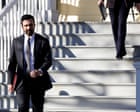
America is turning 250, and the fight over who owns the national narrative is playing out in the most starkly contrasted way possible. On one side, you have the traditional, flag-waving display orchestrated at Mount Rushmore. On the other, you have New York City Mayor Zohran Mamdani standing behind George Washington’s historic desk at City Hall, flanked by newly naturalized citizens.
This isn't just another dry political speech. It's a calculated, ideological reclamation of what it means to be patriotic in 2026.
Mamdani is an unconventional figure to lead a major civic milestone. He’s a democratic socialist, an immigrant born in Uganda who arrived in New York at age seven, and the first Muslim mayor of the nation's largest city. By choosing to mark the semiquincentennial surrounded by people who chose American citizenship rather than inheriting it, Mamdani is directly challenging the exclusionary rhetoric that has dominated the national landscape.
Two Paths for a Divided Semiquincentennial
The timing of this address isn't accidental. Mamdani's morning speech happens just hours before Donald Trump takes the stage at Mount Rushmore. It sets up an aggressive contrast between two wildly different visions of American identity.
The standard conservative critique argues that progressive victories, like Mamdani’s rise, show that Americans are losing touch with founding principles. Critics worry that a democratic socialist platform signals a drift away from individual liberty toward state control.
But Mamdani's team sees it differently. For them, true patriotism means confronting flaws rather than ignoring them. Mamdani previously noted that anniversaries of this scale act as a mirror. He explicitly rejected the old "love it or leave it" framing often found on college dorm posters. To him, loving the country means fighting to fulfill its unkept promises.
This dual perspective is what makes the 250th birthday so tense. Is America a finished masterpiece to be protected from change, or is it an unfinished project that requires constant overhaul?
The Political Reality Behind the Rhetoric
You can’t separate this speech from the raw political momentum Mamdani carries right now. Just last month, his endorsed congressional candidates swept their Democratic primary races across New York City. His national profile is surging, especially among younger voters who feel alienated by mainstream party politics.
This growing influence makes the City Hall event more than a local celebration. It serves as a blueprint for a alternative progressive patriotism. Democrats have spent years letting the right monopolize national symbols and the vocabulary of freedom. Mamdani is trying to claw that back.
The Power of the Staging
- The Desk: Speaking from George Washington’s actual desk anchors the event in foundational history. It signals that the progressive left isn't trying to erase history; they’re claiming ownership of it.
- The Audience: Surrounding the podium with newly naturalized citizens emphasizes that American identity is a shared commitment, not a racial or geographic inheritance.
- The Subtext: The event follows a major Supreme Court decision upholding birthright citizenship. By highlighting naturalized New Yorkers, Mamdani quietly celebrates a massive legal victory against the administration’s immigration agenda.
Moving Past Blind Allegiance
If you look past the political theater, the core message here is that dissent is an act of loyalty. Mamdani's famous social media declaration—"America is beautiful, contradictory, unfinished. No Kings in America"—captures this balance. It acknowledges the country's profound systemic issues while validating the pride of living here.
For the millions of working-class New Yorkers keeping the subway lines moving and the hospitals staffed, this version of America feels real. It focuses on the people doing the heavy lifting rather than the billionaires at the top.
If you want to understand where American politics is heading over the next decade, look closely at this moment. The debate isn't just about policy anymore. It's a fundamental argument over who gets to call themselves a patriot.
To engage with this civic milestone yourself, don't just watch the speeches passively. Read the foundational documents on your own terms. Look at the specific promises made in 1776, compare them to the reality of your community today, and decide what concrete actions you can take to close that gap. Real patriotism requires work, not just applause.


