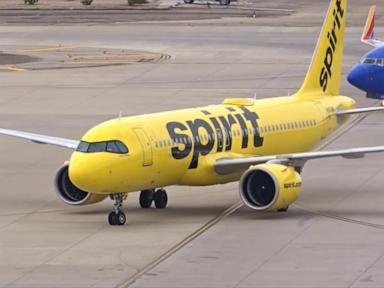
The fluorescent hum of a crew lounge at 3:00 AM has a specific, soul-crushing frequency. It is the sound of stale coffee, recycled air, and the quiet desperation of people who live their lives at thirty thousand feet while their ground-level realities crumble. For years, the bright yellow fleet of Spirit Airlines represented a certain kind of democratic promise: the idea that anyone with twenty dollars and a backpack could fly. But beneath the cheerful, budget-friendly exterior, a much darker narrative was unfolding in the courtrooms and HR offices of Miramar, Florida.
A company is not its balance sheet. It is not its fleet age or its seat pitch. A company is a collection of promises made to the people who keep it running. When those promises break, the resulting turbulence is far more dangerous than anything a pilot encounters over the Rockies.
Recently, a group of former employees decided they were done being quiet. They filed a lawsuit that pulls back the curtain on the "Ultra Low Cost" philosophy, suggesting that the savings passed on to passengers were being extracted directly from the well-being and legal rights of the staff. This isn't just a story about a contract dispute. It is a story about the invisible weight of a yellow uniform.
The Mirage of the Open Door
In the corporate world, there is a pervasive myth known as the "Open Door Policy." It suggests that the distance between the baggage handler and the CEO is merely a hallway's length. In reality, that door often functions like a check valve: information goes up, but empathy rarely flows back down.
Consider the hypothetical case of a flight attendant we’ll call Elena. Elena spent six years navigating the narrow aisles of Airbus A320s. she mastered the art of de-escalating a passenger who realized—too late—that their "personal item" was actually a full-sized suitcase. She smiled through the red-eyes. She handled the turbulence. But when she faced a personal medical crisis that required a temporary adjustment to her schedule, the "family culture" Spirit often touted in orientation vanished.
The lawsuit alleges a pattern of systemic retaliation. It suggests that when employees spoke up about safety concerns, requested legally protected leave, or pushed back against grueling scheduling practices, they weren't met with solutions. They were met with the door.
This is where the business logic of a budget carrier becomes a human tragedy. In a model predicated on razor-thin margins, every minute of a human being's time is scrutinized as a line item. If a human being becomes "inefficient" due to illness, pregnancy, or the audacity to demand a safe working environment, the model views them as a defect in the machinery.
The Mathematics of Exhaustion
We often talk about "burnout" as if it’s a personal failing. We treat it like a low battery that just needs a quick recharge. But in the aviation industry, exhaustion is a mathematical certainty when the schedule is designed to push the limits of FAA regulations.
The legal filings hint at a culture where the pressure to keep the planes moving—the "turn"—outweighed the necessity of a rested crew. Imagine a pilot sitting in the cockpit, the blue light of the primary flight display reflecting in their tired eyes. They have been on duty for fourteen hours. They have navigated three storms and two mechanical delays. They know they are at their limit.
In a healthy system, that pilot calls out. They "fatigue" themselves for the safety of the 182 souls behind them. But the lawsuit suggests that at Spirit, calling out was treated as an act of treason. When the threat of termination hangs over a safety decision, the entire foundation of aviation security begins to crack. You cannot fly a plane on fear.
The numbers are startling. While the specific financial damages sought in the suit are significant, they pale in comparison to the reputational cost. When a service-based business treats its primary service providers—the humans—as disposable assets, the rot eventually reaches the cabin. You can see it in the frayed tempers of the gate agents and the weary eyes of the crew. They are the front lines of a war between profitability and personhood.
The Silence in the Hangar
There is a specific kind of bravery required to sue a multi-billion dollar entity. It is the bravery of someone who has already lost their livelihood and has nothing left to protect but their dignity. The plaintiffs in this case aren't just looking for a payout; they are looking for an acknowledgment that their time and their health mattered.
One of the most damning aspects of the litigation involves the alleged handling of internal whistleblowers. In the high-stakes environment of a hangar, where a single loose bolt can lead to a catastrophe, the freedom to speak is the only thing standing between a routine flight and a headline.
If the allegations are true, Spirit didn't just ignore these voices; they actively sought to silence them. This creates a "chilled" environment. It’s a term lawyers use to describe a workplace where everyone is too afraid to point out the ice on the wings because they don’t want to be the next one in the unemployment line.
Consider the irony: a "Spirit" that breaks the spirit of its own people.
The High Cost of Cheap
We, the consumers, are not innocent bystanders in this narrative. We have become addicted to the ten-dollar fare. We have incentivized a race to the bottom where the only way to win is to cut deeper, move faster, and demand more for less.
But there is no such thing as a free lunch, and there is certainly no such thing as a "cheap" flight. Someone always pays. If it isn't the passenger at the booking kiosk, it is the mechanic working double shifts. It is the flight attendant denied maternity leave. It is the pilot pressured to fly when their brain is screaming for sleep.
The lawsuit against Spirit is a mirror held up to the entire industry. It asks a question that most of us would rather avoid: How much human suffering are we willing to tolerate for a slightly cheaper vacation?
The "Invisible Stakes" mentioned in the legal briefs aren't just about lost wages. They are about the psychological toll of working for an organization that views your rights as an obstacle to its stock price. It is the feeling of being a gear in a machine that doesn't care if you grind into dust.
The Echo in the Terminal
As this case winds its way through the legal system, the planes will continue to take off. The yellow tails will still dot the aprons of airports from LaGuardia to Lima. But for those who have seen the internal mechanics of the company, the color yellow has lost its luster. It no longer looks like sunshine; it looks like a warning sign.
The legal system is slow, and corporate memory is short. There will likely be a settlement. There will be a non-disclosure agreement signed in a mahogany-paneled room. The "facts" will be buried under piles of motions and counter-motions.
But the story remains. It is the story of the person who stayed late, worked hard, and followed the rules, only to find that the rules were written in disappearing ink. It is the story of the moment the "Spirit family" turned out to be nothing more than a collection of strangers bound by a paycheck and a fear of losing it.
The real verdict won't come from a judge. It will come from the next employee who sees something wrong and has to decide whether to speak up or stay silent. It will come from the passenger who looks at the flight attendant and finally sees the person behind the badge.
The plane is idling on the tarmac. The engines are whining, ready for departure. But in the quiet moments before the thrust kicks in, you can almost hear the ghost of the promises that were left behind at the gate. A company that forgets its people eventually forgets how to fly.
The turbulence is coming. And this time, it isn't coming from the sky. It’s coming from within.