The Great Sand Sea does not welcome visitors. It is a vast, shifting expanse of lethal silence straddling the border of Egypt and Libya, where the wind erases footprints seconds after they are made. If you stand out there long enough, the heat stops feeling like warmth and begins to feel like a physical weight pressing down on your skull. It was in this unforgiving wilderness, nearly a century ago, that an English explorer named Patrick Clayton heard a strange, metallic clinking beneath his boots.
He knelt. He brushed aside the burning grains of sand. Instead of bedrock, he unearthed a chunk of glass. In other developments, take a look at: Impatiens Nimspurjai The Taxonomy of Ecological Preservation.
It was beautiful. It possessed a haunting, translucent canary-yellow hue, shifting subtly to a pale, ghostly green when held against the brutal desert sun. It looked entirely alien to the barren landscape around it. Clayton had stumbled upon a geological mystery that would obsess researchers for generations. This was Libyan Desert Glass. It exists only in this specific, desolate corner of the world. It is 29 million years old, purer than any glass humans have ever manufactured, and riddled with tiny, microscopic bubbles of captured history.
But the story of this glass does not begin with modern geology. It begins with an ancient teenager who ruled the ancient world. Scientific American has provided coverage on this important topic in great detail.
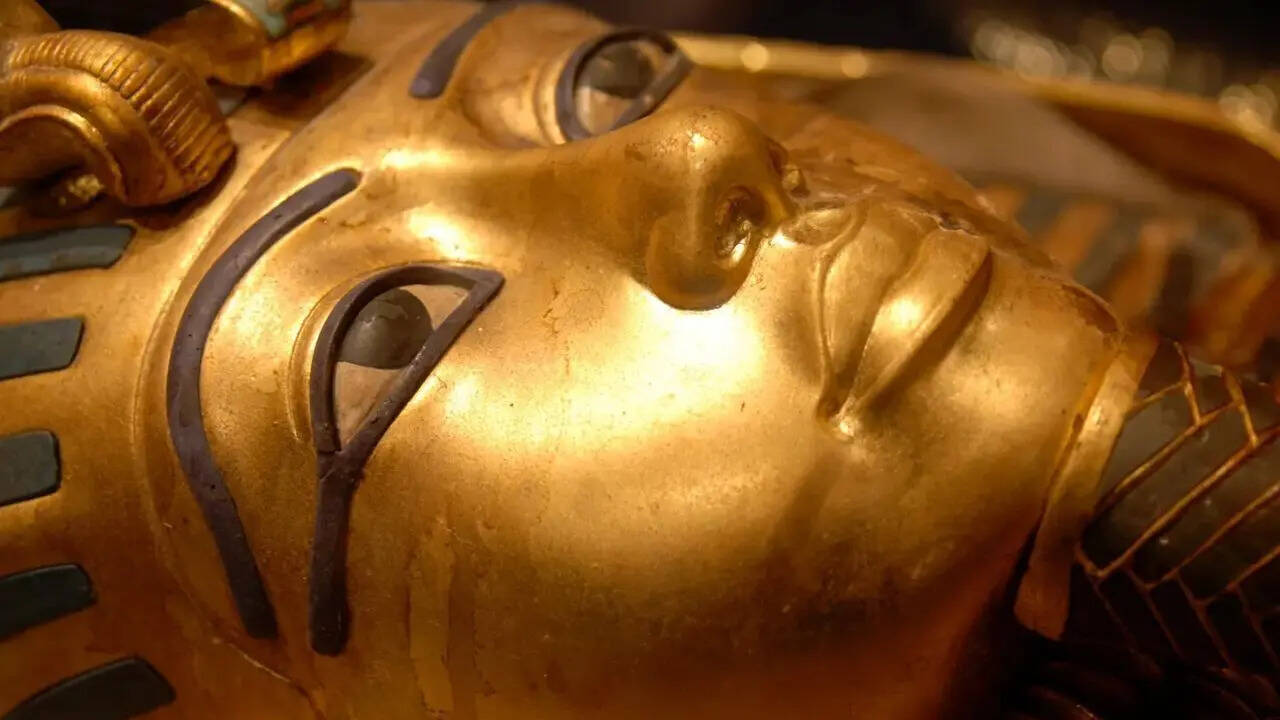
When Howard Carter breached the tomb of King Tutankhamun in 1922, he found a treasury of unimaginable wealth. Among the gold, the lapis lazuli, and the turquoise sat an exquisite pectoral ornament, a breastplate meant to protect the young pharaoh on his journey through the underworld. At the absolute center of this artifact sat a large, finely carved scarab beetle. For decades, experts assumed the beetle was made of chalcedony, a common quartz. They were wrong.
In 1996, an Italian mineralogist named Vincenzo de Michele used a spectrograph to test the pharaoh's scarab. The results sent a shockwave through the archaeological community. The jewel resting on the chest of Egypt's most famous king was carved from the very same mysterious yellow glass Clayton had found buried in the remote dunes of the Great Sand Sea.
Tutankhamun was wearing a piece of the sky.
For decades, the scientific community split into two warring camps over how this glass came to be. The debate was not polite. It was a clash of cosmic proportions, fought in peer-reviewed journals and university lecture halls. The stakes were deceptively high. Understanding the glass meant understanding the cataclysmic forces that shape our planet, forces that could, at any moment, wipe a modern city off the map.
The first camp championed the airburst theory. They argued that a massive asteroid, perhaps a hundred meters wide, tore through Earth’s atmosphere but exploded before it ever hit the ground. Think of it as a cosmic pressure cooker bursting at the seams. The resulting fireball would have acted like a giant magnifying glass, sending a wave of incandescent, atmospheric heat radiating downward. The temperature would have spiked to over 1,600 degrees Celsius in seconds. The desert floor would have melted instantly, pooling into rivers of liquid silica before cooling into the yellow glass we find today.
It is a terrifyingly elegant theory. It also matches what we saw in 1908 during the Tunguska event in Siberia, where a meteor flattened eighty million trees without leaving a single crater.
The second camp scoffed at this. They argued for a direct impact. To them, the airburst theory lacked the raw, violent pressure needed to create such pure glass. They believed a massive space rock must have slammed directly into the bedrock, vaporizing itself and the earth beneath it in a literal flash of apocalyptic fury. The problem? There is no crater in the Great Sand Sea large enough to account for such an impact. The desert sand, like a vast ocean of gold, had swallowed the evidence.
The two sides were deadlocked. Science needed a tiebreaker, a microscopic smoking gun.
That gun was found inside a grain of sand smaller than a speck of dust.
Enter the zircon. Zircons are nearly indestructible minerals. They are the time capsules of the geological world, capable of surviving billions of years of heat, pressure, and erosion. When a team of international researchers analyzed samples of the Libyan Desert Glass using advanced electron microscopy, they weren't looking at the glass itself. They were looking at the tiny zircon crystals trapped inside it.
What they found changed everything.
Under extreme magnification, the zircons revealed a highly unusual atomic structure. They contained remnants of a rare mineral called reidite. Reidite is a high-pressure polymorph of zircon. It does not form easily. You cannot create reidite with heat alone, no matter how intense that heat is. A cosmic airburst, even one that melts the desert floor, cannot generate the sheer, crushing force required to rearrange the atomic lattice of zircon into reidite.
Reidite requires pressure. Tremendous, unimaginable pressure. The kind of pressure that only occurs when a massive celestial object slams into the crust of the Earth at tens of thousands of miles per hour.
The zircon discovery effectively ended the airburst debate. It proved that 29 million years ago, a catastrophic impact occurred. The asteroid didn't just explode in the air; it punched the Earth squarely in the face. The energy released would have made the world's entire nuclear arsenal look like a firecracker. The impact instantly vaporized the bedrock, throwing molten glass high into the atmosphere, where it rained back down across the desert, hardening into the yellow shards that Clayton would find millions of years later.
But solving one mystery only unearths another. Where is the crater?
Some scientists point to the Oasis Crater, a scarred depression in Libya, but its size and age don't perfectly align with the sheer volume of glass found in the Great Sand Sea. Others believe the crater is simply buried beneath hundreds of feet of shifting dunes, waiting for a future generation of satellite technology to unmask it. The desert is a master of hiding its scars.
It is easy to view this as a dry, academic exercise. We read about zircons, reidite, and atmospheric pressures, and our eyes glaze over. But take a step back and consider the human element of this cosmic timeline.
Imagine an ancient artisan, sitting in a dusty workshop in Thebes or Memphis, over three thousand years ago. He is working by the light of an oil lamp, his hands calloused from years of carving hard stones for the royal court. A rare, exotic stone is placed in his palms. It didn't come from the local quarries. It was brought by traders who survived the lethal trek into the deep western desert, a place the Egyptians associated with the realm of the dead.
The artisan feels the smoothness of the yellow glass. He notes how it catches the light, unlike anything else found in the Nile Valley. He spends weeks carefully chipping away at it, grinding it with abrasive sands, shaping it into the form of a sacred scarab beetle, the symbol of Khepri, the god of the rising sun and eternal rebirth.
That artisan had no concept of asteroids. He knew nothing of zircons, reidite, or high-pressure shockwaves. He could not comprehend that this yellow stone was born from a violent, apocalyptic collision between Earth and a stray piece of the solar system millions of years before his civilization ever drew its first breath.
Yet, instinctively, he recognized that this material was divine. He chose it for the chest of his young king, placing a piece of cosmic catastrophe over the pharaoh's heart to guide him through eternity.
There is an unsettling vulnerability in this realization. We tend to think of the ground beneath our feet as permanent, a solid foundation upon which we build our fragile lives. But the yellow glass of the Sahara is a stark reminder that our planet is spinning through a cosmic shooting gallery. The boundary between a quiet, sunlit afternoon in the desert and a world-altering apocalyptic event is incredibly thin.
Today, tourists can buy small shards of Libyan Desert Glass online for a few dollars. It sits on bookshelves and nightstands, used as paperweights or wire-wrapped into trendy necklaces. We have domesticated a relic of cosmic violence.
But if you ever hold a piece of that canary-yellow glass in your hand, don't just admire its color. Feel its weight. Look closely at the tiny bubbles trapped inside its smooth surface. Those bubbles contain the ancient atmosphere of an Earth that was violently shattered and remade in a fraction of a second. You are holding the physical manifestation of a moment when the sky fell, a moment that a young king wore on his chest into the dark unknown, completely unaware that his sacred jewel was born from the death of a star.