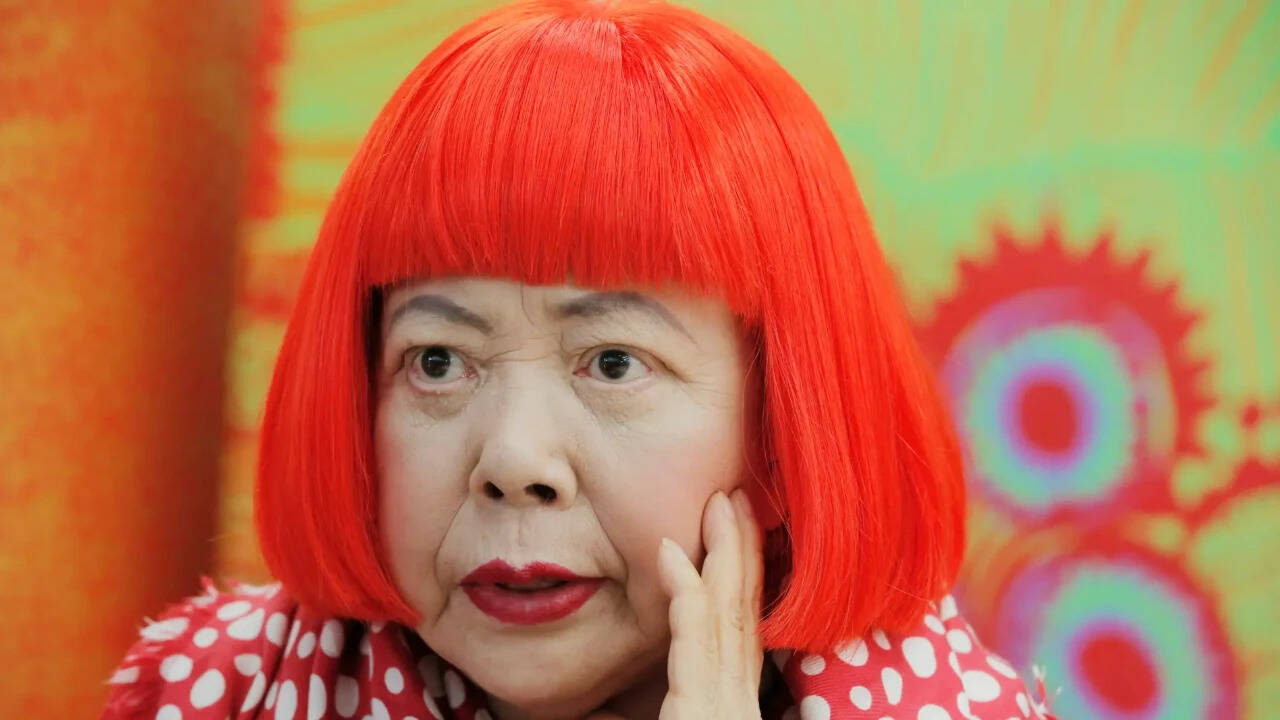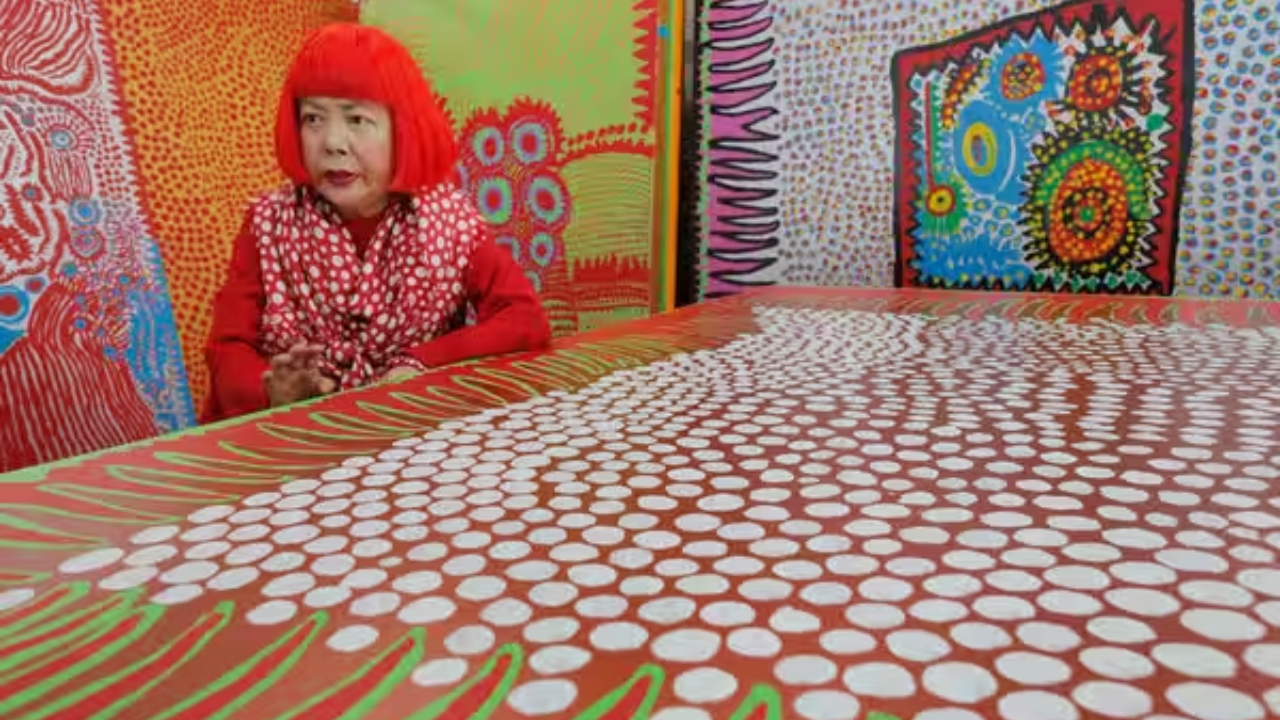
You can buy a cup of coffee for two bucks today. Decades ago, Yayoi Kusama handed over her avant-garde paintings in New York for that exact spare change. She didn't have a safety net. She barely had groceries. Today, those same pieces pull in eight figures at major auction houses like Sotheby's and Christie's.
It sounds like a modern myth. An overlooked starving artist suffers in obscurity, only for the market to wake up fifty years later and shower her estate with cash. But the story of Yayoi Kusama isn't just about a lucky financial break. It is a brutal masterclass in endurance, psychological grit, and outlasting an art world that wanted nothing to do with her until it couldn't ignore her anymore.
Most people look at the ten million dollar price tags attached to her Infinity Nets and assume she planned the trajectory. They think she mapped out a brilliant marketing scheme in the 1960s. They're wrong. She survived purely on obsession.
The Brutal Reality of New York in the Sixties
When Kusama arrived in Manhattan in 1958, she wasn't welcomed with open arms. She was a Japanese woman working in a male-dominated scene dominated by abstract expressionists who liked their canvas space large and their egos even larger. She didn't fit their boxes.
She worked in a freezing studio with no heat. She painted monumental net patterns for hours until her hands cramped up and bled. She didn't sell much. When she did find buyers, she often sold works for pennies just to pay for art supplies or basic rent.
Collectors didn't see genius. They saw a novelty. Worse, contemporaries allegedly stole her ideas and made fortunes while she struggled to pay medical bills. Andy Warhol and Claes Oldenburg drew inspiration from her immersive environments and soft sculptures, while she remained on the financial fringes.
She wasn't making commercial investments. She was trying to quiet her mind. The repetitive dots and nets weren't style choices. They were visual manifestations of the hallucinations she experienced since childhood.
How Two Dollar Art Turns Into Ten Million Dollars
The shift from worthless to priceless doesn't happen overnight. It requires a specific cocktail of historical revisionism, institutional backing, and relentless cultural saturation.
For a long time, Kusama's market was flat. She returned to Japan in the 1970s, physically and mentally exhausted, eventually checking herself into a psychiatric hospital where she still lives by choice. She kept working every single day.
The revival started in the late 1980s and 1990s. Curators began looking past the mainstream canon to unearth artists who shaped minimalism and performance art without getting credit. Galleries in-the-know started buying back her early canvases from the people who originally picked them up for pocket change.
Supply dried up fast. Early Kusama paintings from her New York period are exceptionally rare. When a scarce asset meets an infinite influx of global billionaire wealth, prices skyrocket. By the time a major painting hit the ten million dollar mark, the market had transformed her into a blue-chip commodity.
Wealthy collectors don't just buy a painting. They buy status, history, and narrative. A canvas that cost two dollars in 1960 carries a narrative of validation that money alone cannot manufacture. It proves the owner backed a visionary before the rest of the world caught on.
What Collectors and Creators Can Actually Learn
If you think you can spot the next Kusama at a local gallery and cash out down the road, lower your expectations. The art market is a meat grinder. Most artists who sell work for two dollars will die broke and forgotten.
Kusama succeeded because her work was uncompromisingly singular. She didn't chase trends. She invented a visual vocabulary that refuses to let you look away.
If you're buying art or building a collection, stop looking for safe investments. The pieces that appreciate exponentially are the ones that challenge the status quo so aggressively that people initially reject them.
If you're an artist, take note of the timeline. Kusama waited decades for her flowers. Validation from the mainstream machinery is nice, but it arrives on its own erratic schedule. You have to keep making the work long after the money runs out.
Go look at your own creative output. Are you making things to fit into an existing trend, or are you building a distinct universe that will take the world fifty years to understand?
Stop waiting for permission. Keep going.
.jpg?width=1200&auto=webp&trim=0%2C100%2C0%2C100)