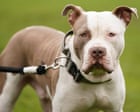
The taxpayer is currently subsidizing a panic. Recent reports highlighting a "huge" spike in police spending on kennelling and veterinary fees following the XL Bully ban are being framed as an unfortunate side effect of public safety. That is a lie. This isn't a side effect; it is the predictable result of a policy built on bad data, aesthetic bias, and a fundamental misunderstanding of canine biology.
We are watching a slow-motion car crash of fiscal irresponsibility. Since the ban took effect, police forces across the UK have seen their budgets swallowed by the logistics of incarceration. When you criminalize a look rather than a behavior, you create a permanent overhead that offers zero ROI in terms of actual safety. Expanding on this topic, you can find more in: The Brutal Truth About the Ritualized Violence Stalking Nigerian Fertility Festivals.
The Myth of the Dangerous Silhouette
The "lazy consensus" suggests that by removing a specific "type" of dog from the streets, we are mathematically reducing the risk of attacks. This is the same flawed logic used in every failed Breed Specific Legislation (BSL) attempt over the last thirty years.
Dog aggression is not a genetic monolith tied to the width of a skull or the muscularity of a shoulder. It is a cocktail of environmental factors, socialization, and owner competence. By focusing on the XL Bully, the government has essentially told the public that every other large, powerful breed is "safe" by default. Experts at NBC News have provided expertise on this trend.
I have spent years watching policy makers chase their tails on this. In the 90s, it was the Pit Bull. Before that, the Doberman. Tomorrow, it will be whatever crossbreed fills the vacuum left by the XL Bully. We aren't solving the problem; we are just changing the shape of the dog that causes it.
The Financial Black Hole of Breed Identification
Police departments are now forced to act as amateur taxonomists. Because "XL Bully" is a type, not a recognized breed with a closed gene pool, officers are spending thousands of man-hours measuring heights and snout lengths.
Consider the sheer waste in the following cycle:
- A dog is seized based on its physical measurements.
- It is placed in a high-security police kennel.
- Taxpayers foot the bill for specialized veterinary care and behavioral assessment.
- Legal battles ensue over whether the dog meets the arbitrary "type" criteria.
The cost of kennelling alone has tripled in some jurisdictions. We are effectively building a gulag for pets while actual violent crime investigations sit on the back burner. This isn't policing; it's expensive theater. If we took half the money spent on kennelling "typed" dogs and put it into mandatory high-level training licenses for owners of all dogs over 25kg, the bite statistics would actually move.
Why Veterinarians Are Winning and Safety Is Losing
The "huge increase" in vet spending isn't just about healthcare; it’s about the cost of compliance. Neutering mandates, microchipping, and the physical trauma of long-term kennelling require constant medical intervention.
Kennel stress is a real physiological condition. A dog that enters a police facility with zero history of aggression can become a liability after six months in a concrete box with minimal human contact. The ban is actually creating the dangerous temperament it claims to prevent. We are paying vets to manage the fallout of a government-imposed psychological breakdown in animals.
The Liability Shift
The most dangerous part of this ban is the false sense of security it provides. When the government bans a breed, it stops looking at the human behind the leash.
The industry insider secret? Professional trainers know that a poorly bred, unsocialized German Shepherd or a high-drive Belgian Malinois is significantly more "dangerous" in a suburban setting than an average XL Bully. But because those breeds aren't on the list, they are invisible to the law until someone gets hurt.
The current legislation is a "whack-a-mole" strategy. It targets the symptom—the dog—rather than the cause—the unregulated market of "status" dog breeding and the lack of owner accountability.
The Thought Experiment of the "Safe" Breed
Imagine a scenario where we banned all cars with red paint because data showed they were involved in more speeding tickets. We would rightfully call it idiocy. We would point out that it’s the driver, the road conditions, and the engine power that matter—not the color.
Yet, with the XL Bully, we have banned the "red paint." We have ignored the "engine" (temperament/genetics) and the "driver" (the owner).
Actionable Disruption: A Better Way
If we actually wanted to reduce dog attacks without bankrupting the police, we would stop measuring dogs and start measuring owners.
- Implement a Tiered Licensing System: If you want to own a dog over a certain weight or bite pressure capability, you pass a rigorous handling test. Period.
- End the "Type" Fantasy: Abolish BSL. Replace it with strict liability laws. If your dog causes harm, you are prosecuted as if you committed the act yourself.
- Tax the Breeders, Not the Taxpayers: Every puppy sold should carry a high-cost registration fee that funds a national dog attack victim compensation fund and local animal control.
The current system is a transfer of wealth from the public purse to private kennels and legal teams, all to maintain a facade of action.
Stop asking how much the ban is costing us and start asking why we are paying for a policy that has never, in any country, resulted in a long-term decrease in dog-related hospital admissions.
We are funding a crusade against a silhouette while the real problem—irresponsible ownership—walks free on the other side of the street.
The XL Bully ban isn't a safety measure. It's an expensive, failing monument to our refusal to hold people accountable for the animals they create.
The money is gone. The dogs are in cages. And the streets aren't any safer.
Pay the bill and keep your mouth shut, or demand a policy that actually targets the brain at the other end of the leash.