The Strait of Hormuz is a narrow stretch of water that keeps the global economy from face-planting. About a fifth of the world's total oil consumption passes through this choke point every single day. When things get tense between the U.S. and Iran, the "close the Strait" threat comes out like a recurring nightmare. Donald Trump has signaled that he wants other countries—specifically the big oil importers in Asia and Europe—to shoulder the burden of keeping those lanes open. He thinks the U.S. is doing too much heavy lifting for nations that don't pay their fair share.
He isn't entirely wrong about the math. But he's dreaming if he thinks a "pay-to-play" maritime security model will actually work.
The reality on the water is a mess of overlapping interests, ancient grudges, and the cold hard fact that most countries simply don't have the hardware to help even if they wanted to. You can't just venmo a navy into existence. If the U.S. pulls back or demands a subscription fee for freedom of navigation, the result isn't a more balanced coalition. It’s a power vacuum that China or regional players will happily, and dangerously, fill.
The Geography of a Nightmare
To understand why this is so hard, look at a map. At its narrowest, the Strait is only about 21 miles wide. The actual shipping lanes are even tighter—just two miles wide in each direction, separated by a two-mile buffer zone. Most of these lanes sit within Omani or Iranian territorial waters.
Iran knows this. They’ve spent decades perfecting "asymmetric" warfare. They don't need a massive fleet of destroyers to cause chaos. They have thousands of fast attack boats, sea mines, and shore-based anti-ship missiles. They can make the cost of insurance for a commercial tanker so high that shipping companies simply stop coming.
When Trump argues that countries like China, Japan, and South Korea should protect their own tankers, he's ignoring the technical reality. The U.S. Fifth Fleet, based in Bahrain, is the only force in the region with the integrated command structure, satellite intelligence, and mine-sweeping capabilities to actually deter a state-level actor.
Why the Allies are Hesitant to Sign On
Asking for help sounds reasonable in a campaign speech. In practice, it hits a wall of diplomatic friction. Most of our allies view the instability in the Strait as a direct result of U.S. policy, specifically the withdrawal from the Iran nuclear deal (JCPOA) and the "maximum pressure" campaign.
European powers like France and the UK have tried to create their own monitoring missions, such as EMASoH (European Maritime Awareness in the Strait of Hormuz). They did this specifically to distance themselves from the U.S.-led "Operation Sentinel." Why? Because they didn't want to be dragged into a shooting war started by a U.S. administration they didn't fully trust.
- Japan has constitutional restrictions on how its military can operate abroad.
- South Korea is constantly looking over its shoulder at North Korea and can't afford to park a significant chunk of its navy in the Persian Gulf indefinitely.
- China prefers to let the U.S. pay for the security that keeps Chinese factories running. They get the oil; we get the bill and the headaches.
Trump's "America First" logic suggests that if they won't help, we should leave. But if the U.S. leaves, we lose the ability to dictate terms in the Middle East. It’s the ultimate catch-22.
The Massive Cost of Shifting the Burden
Let's talk about the money. Running a carrier strike group isn't cheap. It costs millions of dollars a day. If Trump demands that India or Japan pay for this, he's essentially turning the U.S. Navy into a mercenary force. That changes the legal and moral standing of every operation we conduct.
There is also the "free rider" problem. China is the largest importer of Persian Gulf oil. If the U.S. Navy stops patrolling, China will eventually send its own People's Liberation Army Navy (PLAN) to fill the gap. Does Washington really want the Chinese military controlling the world’s most important energy artery? Probably not.
Iran's Home Field Advantage
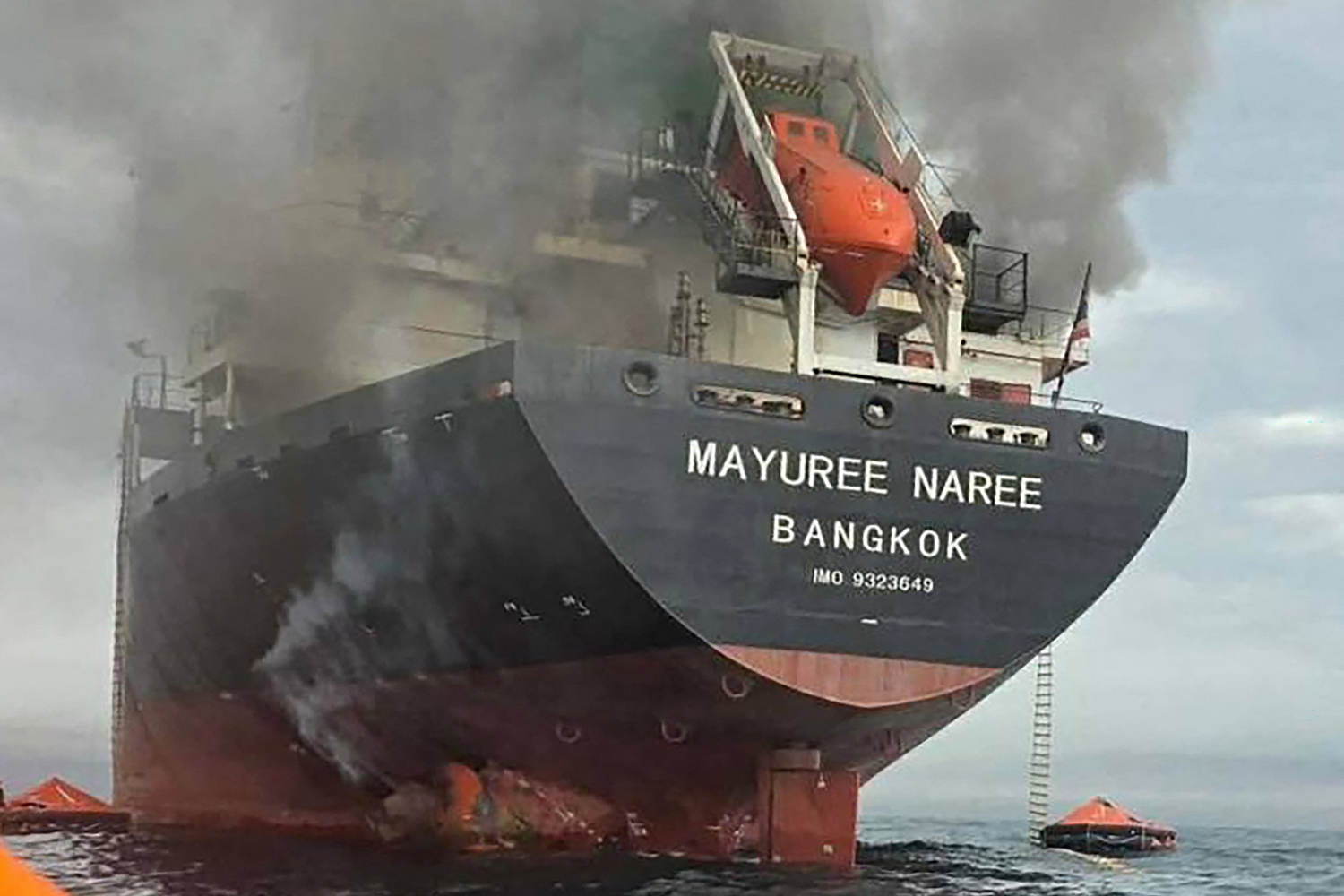
Iran doesn't need to win a war to "close" the Strait. They just need to make it look scary. In 2019, several tankers were damaged by limpet mines. The U.S. blamed Iran; Iran denied it. The result? Insurance premiums for tankers in the Gulf skyrocketed by 1000% in a single week.
If Trump pushes for a multinational force that lacks a unified command, the risk of a "miscalculation" goes through the roof. Imagine a scenario where a nervous captain from a smaller navy fires on an Iranian patrol boat. Suddenly, you have a regional war that nobody—especially not the global oil market—is ready for.
The U.S. military has spent decades practicing for this. We have specialized divers, underwater drones, and sophisticated electronic warfare suites. Most other navies have ships that look nice in a parade but would be sitting ducks against Iranian shore-based missiles like the Noor or the Qader.
Stop Thinking of It as Just a Shipping Issue
This isn't just about boats. It's about the global price of everything. If the Strait closes, oil doesn't just go up in the U.S.; it goes up everywhere. Even if the U.S. becomes "energy independent" in terms of net production, we still live in a global price environment. If a barrel of Brent crude hits $150 because of a skirmish in the Strait, American gas prices will still spike.
Trump’s desire for others to help is a reflection of a tired superpower. It’s an admission that the post-WWII era of the U.S. being the world’s policeman is grinding to a halt. But expecting a quick fix or a check in the mail from our allies is a fantasy.
What Actually Needs to Happen
If the goal is truly to reduce the U.S. footprint in the Strait of Hormuz, it can't be done through threats or invoices. It requires a long-term shift in how global energy is moved.
- Pipeline Expansion: Bypassing the Strait is the only way to reduce its leverage. The Abu Dhabi Crude Oil Pipeline and Saudi Arabia’s Petroline can move some oil to the Gulf of Oman or the Red Sea, but they don't have the capacity to handle everything.
- Regional De-escalation: Security in the Strait is a political problem, not a maritime one. As long as the U.S. and Iran are at each other's throats, the Strait will be a hostage.
- Realistic Expectations: We need to accept that Japan and Europe will never have the naval reach the U.S. has. Encouraging them to handle "low-intensity" tasks like anti-piracy is fine, but they aren't going to fight the Iranian Revolutionary Guard for us.
The Strait of Hormuz is the world's most dangerous cul-de-sac. Trump can yell about the cost all he wants, but as long as the world runs on oil, the U.S. is stuck with the tab. Anything else is just theater.
Watch the insurance markets. When Lloyd’s of London designates the Persian Gulf as a "listed area," that's your signal that the political rhetoric is turning into a real-world crisis. Don't wait for a formal declaration of a closure; by then, the economic damage is already done. Check the daily transit counts through the Strait via maritime tracking services like MarineTraffic to see if the "Trump effect" is actually scaring off tankers or if it's business as usual.