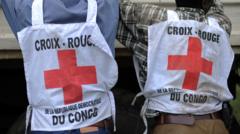
Frontline health workers are dying in the Democratic Republic of the Congo. Again. This time, Red Cross volunteers lost their lives while trying to contain a suspected Ebola outbreak. It is a tragedy, but it is not a surprise. If you have been watching the global health response in Central Africa over the last decade, you know this is a horrifyingly predictable pattern.
We need to talk about why this keeps happening. The standard news cycle treats these deaths as isolated incidents or unavoidable statistics of a brutal region. That narrative is wrong. It ignores the systemic failures, the breakdown in community trust, and the terrifying reality of what it actually takes to bury an Ebola victim.
Local volunteers are the only shield preventing regional outbreaks from becoming global pandemics. Yet, they are consistently underfunded, unprotected, and exposed to lethal violence.
The Deadly Reality of Red Cross Safely Conducting Burials
When an Ebola outbreak hits a village in North Kivu or Equateur province, the risk does not end when a patient stops breathing. The body of someone who died from Ebola is highly infectious. The viral load is at its peak. Traditional Congolese burial practices involve washing the body and close contact with family members. This cultural ritual, born out of love and respect, becomes a super-spreader event.
That is where the Red Cross Safe and Dignified Burial teams step in. I have looked closely at the protocols these teams use, and the margins for error are razor-thin.
Volunteers must suit up in personal protective equipment in sweltering heat. Think heavy layers, thick gloves, goggles, and hoods. They have to handle a highly contagious corpse, disinfect the home, and bury the deceased while keeping grieving, angry relatives at a safe distance. One tear in a glove means a death sentence.
The physical danger is only half the battle. The psychological toll is immense. You are entering a community that is terrified, suspicious, and often convinced that health workers brought the virus to cash in on foreign aid money.
Why Community Resistance Triggers Violence Against Frontline Teams
You cannot understand these recent deaths without understanding the deep-seated distrust in eastern DRC. Decades of armed conflict, government neglect, and exploitation have left local populations wary of outsiders. When teams arrive in white trucks, wearing spacesuits, and demanding to take away the bodies of loved ones, communities snap.
Mistrust turns into physical attacks. Milita groups and angry mobs frequently target treatment centers and burial teams.
- Volunteers have been ambushed on remote roads.
- Conspiracy theories spread faster than the virus itself, claiming Ebola is a political hoax.
- Local youth groups sometimes form blockades to prevent burial teams from entering villages.
International agencies often preach about community engagement from comfortable offices in Geneva or Kinshasa. But on the ground, the reality is messy. If a burial team does not spend days building a relationship with a village elder before an outbreak hits, they are walking into a trap. The recent suspected Ebola deaths highlight a failure not of science, but of local diplomacy.
What the International Community Consistently Gets Wrong About Ebola Response
Global health organizations treat Ebola like a medical fire that needs to be put out with massive infusions of cash and temporary clinics. Once the cases drop to zero, the funding dries up. The international staff flies home. The local volunteers go back to poverty.
This boom-and-burst cycle is broken. It leaves the DRC permanently vulnerable.
True biosecurity cannot be rented during a crisis. It must be built permanently. The World Health Organization and major donors need to stop viewing local Red Cross chapters as cheap, disposable labor for dangerous tasks. These volunteers require consistent salaries, top-tier medical insurance, and long-term mental health support.
Right now, many volunteer teams operate on shoestring budgets until a major crisis makes international headlines. By then, it is already too late for the people on the front lines.
Practical Steps to Protect the Workers Saving Us From Pandemics
We cannot eliminate Ebola from the forests of the DRC. The animal reservoir exists, and spillover events will happen. But we can stop treating the human beings who fight it as collateral damage.
Fixing this requires shifting resources away from top-heavy international bureaucracies directly into the hands of provincial health teams.
First, we must institutionalize permanent hazard pay for burial teams, ensuring they are compensated year-round, not just during declared emergencies. Second, local religious and tribal leaders must be integrated into the core planning phases of epidemic responses, giving them ownership over safe burial protocols rather than forcing external rules upon them. Finally, security logistics need an overhaul. Health workers should never have to choose between entering a hostile zone unprotected or relying on heavily armed military escorts that only deepen community suspicion.
The next time you read a headline about volunteers dying in the DRC, do not look at it as a distant African tragedy. Look at it as a failure of global health strategy. Those volunteers are protecting the entire world from a devastating pathogen. The bare minimum we owe them is the resources, respect, and security to return home alive to their families.