Listen.
In the quietest corners of Lima, behind high stone walls and heavy mahogany doors, there is a specific kind of silence that doesn’t feel like peace—it feels like a threat. For decades, that silence protected one of the most powerful institutions in Peru. Then, a journalist with a notebook, a stubborn streak, and a refusal to flinch decided to break it.
Her name is Paola Ugaz. If you walk past her in a crowded café in Miraflores, she might look like any other hurried writer checking her phone over a cooling espresso. Look closer, though. Notice the way she scans the room before sitting down, choosing a chair with her back to the wall. Notice the weariness around her eyes, the kind that doesn’t come from a single late night, but from years of waking up every morning wondering which courtroom she will have to walk into next.
To understand what happened to Paola Ugaz, you have to understand what happens when you pull a single loose thread on a garment woven from money, faith, and absolute impunity. You don't just unravel a scandal. You bring the entire loom crashing down on your own head.
The Architecture of a Lie
Let’s step back into the early 2010s. At the time, the Sodalitium Christianae Vitae—commonly known as the Sodalicio—was the golden child of conservative Peruvian Catholicism. Founded in 1971 by Luis Fernando Figari, it wasn't just a religious society; it was an empire. They owned cemeteries, schools, real estate companies, and immense political influence. To the elite of Lima, sending your son to a Sodalicio retreat was a badge of honor, a fast track to moral rectitude and social prestige.
But behind the immaculate white shirts and the booming hymns, something rot-black was festering.
When Paola Ugaz and her co-author, Pedro Salinas, began digging into the group, they weren't looking for a headline. They were following the whispers of broken men. In 2015, they published Mitad monjes, mitad soldados (Half Monks, Half Soldiers). The book didn't just expose abuse; it revealed a systematic factory of psychological, physical, and sexual violence designed to break young men down until their wills belonged entirely to Figari and his inner circle.
Imagine, for a moment, a hypothetical seventeen-year-old boy from a devout Lima family—let’s call him Mateo. Mateo is idealistic, eager to serve God, and desperate to belong. He enters a Sodalicio community expecting brotherhood. Instead, he is isolated from his parents. His sleep is weaponized. He is told that his own thoughts are sinful, that obedience to his superiors is the only path to salvation, and that the physical humiliation he endures is a form of spiritual purification. By the time Mateo realizes he is in a cage, he no longer remembers how to use the key.
That was the reality Paola Ugaz put into print. And the empire struck back immediately.
Death by a Thousand Subpoenas
You might think that when a journalist uncovers the largest abuse scandal in her country’s modern religious history, she gets a medal, a book tour, and a quiet life. In Peru, you get a target painted on your back.
Powerful institutions rarely send assassins anymore; the optics are too messy. Instead, they use the law. They weaponize the judiciary until the process itself becomes the punishment. This is what legal scholars call SLAPP suits—Strategic Lawsuits Against Public Participation—though for Paola, it felt less like a legal strategy and more like slow-motion suffocation.
Over the course of nearly a decade, Ugaz was hit with a staggering barrage of criminal defamation lawsuits, money laundering accusations, and bizarre conspiracy claims. Consider what happens next when a reporter is dragged into court dozens of times:
- Your bank accounts are scrutinized as if you were a cartel boss.
- Your savings evaporate into the pockets of defense attorneys.
- Your name is dragged through sympathetic media outlets, painting you not as an investigator, but as an extortionist.
- Every trip to the grocery store carries the low-grade hum of paranoia, the lingering shadow of surveillance and anonymous threats.
It is a war of attrition. The goal isn't necessarily to win the case; the goal is to bankrupt the journalist, exhaust her spirit, and send a chilling message to every young reporter in Lima: Look at Paola. Do you really want to write that story?
I have spent years watching how institutional cover-ups operate, and the pattern is always the same. First, they deny the victims exist. Second, they claim the abuse was just a few "bad apples." Third, when the evidence becomes undeniable, they attack the sanity and integrity of the person holding the flashlight. It is like watching an arsonist sue the firefighter for water damage.
For years, Paola stood in the rain while the very justice system meant to protect citizens was used as a cudgel against her. The Peruvian courts, notoriously slow and vulnerable to political pressure, became a labyrinth with no exit. She was accused of illicit enrichment—an absurd charge for a journalist whose investigative work was costing her everything she owned. She was sued by an archbishop. She was harassed by trolls and shadowed by men in unmarked cars.
There were moments, she has admitted in quiet interviews, when the weight felt unbearable. When you are fighting an octopus, cutting off one tentacle only leaves seven more wrapped around your throat.
The Unlikely Ally in Rome
Then, the wind shifted in the most unexpected place on earth: the Vatican.
To grasp the sheer improbability of what followed, you have to understand the geography of Catholic power. For years, the Sodalicio had allies in Rome who kept the complaints buried under layers of bureaucratic dust. Victims flew to Italy only to be met with polite nods and closed doors.
Enter Robert Francis Prevost.
Before the world knew him as Pope Leo XIV, Prevost was an American-born Augustinian missionary who had spent decades in Peru, eventually serving as the Bishop of Chiclayo. He didn't view Peru from the marble balconies of St. Peter’s Basilica; he knew the red dust of the northern coast, the resilience of its people, and the suffocating grip of clericalism. He understood the Sodalicio not as a theological abstraction, but as a local wound that refused to heal.
When Prevost rose through the ranks of the Vatican—first heading the Dicastery for Bishops under Pope Francis, and later ascending to the papacy itself as Leo XIV—he brought that lived Peruvian reality with him to the highest seat of Catholic authority.
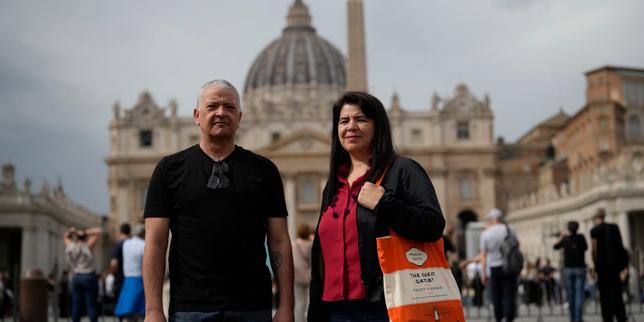
The Vatican finally dispatched its top investigators, Archbishop Charles Scicluna and Monsignor Jordi Bertomeu, to Lima. They didn't just speak to the bishops. They sat down with the survivors. And they sat down with Paola Ugaz.
Imagine sitting across from envoys of the Holy See after ten years of being called a liar, a criminal, and an enemy of the faith by your own countrymen. For the first time, the institutional machinery wasn't grinding her down; it was listening.
When Pope Leo XIV assumed the papacy, the signal became unmistakable. His history in Peru and his unwavering backing of the investigation into the Sodalicio shattered the myth that the group was untouchable. The ultimate result—the historic suppression and dissolution of the Sodalicio by the Vatican—was a seismic shockwave across Latin America. An empire that thought it would last a thousand years was dismantled by the pen of the very institution it claimed to serve.
And standing right there, vindicated by the highest moral authority in the Catholic world, was Paola Ugaz.
The Cost of Keeping the Lights On
If this were a Hollywood movie, the credits would roll right here. The villains would slink away, the Pope would offer a blessing, and Paola would walk out of the courthouse into the warm Peruvian sunshine, completely free.
Real life is rarely that tidy.
Even with the backing of Pope Leo XIV and the dissolution of the Sodalicio, the legal gears in Peru grind slowly. A papal decree in Rome does not automatically erase a fabricated money-laundering file sitting on a prosecutor's desk in Lima. The remnants of the old guard—wealthy, connected, and deeply bitter—still hold sway in certain corners of the Peruvian judiciary and political class.
Think about what that means for a moment. The highest authority in the Catholic Church has effectively said, This journalist told the truth, and the men she exposed were monsters. Yet, in her own country, she still has to fight to clear her name from the legal traps set by those very same men.
It is a bizarre, almost surreal purgatory. You can be celebrated in Rome and prosecuted in Lima on the exact same Tuesday.
Why does this matter to anyone outside of Peru? Why should someone sitting in Chicago, Paris, or Buenos Aires care about a bruised investigative reporter and a disbanded religious group?
Because the playbook used against Paola Ugaz is now open-source. Across the globe, from tech oligarchs to corrupt politicians to abusive institutions, the strategy for silencing dissent has evolved. You don't need to censor the press if you can simply litigate them into bankruptcy. You don't need to burn the books if you can make the author spend every waking hour defending themselves in court.
Paola’s survival is proof that the strategy isn't foolproof, provided someone is willing to endure the hell of outlasting it.
She didn't have a massive corporate legal team behind her. She didn't have billionaire backers. What she had was a relentless commitment to the facts, a network of international press freedom advocates who refused to let her disappear into a Peruvian prison cell, and the moral courage to keep showing up.
The Notebook Remains Open
Walk past that café in Miraflores again.
The sun is dipping low over the Pacific, casting long, golden shadows across the pavement. Inside, Paola Ugaz is still sitting with her back to the wall. The espresso is cold now. Her phone buzzes with another message—maybe from a lawyer, maybe from a survivor in another city who finally feels safe enough to speak, maybe from a colleague checking in.
She picks up her pen. The ink is black, the paper is white, and the noise of the city hums softly behind the glass.


