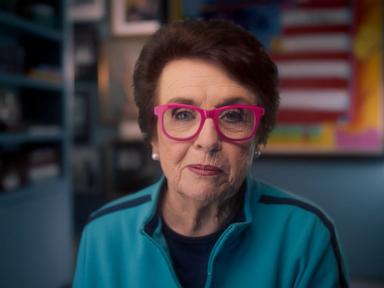
The tennis racket felt heavy in the hand, but the invisible weight was always much worse.
Imagine standing on a court under the blinding glare of stadium lights, knowing that every swing of your arm is meant to shatter a glass ceiling that the rest of the world pretends does not exist. That was the daily reality for Billie Jean King during an era when women's athletics were treated as an afterthought, a polite diversion played out on the outer grounds while the main stadium waited for the men.
A new documentary feature titled Give Me the Ball!, directed by Liz Garbus and Elizabeth Wolff, pulls back the archival curtain on that thunderous era. The project offers a raw, unfiltered look at the sports icon. It forces us to confront a heavy truth. True social transformation is rarely born from comfort; it is forged by individuals willing to sacrifice their private peace for a public reckoning.
History loves clean heroes. We prefer our icons packaged neatly, cast in bronze, stripped of the messy, bleeding edges of ordinary humanity. Yet the archival footage and candid present-day interviews in this film refuse to let Billie Jean remain a flat symbol on a poster. Instead, the narrative exposes the high personal toll of her unrelenting drive.
Consider what happens when a person decides that the collective future of an entire demographic matters more than their own psychological survival. While fighting tooth and nail for equal prize money and building the foundation of professional women's tennis from scratch, King was fighting invisible wars behind closed doors. She battled hidden eating disorders. She bore the crushing burden of concealing her true sexual orientation in a society hostile to her identity. She did not merely play the game; she absorbed the blows meant for generations of athletes who came after her.
The documentary frames these struggles not as footnotes, but as the central engine of her crusade. Voices like Chris Evert, Serena Williams, and Elton John step into the frame to bear witness, providing context to an intensity that often alienated those closest to her. Perfection was never the goal. Survival and equity were.
We often look at modern sports stars signing multi-million dollar contracts and forget that someone had to walk into hostile boardrooms with a handful of dollar bills and an ultimatum. In 1973, when King threatened to boycott the US Open unless the prize money for men and women was equalized, she wasn't just negotiating a purse. She was rewriting the value of a woman's labor in real time. She took a massive risk, putting her career and reputation on the line so that future generations could simply play.
What makes this cinematic portrait compelling is its refusal to rush past the pain. Directors Garbus and Wolff hold the focus on the discomfort, reminding viewers that the freedoms we take for granted today were wrung out of stubborn resistance. Billie Jean King put changing the world ahead of saving herself.
The racket rests now, but the echo of her fierce determination still reverberates across every court, arena, and boardroom where women demand a seat at the head of the table.
Watch Billie Jean King discuss the documentary
This video provides a direct, firsthand look at the iconic athlete discussing her historic career and the core themes explored in the new documentary.