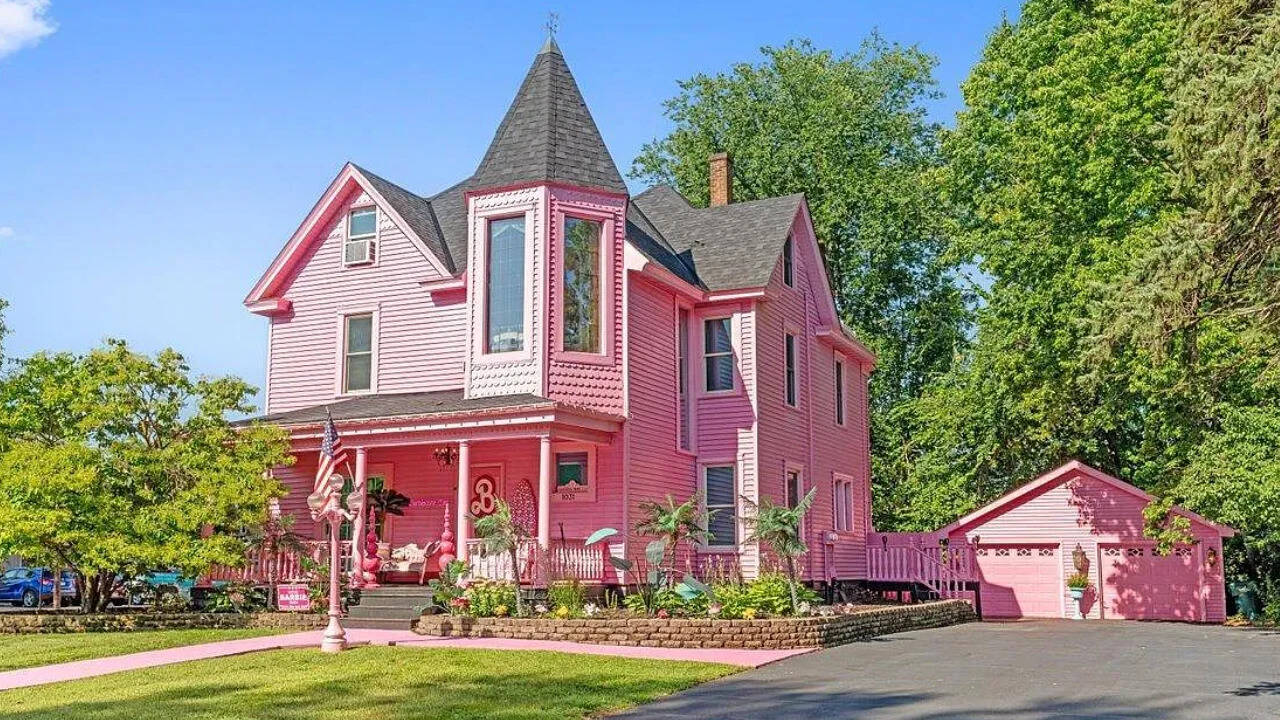
Real estate media loves a gimmick. When a bubblegum-pink colonial in Hudson, Wisconsin hit the market for $1.1 million and quickly went under contract, property blogs tripped over themselves to celebrate. They called it viral marketing genius. They praised the seller’s audacity. They framed it as proof that maximalist design prints money in a sluggish housing market.
They are completely wrong.
Viewing the pending sale of a hyper-themed residential property as a blueprint for value creation is a classic case of mistaking novelty for asset appreciation. Going under contract is not closing. Even when a deal like this crosses the finish line, the financial mechanics underneath the hot-pink paint tell a much darker story about functional obsolescence, appraisal gaps, and the brutal reality of illiquid real estate.
The Appraisal Cliff Nobody Mentions
Every standard real estate headline treats a pending contract price as the final word on a home’s worth. In reality, a contract on a hyper-customized property is just the opening bell of a brutal negotiation with a bank appraiser.
Lenders do not care about TikTok views. They do not care about Mattel nostalgia. Mortgage underwriters base loan-to-value ratios on comparable sales—recent transactions of similar properties within a tight geographic radius. In Hudson, Wisconsin, a standard four-bedroom colonial with neutral finishes has a clear ceiling determined by local square-footage metrics.
When a seller dumps hundreds of thousands of dollars into monochromatic pink cabinetry, custom neon signage, and themed pool accessories, they trigger what appraisers call super-adequacy or incurable functional obsolescence.
- The Comp Deficit: An appraiser cannot use a standard luxury home in Minneapolis or a themed Airbnb in Palm Springs to justify a price tag in western Wisconsin. They have to use neighboring houses.
- The Financing Choke Point: If the neighborhood median supports $750,000, and the contract is for $1.1 million, the appraiser will likely value the property closer to $750,000.
- The Cash Bridge: Unless the buyer is paying all cash, they have to bring $350,000 to the closing table out of pocket just to cover the valuation gap. Most residential buyers do not have that kind of liquid cash sitting around for a novelty house.
I have watched dozens of sellers fall in love with their own viral press, only to watch three consecutive contracts collapse during the inspection and appraisal contingencies. Going under contract on a house like this is easy; getting a traditional mortgage lender to actually fund the note is an entirely different war.
Short-Term Rental Math Is Breaking Down
The lazy consensus assumes that whoever buys a $1.1 million Barbie house isn't going to live there—they are buying a cash-flowing short-term rental (STR) machine. Five years ago, that thesis had teeth. Today, it is a recipe for negative cash flow.
During the 2021–2022 travel boom, themed Airbnbs printed money. Guests paid massive premiums for "Instagrammable" stays, and low interest rates meant investors could carry bloated mortgages easily. That market has violently corrected. Supply in the STR sector exploded while consumer discretionary spending tightened.
Imagine a scenario where an investor buys this Wisconsin property at $1.1 million with 20% down ($220,000) at prevailing commercial or investment property interest rates hovering near 7.5% to 8%.
- Debt Service: Principal and interest alone will eat roughly $6,100 to $6,500 every single month.
- Operating Expenses: Property taxes in Wisconsin are notoriously high, averaging over 1.5% of assessed value. Add commercial liability insurance, pool maintenance in a cold-weather climate, utilities, and a 20% property management fee, and your baseline monthly nut easily clears $9,500 before a single guest books a night.
- Seasonality: Hudson, Wisconsin is not Scottsdale. It experiences brutal winters. You cannot rely on year-round pool parties to drive high average daily rates (ADR). To clear $115,000 in annual gross revenue just to break even, the property needs near-peak occupancy at luxury resort rates during a narrow five-month weather window.
When you buy a property strictly for its viral theme, you are no longer in the real estate business. You are in the entertainment business. Entertainment assets require constant capital expenditure to stay relevant. Once the novelty wears off—and cultural trends move at algorithmic speed—your occupancy rates crater, leaving you holding an overpriced asset that nobody wants to rent and no residential family wants to buy.
Why Loud Design Destroys Exit Liquidity
In institutional real estate, the single most important metric isn't entry price. It is exit liquidity—how fast you can turn the asset back into cash without taking a haircut.
Great investors, from Sam Zell to modern private equity syndicators, obsess over optionality. When you buy a neutral, well-located asset, you have three clear exit strategies: sell to a primary homeowner, lease to a long-term tenant, or operate as a short-term rental.
Painting a $1.1 million estate top-to-bottom in hot pink systematically destroys two of those three exits.
- Primary Buyers Walk Away: A traditional family shopping at the $1 million-plus tier wants turnkey luxury, not a $150,000 remediation project. Stripping specialty paint off millwork, replacing custom pink tile, ripping out themed carpets, and repainting exterior trim is a logistical nightmare. Buyers mentally deduct double the actual renovation cost from their offer just for the headache.
- Long-Term Tenants Won't Pay the Premium: Corporate executives relocating to the Twin Cities metro area aren't paying $6,500 a month in rent to live inside a toy box. They want understated quality.
By hyper-targeting the 0.01% of buyers who want a themed novelty property, the seller trades broad market demand for media attention. Media attention feels great on Instagram, but it does not pay capital gains taxes.
The Only Time Viral Real Estate Actually Works
To be fair, the seller in Wisconsin pulled off a brilliant PR stunt. By leaning completely into the aesthetic, they bypassed traditional real estate marketing channels and earned millions of dollars in free global press. For an individual seller looking to capture one specific eccentric buyer—or a wealthy super-fan with cash to burn—the gamble can occasionally pay off if the timing aligns with a massive pop-culture wave.
That is the trap, though. You cannot systematize luck.
If you are looking at the Wisconsin Barbie house and thinking about applying "bold, polarizing design" to your own flip or investment property, stop. You are suffering from survivorship bias. You see the one viral listing that made the news; you don't see the hundreds of overly personalized homes sitting on the MLS for 240 days, bleeding carrying costs while sellers slash prices by $50,000 every month.
Real wealth in property comes from buying unremarkable structures in irreplaceable locations and executing clean, timeless renovations that appeal to the widest possible pool of qualified buyers. Leave the pink paint for the toy aisle.
If you want to build actual equity, buy the boring house next door, paint it white, and let your neighbors chase the headlines while you quietly bank the appreciation.