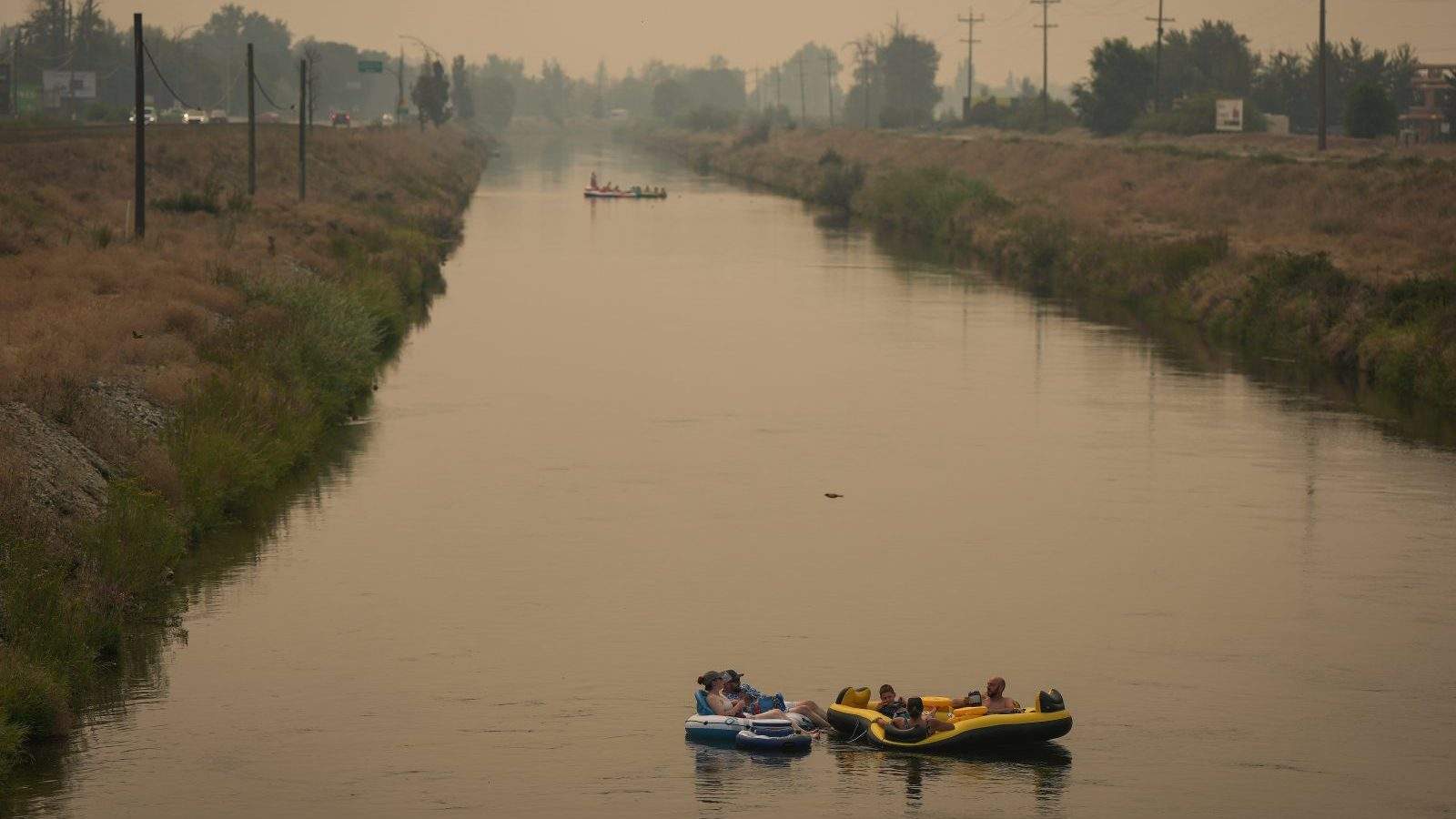
You probably checked the weather before walking out the door today. You didn't check the PM2.5 levels.
That habit used to be harmless. Not anymore. According to recent global public health findings—including data highlighted by the Lancet Countdown on Health and Climate Change—deaths tied to wildfire smoke have surged by roughly 275% over the past two decades. Hundreds of thousands of people are dying prematurely every single year from breathing in burning forests, melted plastics, and incinerated homes from hundreds of miles away.
Yet when the sky turns a hazy, apocalyptic orange, most folks still go for their morning jog. They crack their bedroom windows at night because it feels cool. Honestly, we're treating a severe chemical hazard like a foggy morning, and our lungs are paying the price.
Why Wildfire Smoke Is Worse Than Regular Air Pollution
People love to compare bad smoke days to smoking a pack of cigarettes. That comparison is cute, catchy, and wildly misleading.
Standard urban smog from tailpipes and factories is terrible for you, sure. It contains fine particulate matter known as PM2.5—microscopic specks less than 2.5 micrometers wide. To put that in perspective, a single strand of human hair is about 70 micrometers across. You could line up nearly thirty of these particles across the width of one hair.
Wildfire smoke carries PM2.5, too. Here is the catch. Recent atmospheric research out of institutions like Stanford University and the Scripps Institution of Oceanography shows that wildfire-specific PM2.5 is significantly more toxic to human cells than the same concentration of exhaust fumes.
Why? Because wildfires don't just burn pristine pine trees anymore. They tear through wildland-urban interfaces. When a fire consumes a neighborhood, it vaporizes cars, batteries, vinyl siding, treated lumber, household cleaners, and asbestos. The resulting plume is a cocktail of heavy metals, volatile organic compounds, and polycyclic aromatic hydrocarbons.
Even pure forest smoke undergoes chemical aging as it travels. Sunlight bakes the smoke plume as it drifts across states or entire continents, creating secondary organic aerosols and ground-level ozone. By the time that haze reaches a city a thousand miles downwind, it has morphed into an oxidative stress machine.
What Actually Happens Inside Your Body
When you inhale normal dust, your nose hairs and throat mucus trap most of it. You sneeze, you cough, problem solved.
PM2.5 laughs at your nose hairs.
These particles are so tiny they bypass your upper respiratory defenses completely and lodge deep inside the alveoli—the microscopic air sacs in your lungs where oxygen enters your blood. Once there, the smallest ultrafine particles actually cross the alveolar-capillary barrier and enter your bloodstream directly.
Your immune system freaks out. It treats these foreign chemical specks like an invading pathogen, triggering massive systemic inflammation. Your blood vessels constrict. Your blood becomes stickier and more prone to clotting.
This is why the 275% spike in wildfire smoke deaths isn't mostly people suffocating from asthma attacks. While respiratory distress sends thousands to the ER, the real silent killer is cardiovascular failure. Heart attacks, ischemic strokes, and sudden cardiac arrests spike dramatically within 24 to 72 hours of a heavy smoke event.
I've spoken with pulmonologists who note that patients with zero history of heart trouble suddenly show up with dangerous arrhythmias during regional smoke waves. If you already have high blood pressure, mild plaque buildup, or diabetes, breathing unfiltered wildfire haze is like throwing a lit match onto dry kindling.
The Delayed Damage Nobody Tracks
Emergency room visits give us immediate, dramatic numbers. They don't capture the slow burn.
Long-term exposure to repeated smoke seasons eats away at baseline lung function. Studies tracking residents exposed to severe wildfire seasons—like the devastating 2019–2020 Australian bushfires or the massive Canadian boreal fires of 2023—show measurable drops in lung capacity lasting months or even years after the skies clear.
Pregnant women face heightened risks of preterm birth and low birth weight. Kids breathing heavy smoke during critical developmental windows show higher rates of new-onset asthma and cognitive fatigue. You don't drop dead the afternoon the sky turns gray, so you assume you're fine. Ten years later, your cardiovascular system tells a different story.
The Biggest Mistakes People Make During Smoke Events
Living through multiple severe smoke seasons teaches you quickly that common sense fails when dealing with invisible particulates. Most people rely on terrible metrics to judge their risk.
Trusting Your Eyes and Nose
This is mistake number one. If you can smell campfire, the air is obviously bad. If you can't smell anything and the sky looks relatively blue, you assume the air is clean.
Wrong. Your olfactory nerves experience fatigue within minutes of exposure. You literally stop smelling the smoke while your lungs keep absorbing it. On top of that, high-altitude smoke plumes can mix downward rapidly without creating that dramatic orange sci-fi lighting. You have to look at actual sensor data, not out your window.
Wearing a Cloth or Surgical Mask
During the pandemic, everyone stocked up on blue surgical masks and washable cloth face coverings. When smoke rolls in, people dig those same masks out of the junk drawer.
They do almost nothing against wildfire smoke.
Cloth masks and loose surgical masks have massive gaps around the nose and cheeks, and their weave is way too wide to stop 2.5-micron particles. Wearing one while walking outside in hazardous air just gives you a false sense of security while you huff unfiltered toxins. You need a tightly sealed N95, KN95, or KF94 respirator. If air leaks around the edges when you breathe out, adjust the nose wire or tighten the straps.
Running the Wrong Kind of Air Purifier
Buying an air purifier is great. Buying an ozone-generating "ionizer" purifier is a disaster.
Some budget air cleaners use electrostatic precipitation or ionization to trap dust, emitting small amounts of ozone as a byproduct. Ground-level ozone is a severe lung irritant that reacts with wildfire VOCs to create even worse indoor pollutants. Stick strictly to mechanical filtration. You want a true HEPA filter (High-Efficiency Particulate Air) paired with an activated carbon layer to absorb the gases and odors, not just the solid particles.
Vacuuming While the Air Is Bad
It sounds productive to clean the house when you're stuck indoors. Don't do it unless your vacuum has a sealed HEPA exhaust system. Standard vacuums suck up settled ash and fine dust from your rugs and blast the tiniest, most dangerous particles straight back into your breathing zone at eye level. Wipe surfaces with a damp microfiber cloth instead.
How to Read the Air Quality Index Without Getting Confused
If you open your phone's weather app, you'll see an AQI number. Most people have no idea what those numbers actually mean for their daily routine.
The Air Quality Index runs from 0 to 500, broken into color-coded tiers. Here is how you should actually treat them in practice.
- 0 to 50 (Green): Clean air. Do whatever you want outside.
- 51 to 100 (Yellow): Moderate. Fine for almost everyone, though unusually sensitive individuals with severe asthma might notice mild irritation.
- 101 to 150 (Orange): Unhealthy for Sensitive Groups. Kids, older adults, pregnant people, and anyone with heart or lung conditions need to cut back on heavy outdoor exertion. If you're healthy, you can still go outside, just maybe skip the high-intensity interval training.
- 151 to 200 (Red): Unhealthy. Everyone starts feeling effects. Move workouts indoors. Close your windows. Turn on your indoor filtration.
- 201 to 300 (Purple): Very Unhealthy. Health alert territory. Stay inside as much as possible. Wear a fitted N95 if you must be outdoors for more than a few minutes.
- 301 and above (Maroon): Hazardous. Emergency conditions. Every breath outside carries immediate health risks.
One quick pro tip on data sources. Government monitors (like those feeding into the EPA's AirNow map) are hyper-accurate, but they update slowly—sometimes showing an average from two or three hours ago. Smoke plumes move fast. Pair official government data with hyper-local crowdsourced sensor networks like PurpleAir. Just make sure to apply the EPA conversion factor in the PurpleAir settings, because raw laser sensors tend to read slightly higher in humid conditions.
Building a Clean Air Room on a Budget
You don't need to drop two grand on a whole-home hospital-grade HVAC overhaul to protect your family. In fact, trying to filter an entire leaky house during a massive smoke event usually fails. Focus on creating one clean air sanctuary—ideally your main bedroom, since you spend eight hours a night unconscious and breathing deeply there.
First, seal the leaks. Walk around the room and feel for drafts around window frames and exterior doors. Cheap painter's tape or removable weatherstripping works wonders for blocking smoky air from seeping through cracks. If you have a window air conditioner, check if it has a fresh air intake vent and close it. Set your central HVAC system to recirculate mode so it isn't actively pulling outside air into your ductwork.
Second, upgrade your furnace filter. Look at the MERV rating on your current HVAC filter. Cheap fiberglass filters are MERV 1 to 4—they basically only stop pet hair and large dust bunnies. Swap it out for a MERV 13 filter during fire season. Check your system's manual first to ensure the blower motor can handle the higher airflow resistance, though most modern residential units handle MERV 13 just fine.
Third, run a portable HEPA unit sized properly for the room's square footage. Look at the CADR (Clean Air Delivery Rate) on the box. A good rule of thumb is that the smoke CADR should be at least two-thirds of the room's area in square feet. Run it on high when smoke first enters the room, then drop it to medium once the air clears so you can actually sleep.
If commercial purifiers are sold out or outside your budget, build a Corsi-Rosenthal Box. Grab a standard 20-inch box fan, four 20x20-inch MERV 13 furnace filters, a cardboard shroud, and a roll of duct tape. Tape the filters into a cube with the fan on top blowing air upward. Independent lab testing from UC Davis and the EPA proved that these DIY cubes often outperform $600 boutique air purifiers at moving massive volumes of clean air, all for around $75 in hardware store parts.
Why This Trend Isn't Slowing Down Anytime Soon
It's tempting to view a 275% surge in wildfire smoke deaths as a fluke caused by a couple of unusually dry summers. That's wishful thinking.
We are dealing with a compounding equation. Decades of aggressive fire suppression left forests choked with dense, unnatural amounts of dead brush and ladder fuels. Pair that fuel load with hotter average temperatures, prolonged droughts, and earlier spring snowmelt, and fire seasons now stretch up to two months longer than they did in the 1980s.
Even if your local town hasn't seen a brush fire in fifty years, jet stream patterns easily carry smoke plumes thousands of miles across borders. Residents in New York, Chicago, and Toronto learned that the hard way when Canadian wildfire smoke choked the East Coast, turning midday into twilight and breaking all-time air quality records. Nobody lives outside the smoke zone anymore.
What You Should Do Today
Waiting until the sky turns orange to prepare is like waiting until a hurricane makes landfall to buy plywood. By the time local news starts running wall-to-wall coverage of a regional smoke event, every hardware store and online retailer will be completely sold out of N95 masks and HEPA filters.
Take twenty minutes this week to get ahead of the next smoke wave:
- Download AirNow or bookmark the PurpleAir map on your phone's home screen so checking PM2.5 takes two seconds.
- Buy a box of NI0SH-approved N95 respirators (3M Aura 9205+ masks fit almost every face shape comfortably without fogging glasses) and stash a few in your car's glovebox and work bag.
- Check the size of your home's HVAC filter slot and keep two spare MERV 13 filters in your closet.
- Pick up a true HEPA air purifier for your bedroom and test it now to make sure it runs quietly enough for you to sleep through the night.
Clean air isn't something you can take for granted anymore. Treat smoke forecasts with the exact same seriousness you give severe storm warnings, filter the air inside your four walls, and stop letting invisible particulates silently wreck your heart and lungs.