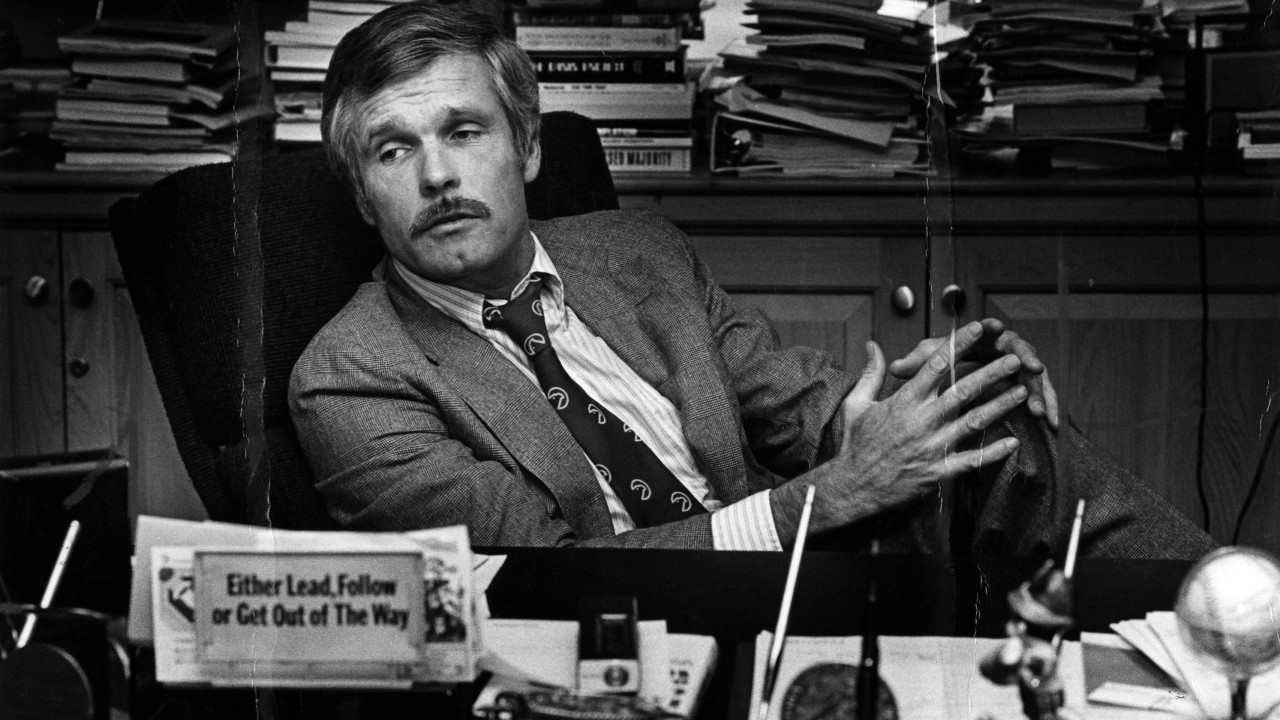
Ted Turner was never supposed to win. The "Mouth from the South" was too loud, too erratic, and frankly, too crazy for the buttoned-up executives in New York. Yet, with his passing at age 87, we're forced to reckon with the fact that the man fundamentally reshaped how you see the world. If you’ve ever watched a 24-hour news cycle or seen a professional sports team become a global brand, you’re living in Ted’s world. He didn't just found CNN. He invented a new way for humans to consume reality.
He wasn't perfect. He was a billionaire with a temper and a penchant for saying the wrong thing at the most public moment possible. But he had a gut instinct that the traditional networks lacked. While CBS and NBC were busy signing off for the night, Turner saw a world that never slept. He saw a global village before the internet made that a tired phrase. Meanwhile, you can explore other stories here: Tactical Degradation and the Governance Vacuum Analyzing the Targeting of Hamas Civil Police Leadership.
Turning a Billboard Company Into a Global Empire
You have to look at where he started to get why he was so obsessed with winning. When his father took his own life in 1963, a 24-year-old Ted inherited a billboard business on the verge of collapse. Most people would’ve sold the assets and walked away. Not Ted. He doubled down. He bought struggling radio stations and then moved into TV, specifically a low-power UHF station in Atlanta called WTCG.
At the time, UHF was the graveyard of television. Nobody watched it. But Turner realized he could beam that signal via satellite to cable systems across the country. He created the "Superstation," eventually WTBS. It was a simple idea that changed everything. Suddenly, a local station in Georgia was available in households from Maine to California. He used cheap reruns and Braves baseball games to build a loyal audience that the big three networks simply couldn't ignore. To explore the complete picture, check out the excellent analysis by NPR.
The Audacity of 24 Hour News
When Turner announced CNN in 1980, the industry laughed. They called it "Chicken Noodle News." Critics said there wasn't enough news in the day to fill 24 hours. They were wrong. Turner knew that news isn't just about what happened today; it’s about what’s happening right now.
He hired real journalists but gave them a mandate that was unheard of. Go live. Stay live. If a war breaks out, don’t wait for the evening broadcast. Show the missiles in the air. This shift in perspective changed how governments operated. Diplomats started watching CNN to see what was happening in their own backyards. It was the birth of the "CNN Effect," where real-time images forced political leaders to act faster than they ever wanted to.
Why the Braves and WCW Mattered to Media
Ted didn't just want news. He wanted your entire Sunday afternoon. He bought the Atlanta Braves and the Atlanta Hawks because he needed content for his Superstation. He famously managed the Braves for one game in 1977 before the National League president told him to get back in the owner's box. That was Ted. He couldn't just own the team; he had to be part of the play.
He did the same with professional wrestling. By buying World Championship Wrestling (WCW), he took a regional "carnival" business and turned it into a prime-time powerhouse. He went toe-to-toe with Vince McMahon and almost won. He understood that television is about tribalism. Whether it’s a political debate or a wrestling match, you need a hero and a villain. Turner played both roles perfectly throughout his career.
The Conservationist and the Billionaire Rebel
People forget that Turner was one of the largest landowners in America. He owned millions of acres across the Great Plains and the West. He wasn't just buying land to hide away; he was obsessed with bringing back the bison. When he started, the American bison was nearly extinct. Today, thanks largely to his efforts and his Ted’s Montana Grill chain—ironic as that may be to some—the population is stable.
He gave away a billion dollars to the United Nations when the U.S. government was dragging its feet on dues. He did it on a whim during a gala dinner. That’s not how billionaires usually work. They have committees. They have tax strategies. Ted just had a checkbook and an ego that wanted to save the planet. He was a pioneer in environmental philanthropy long before it became a PR requirement for the ultra-wealthy.
Mistakes and the AOL Disaster
You can't talk about Turner without mentioning the merger between Time Warner and AOL. It was perhaps the worst business deal in history. Ted saw his influence evaporate almost overnight. He was sidelined by corporate suits who didn't understand his gut-level approach to media. He lost billions. He lost his station. He lost his voice in the company he built from scratch.
It's a lesson for any entrepreneur. Even if you're the smartest guy in the room, the room can still eat you. Turner spent his later years more quietly, dealing with Lewy body dementia, a cruel fate for a man whose mind always raced at a hundred miles an hour. But even in those quieter years, he remained a symbol of an era where one person with a big enough personality could move the needle on a global scale.
Lessons From a Life Lived at Full Speed
If you’re looking to understand why the media looks the way it does today, look at Ted. He proved that speed beats polish. He showed that being "first" is often more valuable than being "perfect." We see this today in every live stream and every breaking news tweet.
- Don't fear the giants. Turner took on the big networks when he had almost nothing.
- Control the distribution. He understood satellites before his competitors understood cable.
- Diversify your passions. He was a champion sailor, a media mogul, and a buffalo rancher.
- Take the hit. He lost a lot of money on AOL but never stopped talking about the causes he cared about.
Ted Turner’s death marks the end of the "Great Founder" era in media. We won't see another one like him because the world is too fragmented now. We have thousands of channels, but we have very few visionaries willing to bet their entire fortune on a single, "crazy" idea.
Go watch some vintage CNN footage or look up his 1977 America's Cup win. Understand that the world didn't just happen this way. It was dragged here by people like Ted who refused to shut up and refused to lose. If you want to honor his legacy, stop playing it safe in your own career. Take a swing at something that makes the experts laugh. It’s usually a sign you’re onto something big.