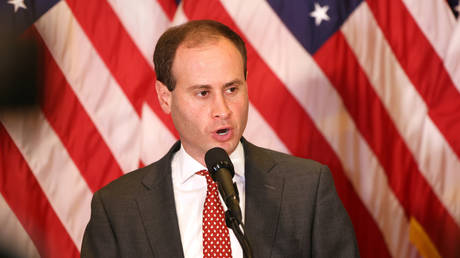
Coverage surrounding the White House warning to congressional Democrats over investigative probes into Donald Trump routinely frames the clash as a simple partisan standoff. According to standard political reporting, the executive branch is pushing back against legislative overreach, while House committees assert their constitutional mandate to conduct oversight. That framing reduces a structural conflict over the separation of powers to a predictable Washington turf war.
Both sides treat congressional subpoenas and executive privilege claims as tactical weapons rather than symptoms of a deeper constitutional ambiguity. When the White House warns Democrats that aggressive probes will backfire politically or stall legislative priorities, it relies on an assumption that voters punish oversight when it looks partisan. Simultaneously, Democratic committee chairs often operate under the assumption that issuing subpoenas automatically translates into public accountability and courtroom victories. Both assumptions overlook how modern separation-of-powers disputes actually play out in federal courts and in public opinion.
The Structural Limits of Congressional Oversight
To understand why White House warnings carry weight—and where they fall short—you have to examine the legal mechanics of congressional oversight. The U.S. Constitution does not explicitly mention a congressional power to investigate. Instead, the Supreme Court established in McGrain v. Daugherty (1927) that the power of inquiry is an implied authority auxiliary to the legislative function. A committee cannot investigate simply to expose wrongdoing for its own sake; every subpoena must serve a valid legislative purpose.
Legal scholars and practitioners who have litigated separation-of-powers cases point out that this requirement creates an immediate bottleneck for any House majority:
- The Legislative Nexus Requirement: Under Trump v. Mazars USA, LLP (2020), the Supreme Court held that courts must take special care to assess the separation-of-powers concerns raised when Congress subpoenas a president's personal information. Chief Justice John Roberts outlined a four-factor test requiring Congress to show that other sources cannot reasonably provide the information, that the subpoena is no broader than necessary, that the evidence genuinely advances a valid legislative purpose, and that the burdens imposed on the president are adequately assessed.
- The Timeline Mismatch: Civil enforcement of a congressional subpoena in federal district court, followed by appeals to the D.C. Circuit and the Supreme Court, routinely takes eighteen months to three years. Because the House of Representatives operates on a two-year election cycle, a sitting president's legal team does not necessarily need to win on the merits to defeat a probe; running out the clock until the next Congress is sworn in often achieves the exact same result.
- Executive Privilege and Accommodation: Historically, disputes between the executive and legislative branches were resolved through the "accommodation process," a tradition of negotiated compromise documented extensively by the Department of Justice's Office of Legal Counsel (OLC). When either branch abandons accommodation in favor of absolute demands or blanket refusals, the dispute shifts from political negotiation to protracted judicial review.
Why Executive Branch Warnings Are Often Misread
When the White House issues formal letters or public statements warning Democrats against launching expansive investigations, media coverage frequently interprets those statements as signs of political anxiety or obstruction. According to former White House counsel officials from both Democratic and Republican administrations, these warnings serve a much more specific legal and strategic function.
First, a formal warning establishes a record for future litigation. Under the Mazars framework, courts evaluate whether Congress and the executive branch engaged in good-faith negotiations before turning to the judiciary. By putting the White House's objections on the record early—arguing that specific document requests lack a legitimate legislative purpose or intrude upon core executive functions—administration lawyers lay the groundwork for future motions to quash subpoenas.
Second, the White House uses public warnings to frame the narrative around opportunity cost. Voters consistently rank economic concerns, healthcare, and inflation ahead of institutional oversight in public polling conducted by organizations such as the Pew Research Center and Gallup. By arguing that congressional Democrats are prioritizing investigations over bipartisan legislation on infrastructure, prescription drug pricing, or appropriations, the executive branch attempts to shift the political burden onto the House majority.
However, this strategy carries significant risks for the administration. Blanket resistance to oversight can reinforce public perception that the executive branch is hiding damaging information, even when the underlying legal objections are grounded in long-standing OLC precedents protected by presidents of both parties.
The Historical Precedent of Oversight Backfires
Analysts often cite the 1998 impeachment of President Bill Clinton as the primary example of oversight overreach backfiring on the investigating party. During the 1998 midterm elections, Republicans lost five seats in the House of Representatives—a rare midterm loss for the party out of power—largely attributed by political scientists to voter fatigue over the Monica Lewinsky investigation.
Yet relying solely on 1998 ignores counterexamples where sustained congressional investigations reshaped the political environment and yielded concrete legislative or electoral outcomes:
- The Watergate Committee (1973–1974): The Senate Select Committee on Presidential Campaign Activities conducted methodical, televised hearings that steadily shifted public opinion and led directly to major post-Watergate reforms, including the Ethics in Government Act and the Inspector General Act of 1978.
- The Church Committee (1975): Senator Frank Church's investigation into intelligence abuses uncovered widespread domestic surveillance by the CIA, NSA, and FBI, resulting in the creation of permanent intelligence oversight committees and the Foreign Intelligence Surveillance Act (FISA).
- The Benghazi Select Committee (2014–2016): While critics argued the investigation was politically motivated, the prolonged inquiry kept scrutiny focused on former Secretary of State Hillary Clinton's use of a private email server throughout the 2016 presidential campaign.
Political historians note that the difference between an investigation that resonates with voters and one that backfires rarely hinges on White House warnings. Instead, it depends on whether investigators uncover verifiable new facts that connect directly to issues voters care about, rather than recycling existing partisan talking points.
What Standard Coverage Misses About Institutional Incentives
The central flaw in conventional reporting on White House-Congress clashes is treating both institutions as monolithic actors with unified goals. In reality, internal incentives within both the White House and the House Democratic caucus pull decision-makers in competing directions.
Within the House of Representatives, committee chairs face intense pressure from their caucus base and advocacy groups to use every available oversight tool immediately. Failing to issue subpoenas or hold high-profile hearings can trigger primary challenges or internal leadership disputes. At the same time, frontline Democrats representing swing districts—many of whom won seats in districts carried by Trump—face a completely different electoral calculus. For those members, being tied to continuous investigative warfare complicates their efforts to campaign on local economic issues.
Conversely, inside the White House, career attorneys in the Office of Legal Counsel and the White House Counsel's Office focus on protecting institutional executive prerogatives that outlast any single presidency. Political advisors in the West Wing, however, focus on daily media cycles and upcoming campaign messaging. When the White House warns Democrats over impending probes, the message is often an uneasy compromise between lawyers trying to preserve executive authority and communications strategists trying to win the news cycle.
Common Misconceptions About Congressional Subpoenas and Executive Privilege
Public debate around these probes routinely conflates distinct legal concepts, leading to flawed predictions about how disputes will resolve.
| Misconception | Legal and Institutional Reality |
|---|---|
| A congressional subpoena forces immediate compliance. | Congress has no independent police force to enforce civil subpoenas. Enforcement requires either a lengthy civil lawsuit in federal court or a criminal contempt referral to the Department of Justice, which exercises prosecutorial discretion. |
| Executive privilege is an absolute shield. | Established in United States v. Nixon (1974), executive privilege is qualified, not absolute. It protects confidential presidential communications and deliberative processes, but it can be overcome by a demonstrated, specific need for evidence in a criminal proceeding or valid oversight inquiry. |
| Inherent contempt is a practical enforcement tool. | While Congress theoretically retains the power to arrest and detain uncooperative witnesses using its own Sergeant at Arms, inherent contempt has not been used since 1935 and would face immediate habeas corpus challenges in federal court. |
| Tax returns and financial records are beyond congressional reach. | Under Internal Revenue Code Section 6103(f), the chairs of the House Ways and Means Committee, Senate Finance Committee, and Joint Committee on Taxation have statutory authority to request any taxpayer's returns, though courts still scrutinize the underlying legislative purpose. |
How Institutional Stand-Offs Actually Resolve
When the executive branch warns Congress against investigating and Congress pushes forward anyway, the outcome rarely resembles the dramatic courtroom showdowns depicted in cable news commentary. Instead, these disputes follow a predictable trajectory shaped by procedural friction.
First, committees issue broad document requests designed to establish a baseline. Second, the White House responds with letters raising constitutional and statutory objections, offering limited briefings or redacted materials as a gesture of accommodation. Third, if negotiations stall, the committee issues formal subpoenas, prompting the administration to instruct current and former officials not to comply based on testimonial immunity or executive privilege claims.
Once the dispute enters federal court, judicial doctrine favors delay and compromise. Federal judges routinely urge both branches to settle their differences outside the courtroom rather than forcing the judiciary to draw permanent constitutional boundaries between the political branches. By the time an appellate court issues a substantive ruling, the political context—or the party controlling the House—has frequently changed.
Rethinking the Oversight Debate
Evaluating the White House's warnings to Democrats requires looking past the immediate rhetoric of partisan confrontation. Neither the executive branch's warnings nor congressional pledges of aggressive accountability operate in a vacuum. Both are constrained by Supreme Court precedent, the two-year congressional calendar, and the competing priorities of swing-district voters.
Oversight does not succeed merely because a committee issues a subpoena, and executive resistance does not succeed merely because the White House issues a warning. The real test of any congressional investigation lies in whether it produces durable legislative reforms and verifiable public facts—standards that institutional rhetoric from either end of Pennsylvania Avenue rarely meets on its own.


