Every few months, a major outlet runs the exact same headline. Xi Jinping gives a speech, uses the phrase "reunification," warns against "separatist forces," and Western newsrooms immediately hit the panic button. They frame it as an imminent countdown to World War III. They run stock photos of amphibious landing craft. They quote the same three think-tank analysts predicting an invasion window.
It is lazy journalism. Worse, it is dangerously wrong.
If you treat Beijing’s boilerplate rhetoric as a tactical military warning, you completely miss the actual game being played across the Taiwan Strait. You are looking at the theater on the stage while ignoring the trapdoors being built underneath it.
Standard coverage assumes that "no room for Taiwan independence" equals "tanks rolling onto beaches in Taipei." That binary thinking blinds policymakers, investors, and everyday readers to the reality of modern statecraft. Beijing does not want to inherit a smoking crater of destroyed semiconductor fabs and hostile, insurgent-minded citizens. An amphibious invasion across 100 miles of rough, turbulent water—widely recognized by military historians as vastly more complex than the D-Day landings at Normandy—is the absolute last resort of a cornered regime, not its preferred opening move.
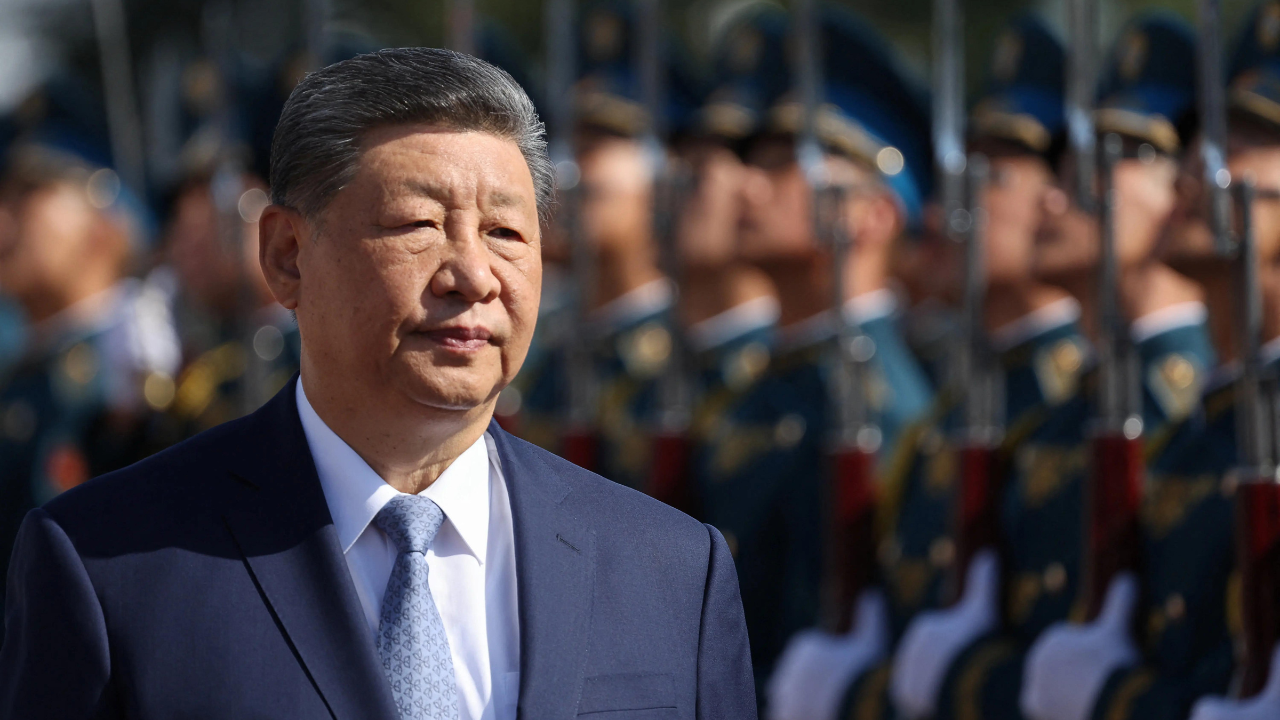
When Xi doubles down on reunification, he isn't announcing an invasion date. He is speaking to an audience of 1.4 billion domestic citizens, reinforcing Communist Party legitimacy, and executing a strategy of slow-motion strangulation that requires zero shots fired.
The Illusion of the "Imminent Invasion"
Let’s dismantle the primary myth first. The mainstream media loves a ticking clock. For years, commentators have fixated on the "Davidson Window"—the 2021 congressional testimony by Admiral Philip Davidson suggesting Beijing could attempt a takeover by 2027. Since then, 2027 has been treated less like an intelligence estimate and more like a movie release date.
This obsession with D-Day scenarios misunderstands how the People's Liberation Army (PLA) actually operates and how the Chinese Communist Party (CCP) calculates risk.
I have sat in boardrooms with multinational supply chain directors who burned tens of millions of dollars panic-shifting manufacturing out of Asia based on sensationalist headlines, only to realize they had mispriced the actual geopolitical risk. They hedged against a kinetic war that hasn't happened, while leaving themselves completely exposed to the regulatory, cyber, and logistical chokeholds that are happening right now.
Look at the mechanics of a full-scale invasion:
- The Geography Problem: Taiwan’s western coastline consists largely of mudflats and cliffs, leaving only a handful of viable landing beaches. Every single one of those beaches is heavily fortified, pre-sighted for artillery, and surrounded by dense urban sprawl.
- The Logistics Nightmare: Moving hundreds of thousands of troops, thousands of armored vehicles, and millions of tons of fuel and ammunition across the Taiwan Strait requires total air and naval superiority. Even if Beijing achieved that, keeping those troops supplied under constant missile fire from mobile launchers hidden in Taiwan’s central mountain range is a logistical puzzle no military has ever solved.
- The Economic Suicide: The moment the first missile hits Taipei, global maritime insurers pull coverage for the entire region. Trade through the South China Sea—which carries roughly a third of global shipping—freezes overnight. China, the world's largest importer of energy and food, would effectively blockade itself from the global economy.
Xi Jinping is a ruthless political survivor, not a suicidal gambler. He knows that a failed invasion means the end of his rule and potentially the end of the CCP. Even a successful invasion leaves him ruling over a devastated economy, cut off from Western markets, facing a permanent guerrilla insurgency.
So why does he keep delivering hardline speeches about reunification? Because the rhetoric itself is a weapon, and the real war is being fought in the "gray zone."
What "No Room for Independence" Actually Means
To understand Beijing’s playbook, you have to strip away the Western obsession with dramatic, decisive battles and look at the concept of annexation without invasion—often referred to by military strategists as quarantine or gray-zone coercion.
When Xi says there is "no room for Taiwan independence," he is establishing a psychological and legal baseline. In Beijing's framing, Taiwan is not a separate country negotiating terms; it is a wayward province whose eventual return is an unstoppable historical inevitability. By repeating this mantra relentlessly, Beijing accomplishes three concrete objectives without firing a live round:
- Domestic Crowd Control: China’s economy is wrestling with structural headwinds—a deflating property sector, high youth unemployment, and an aging population. Nationalism is the glue that holds the social contract together when GDP growth slows. Tough talk on Taiwan is primarily for domestic consumption. It signals strength to party hardliners and distracts ordinary citizens from local economic pain.
- Eroding Taiwan’s Will to Resist: Beijing wants Taiwanese voters to believe that resistance is futile and that Washington will eventually abandon them. Every time the PLA conducts massive encirclement drills, crosses the median line of the Taiwan Strait, or launches cyberattacks against Taiwanese infrastructure, the goal isn't to practice for an invasion. The goal is to normalize military pressure until Taipei becomes psychologically exhausted and accepts a political settlement on Beijing's terms.
- Redefining the Status Quo: Twenty years ago, the median line in the Taiwan Strait was respected as an informal buffer zone. Today, PLA aircraft and naval vessels cross it daily. Beijing uses incremental aggression to slowly change the facts on the ground, pushing the boundaries just far enough to gain territory or leverage without triggering a military response from the United States.
The Quarantine Scenario Nobody Talks About
Imagine a scenario where Beijing decides the status quo is no longer tolerable. Instead of launching missiles at Taipei, the China Coast Guard—backed by the PLA Navy—announces a "customs inspection regime" around Taiwan’s major ports.
They don't declare war. They don't sink ships. They simply declare that because Taiwan is part of China, all incoming cargo vessels must submit to administrative inspections by mainland authorities to prevent "contraband" from entering the island.
Think about the brilliance—and the terror—of that move.
- Insurance Collapse: Commercial shipping companies like Maersk or MSC will not sail into a contested quarantine zone. Maritime insurance premiums skyrocket to infinity, halting 90% of Taiwan’s imports within days.
- Energy Starvation: Taiwan imports roughly 98% of its energy. Its natural gas reserves last less than two weeks. Without a single bomb dropped, the island’s power grid faces blackouts, shutting down the semiconductor foundries that power the global economy.
- The Escalation Trap: How does Washington respond? If the U.S. Navy sends warships to escort commercial tankers through the blockade, America is forced to fire the first shot against Chinese Coast Guard vessels. Beijing gets to play the victim of foreign aggression while suffocating Taiwan economically.
This is the true nature of the threat. While cable news pundits argue over amphibious assault ships, Beijing is quietly building the world’s largest coast guard—complete with 10,000-ton cutters armed with naval cannons—specifically designed for law-enforcement-style blockades.
Dismantling the Bad Questions
When major speeches happen in Beijing, search engines light up with the same panicked, poorly framed queries. Let’s look at the flawed premises behind the questions people actually ask.
"When will China invade Taiwan?"
This is the wrong question. Asking when an invasion will happen assumes an invasion is the inevitable climax of the dispute. It ignores the reality that Beijing prefers winning without fighting. The better question is: At what point does Beijing's gray-zone pressure make Taiwan's current political autonomy unsustainable? You shouldn't be watching for troop buildups in Fujian province; you should be watching undersea internet cables being mysteriously severed, subtle shifts in Taiwanese corporate capital flows, and legal decrees from Beijing claiming jurisdiction over Taiwan's airspace and waters.
"Will the U.S. go to war to defend Taiwan?"
For decades, Washington maintained a policy of strategic ambiguity—refusing to state explicitly whether it would intervene militarily, thereby deterring Beijing from attacking while preventing Taipei from declaring formal independence. Even though recent administrations have drifted toward strategic clarity, the question still misses the point. If Beijing uses a customs quarantine, cyber warfare, and economic coercion rather than an outright invasion, there is no clear "Pearl Harbor moment" to trigger a U.S. military intervention. Washington cannot bomb Beijing over a customs dispute.
"Is Taiwan's semiconductor industry really a 'Silicon Shield'?"
The popular theory goes like this: Taiwan produces over 90% of the world's most advanced microchips (via TSMC), so the global economy would collapse if Taiwan were attacked, forcing the U.S. to defend it and deterring China from invading.
This "Silicon Shield" is a dangerous illusion. It cuts both ways. Yes, a war would destroy global supply chains—including China’s own tech sector, which relies heavily on Taiwanese chips. However, it also makes Taiwan the ultimate strategic prize. If Beijing ever believed it could capture TSMC's fabrication plants intact, it would hold a chokehold over the entire global economy, from Apple iPhones to Lockheed Martin fighter jets. Furthermore, as the U.S., Japan, and Europe spend billions subsidizing domestic chip fabs to reduce reliance on Taiwan, the shield actually shrinks. Over time, the world becomes less dependent on Taipei, potentially lowering the cost of conflict for Beijing.
The Uncomfortable Flaws in the Contrarian View
Intellectual honesty requires admitting where a contrarian thesis can break down. Relying purely on the logic of rational economic self-interest has historically blinded analysts to catastrophic wars.
In early 1914, British author Norman Angell famously argued in The Great Illusion that European economies had become so deeply intertwined through trade and finance that a major war was economically impossible. Months later, Europe tore itself apart in World War I. In early 2022, thousands of smart analysts argued Vladimir Putin would never launch a full-scale invasion of Ukraine because the economic sanctions would cripple Russia and the military logistics were too messy. He did it anyway.
Authoritarian leaders operating inside information bubbles do not always make spreadsheets-first decisions.
As Xi Jinping has consolidated power, eliminating rivals and surrounding himself with loyalists, the risk of miscalculation has climbed. When nobody in the room is brave enough to tell the supreme leader that his military isn't ready or that the economic fallout will be catastrophic, bad decisions happen. Ideological obsession can override economic logic. If Xi truly views reunification as his personal historical legacy—the crowning achievement that puts him on par with Mao Zedong—he may eventually decide that the political cost of not acting outweighs the economic ruin of war.
Dismissing the kinetic threat entirely is just as foolish as treating it as an immediate certainty.
How to Actually Read the Room
If you are an investor, a business leader, or simply someone trying to understand where the world is heading without getting manipulated by clickbait headlines, stop reacting to speeches. Rhetoric is noise. Watch the structural signals instead.
- Track the Legal Warfare ("Lawfare"): Pay close attention when Beijing’s courts or ministries issue new regulations claiming administrative or criminal jurisdiction over Taiwanese citizens or Strait waterways. Beijing always builds a legal pretext before taking physical action. When they pass a law, they intend to enforce it.
- Watch Energy and Commodity Stockpiling: Before any major geopolitical shock—whether a blockade or a kinetic conflict—China will aggressively hoard crude oil, natural gas, grains, and critical minerals while quietly liquidating vulnerable overseas financial assets. Data on Chinese port inventories and central bank gold purchases tells you far more about Beijing's timeline than any speech at the Great Hall of the People.
- Monitor Taiwan’s Domestic Politics, Not Just Washington’s: The real battleground is the ballot box in Taipei. Beijing pours massive resources into disinformation campaigns and economic incentives aimed at convincing Taiwanese voters that cooperation with the mainland brings prosperity, while alignment with Washington brings war. If Beijing can achieve political alignment through elections, the PLA never has to leave port.
- Audit Your Hidden Dependencies: If you run a business, stop assuming your supply chain is safe just because your direct suppliers aren't in Taiwan. Ask your tier-two and tier-three vendors where their microcontrollers, power management chips, and specialized chemicals originate. A three-week maritime quarantine of Taiwan wouldn't just halt iPhone production; it would freeze automotive assembly lines in Detroit, medical device manufacturing in Germany, and server farms in Virginia.
The mainstream press will keep selling you the simple story of an impending amphibious invasion because fear sells clicks and fits neatly into a three-minute broadcast segment. Let them chase shadows. Beijing isn't planning a sudden storming of the beaches—it is slowly turning up the heat on the water, betting that by the time the world notices it's boiling, the outcome will already be decided.