The rain in Brussels does not fall; it hangs. It clings to the cold glass of the NATO headquarters, a sprawling, grey fortress of modern statecraft designed to look like interlocking fingers. Inside, the air smells of expensive wool, damp overcoats, and adrenaline.
To understand what happens when the architecture of global security begins to tremor, you have to look past the podiums. Look instead at the mid-level diplomats. Consider a hypothetical but entirely accurate composite of these figures: a defense attache from a Baltic nation, let us call her Linna. She stands near a coffee station, her fingers tightening around a paper cup until the cardboard buckles. She is watching a television monitor. On the screen, the President of the United States is speaking.
For seven decades, the geopolitical reality of Western Europe has rested on a single sentence. Article 5 of the North Atlantic Treaty states that an attack on one is an attack on all. It is a psychological shield. It works because everyone believes it works. If a rogue state or a resurgent empire contemplates rolling tanks across a border, they stop because they believe American nuclear and conventional might will instantly meet them. It is an insurance policy signed in blood and sustained by absolute certainty.
Then came the mixed signals.
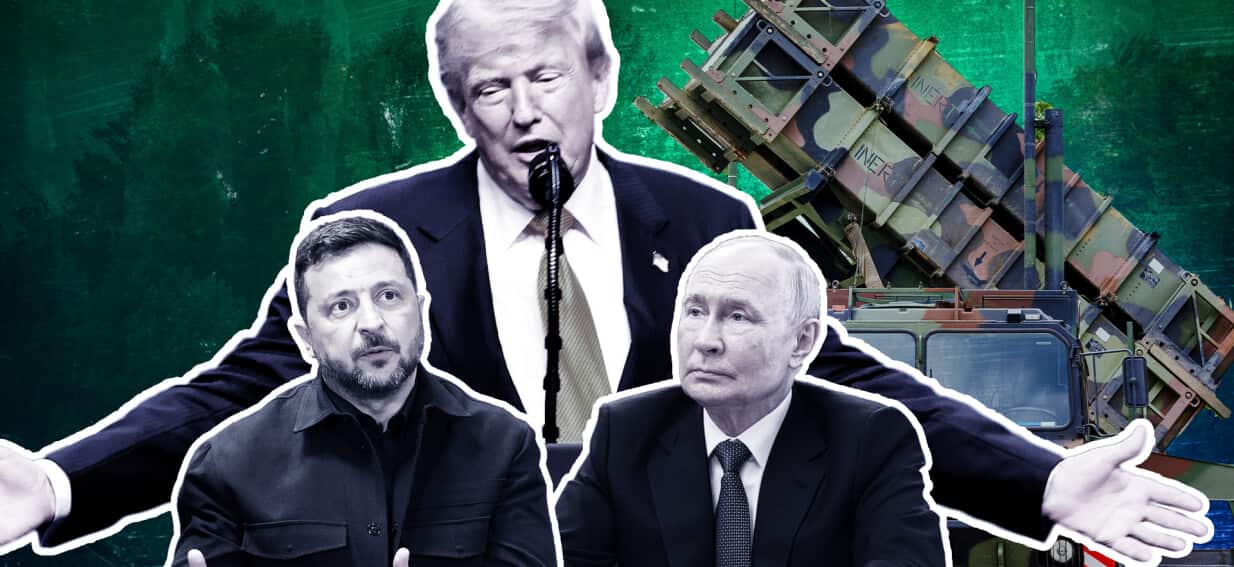
During his time at the podium and in impromptu press gaggles, Donald Trump turned that certainty into a variable. One hour, he lambasted allies as "delinquent," implying that the United States might not defend nations that failed to meet the target of spending two percent of their gross domestic product on defense. The next hour, or perhaps the next morning, he stood before the cameras and declared that the U.S. commitment to the alliance remained rock-solid.
The room froze. The alliance is not a business transaction; it is a vow. When a vow becomes conditional, the entire structure shifts.
The Ledger and the Lifeline
To the American president, the math was simple, intuitive, and deeply rooted in his background as a New York real estate developer. You pay your rent, or you get evicted. You do not get the protection of the landlord if your ledger is in the red. He looked at Germany, at Italy, at Spain, and he saw wealthy nations coasting on American generosity. He was not entirely wrong about the numbers. For years, American administrations had quietly grumbled that Europe was free-riding on the U.S. defense budget.
But the American president did not grumble quietly. He used a sledgehammer.
He publicly questioned whether the U.S. would defend Montenegro, a tiny, newly minted NATO member, suggesting that its "very aggressive people" might trigger World War III. He called NATO "obsolete," then called it "no longer obsolete," then criticized it again.
For Linna and the millions of citizens living in countries that share a direct, physical border with aggressive neighbors, these verbal shifts were not mere political theater. They were existential threats. If you live in Tallinn or Vilnius, the distance between safety and catastrophe is measured in the hours it takes for a column of armor to move down a highway. If the American president hesitates for even a day to debate whether a country paid enough into its treasury, the country could cease to exist before the debate ends.
The tension in the halls of Brussels during these summits was palpable. Diplomats scrambled to decipher the true policy hidden beneath the rhetoric. Was the theatrical anger merely a negotiation tactic designed to shock Europeans into spending more? Or was it a genuine philosophical rejection of the post-war international order?
The reality was a dizzying mix of both.
Behind Closed Doors
Away from the television cameras, inside the soundproofed council chambers, the atmosphere resembled a high-stakes corporate restructuring meeting rather than a gathering of historic allies. Leaders sat in a circle, watching the American president skip the pre-written diplomatic platitudes. He pointed fingers. He cited specific GDP percentages. He disrupted the carefully choreographed schedule, forcing an emergency session to address defense spending.
European leaders reacted in two distinct ways. Some, like the French and Germans, attempted to argue from history and philosophy. They spoke of shared values, democratic solidarity, and the lessons of the twentieth century. This approach largely failed to connect.
Others took a more pragmatic route. They realized that the way to communicate with this American administration was through concrete metrics and flattery. They began to reframe their existing plans to increase defense budgets as a direct response to the president's leadership. They gave him the victory he wanted, presenting charts and upward-sloping lines that proved Europe was finally opening its wallet.
It worked, temporarily. The president emerged from the closed-door sessions to declare a personal triumph, claiming he had raised billions of dollars for NATO in a matter of hours. The official summit communiqués—the dry, legalistic documents hammered out by exhausted bureaucrats in the dead of night—still contained the standard, ironclad language affirming Article 5.
But the damage to the psychological shield was done.
The Cost of Uncertainty
In diplomacy, ambiguity can sometimes be a tool. It keeps your adversaries guessing. But strategic ambiguity directed at your friends produces a different result. It creates paralysis.
Consider what happens next when a collective defense system loses its absolute predictability. Adversaries begin to test the edges. They probe with cyberattacks, disinformation campaigns, and airspace violations, watching closely to see if the fractured alliance will respond as a cohesive unit or splinter into factions.
The mixed messages created a dual reality. On paper, the U.S. military actually increased its footprint in Europe during this era, rotating troops through Poland and the Baltic states under the European Deterrence Initiative. The institutional machinery of the Pentagon and the State Department continued to function along traditional lines, reassuring allies and conducting massive joint exercises.
Yet, the words from the top mattered more than the movements on the ground. A bureaucracy can move tanks, but only a commander-in-chief can authorize their use in a crisis. If the political will at the very top is perceived as fickle, the tanks become expensive stage props.
The European allies realized they could no longer afford the luxury of total dependence. The modern push for "European strategic autonomy"—the idea that the European Union must possess its own independent military capability to act without American assistance—was born out of the anxiety generated at these summits. What was once a fringe theoretical concept discussed in Parisian think tanks suddenly became a matter of urgent policy in Berlin, Brussels, and Warsaw.
The United States had spent decades discouraging Europe from building a separate military structure, fearing it would duplicate and weaken NATO. Now, American unpredictability was driving them to do exactly that.
The Unspoken Script
The summit eventually drew to a close. The motorcades departed down the rain-slicked avenues of Brussels, carrying presidents and prime ministers back to their respective capitals. The journalists packed up their tripods, having filled their feeds with headlines about a fractured West and an alliance on the brink.
Left behind were the career officials who actually run the machine. They were left to patch the drywall of diplomacy, writing memos to reassure nervous capitals that the alliance had survived another storm.
But the air had changed. The fundamental assumption that had underpinned Western security since 1949 had been exposed as a choice, not an inevitability. Every future summit would now carry the phantom weight of that realization.
Linna, the Baltic diplomat, finishes her lukewarm coffee and tosses the crumpled cup into a bin. She walks back to her office to prepare a briefing for her government. The report will state that the treaty holds, that the troops remain in place, and that the official statements are resolute.
But beneath the official language, the true takeaway requires no translation. Europe is on notice. The shield is still there, but for the first time in history, everyone has seen the cracks in the handle.