The air in Glasgow during cup final week doesn't just move; it vibrates. It is a thick, electric soup of anticipation and ancient rivalry that settles in the lungs of every person from the Gallowgate to the South Side. When Celtic and Rangers prepare to meet at Hampden Park with a trophy gleaming on a plinth between them, the city stops being a collection of streets and becomes a pressure cooker.
John Swinney knows this pressure. He isn't just looking at a football match; he is looking at a powder keg. As Scotland’s First Minister stepped to the microphone recently, his words weren't aimed at the tactics on the pitch or the fitness of the players. He was talking to the soul of the city. He was asking for something that sounds simple but feels impossible in the heat of a Derby: restraint.
The Invisible Stakeholders
Consider a hypothetical supporter named Callum. He has followed Celtic since he was five, back when the scarves were itchy wool and the Bovril was hot enough to melt lead. For Callum, the Scottish Cup Final isn't a "sporting event." It is a validation of identity. When his team wins, the sun shines brighter on Monday morning. When they lose, the sky stays grey for a month.
But there is a shadow that follows Callum and thousands like him into the stadium. It’s the shadow of what happens when the passion curdles. Mr. Swinney’s plea for fans to "behave" isn't a schoolteacher’s finger-wagging; it is a desperate attempt to protect the collective reputation of a nation. The First Minister is acutely aware that when the final whistle blows, the world isn't just looking at the scoreline. They are looking at the stands. They are looking at the streets.
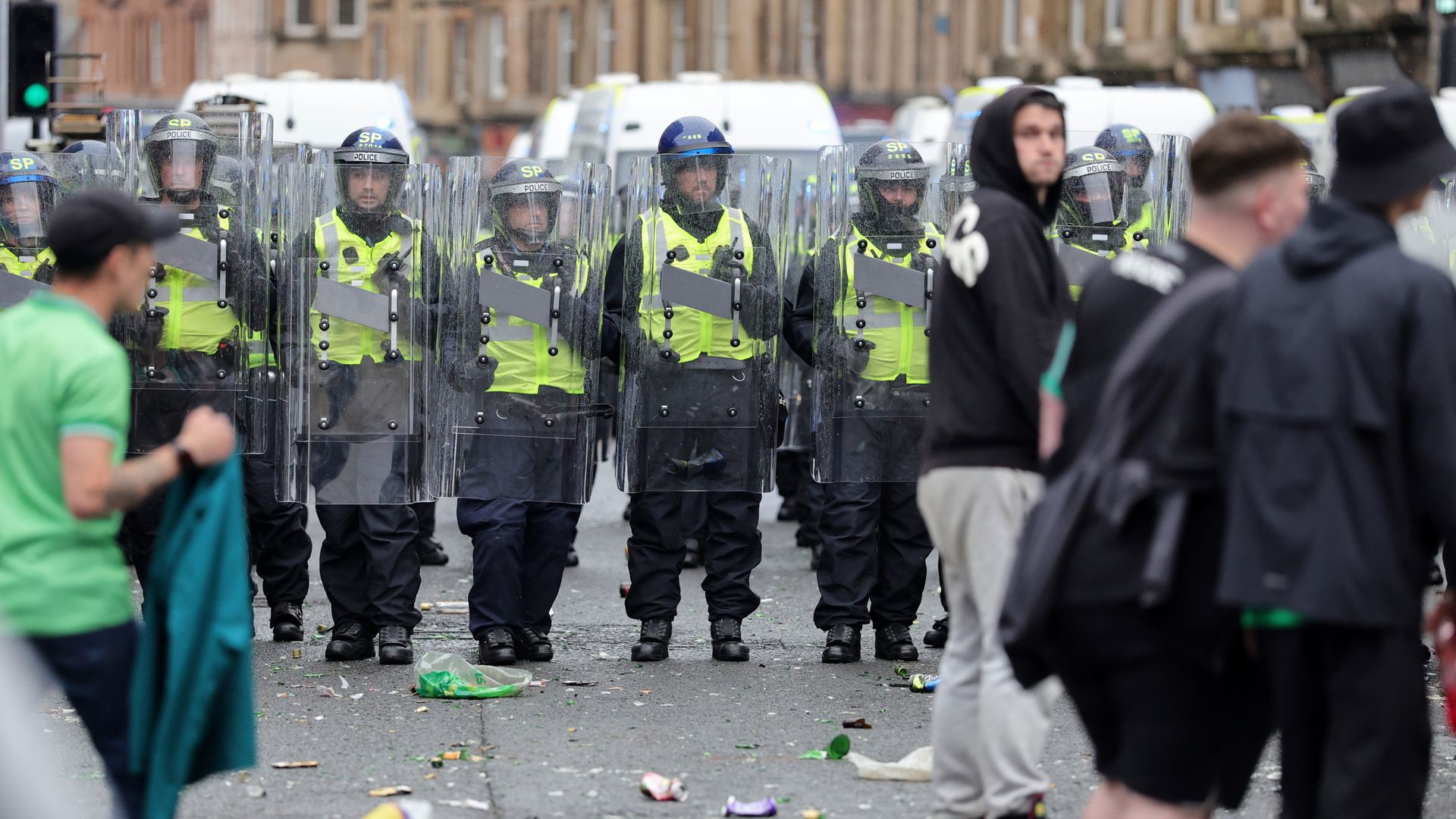
The stakes are invisible until they aren't. They manifest in the extra shifts worked by police officers who won't see their families this weekend. They appear in the anxiety of shopkeepers boarding up windows, not out of malice, but out of a weary, lived experience of what "celebration" can sometimes look like.
A History Written in Tension
Scottish football is a beautiful, jagged glass. It reflects a history of migration, religion, and class struggle that most modern leagues have long ago polished away into corporate sterility. This raw authenticity is why we love it. It’s why the atmosphere at Hampden can make the hair on your arms stand up. But that same rawness makes it volatile.
The government's intervention reflects a specific fear: the "unacceptable conduct" that has haunted previous fixtures. We have seen the script before. Pyrotechnics that turn a sunlit afternoon into a choking fog. Chants that dig up graves better left undisturbed. Pitch invasions that transform a moment of sporting glory into a chaotic security failure.
John Swinney is asking fans to remember that they are ambassadors. It is a heavy mantle to place on a person who has had three pints and is screaming for a penalty, but it is a necessary one. The First Minister emphasized that the eyes of the world are on Scotland. He wants the narrative to be about the football—the grace of a winger’s cross, the thud of a well-timed tackle—not the wreckage left behind in the city center.
The Psychology of the Pack
Why is it so hard to just "behave"?
Psychologically, a football stadium is one of the few places left in modern society where a person can truly lose themselves. In the crowd, you aren't a bank clerk or a plumber or a student. You are a cell in a massive, breathing organism. This anonymity provides a sense of power. It creates a vacuum where personal responsibility often gets sucked out, replaced by the collective urge of the hive.
When the Scottish Government speaks to the fans, they are trying to break that spell. They are trying to remind the individual within the mass that their actions have echoes. A flare thrown onto the pitch isn't just a bright light; it is a potential injury, a fine for the club, and a stain on the game's future.
The messaging from the top floor of St. Andrew’s House is clear: enjoy the spectacle, embrace the tribalism, but don't let the fire burn the house down.
The Cost of the Aftermath
We often talk about the "cost" of the game in terms of ticket prices or TV rights. The real cost is measured in the days following the event. If the warnings go unheeded, the conversation on Monday won't be about the winning goal. It will be about "draconian" new laws. It will be about restricted movement, booze bans, and increased surveillance.
Every time a boundary is crossed, the leash gets shorter for everyone. The "well-behaved" majority ends up paying the price for the "reckless" minority. This is the irony of the Scottish football fan’s existence: the more we push the limits of our expression, the more the state feels compelled to hem us in.
John Swinney’s appeal is a plea for self-regulation. He is essentially saying: "Show us you don't need a leash."
The Quiet Walk to the Turnstile
Imagine the walk to Hampden. The sea of green and white moving in one direction, the blue moving in another. There is a tension there that is almost musical—a low, vibrating hum of nerves. It is one of the most intense human experiences available in the 21st century.
The beauty of the Scottish Cup Final lies in its ability to make grown adults weep with joy or despair over a ball hitting a net. That emotional investment is a gift. It makes life vivid. But as the First Minister suggested, that gift comes with a social contract. You get to feel this deeply, but you must remain a neighbor to those around you.
The "behave" directive isn't about silencing the roar. It’s about ensuring that when the roar dies down, there is still a city standing, proud of its teams and itself.
The players will eventually leave the pitch. The silver will be hoisted, the medals handed out, and the grass will be left to recover under the Glasgow rain. What remains is the memory of how we acted when the world was watching. We are more than the colors we wear; we are the way we carry our victories and the way we shoulder our defeats.
As the sun sets over the stadium, the true victory isn't found in the trophy room. It’s found in the quiet, orderly dispersal of a crowd that proved it could handle the weight of its own passion. It is found in the handshake between rivals who understand that without the other, the game means nothing. It is found in the realization that the most powerful thing you can do in a moment of total chaos is to remain human.