Heat does not merely descend from a sky stripped of clouds; it rises from the earth, radiating upward until the air itself shimmers into a cruel, liquid mirror. There is no shade. There is only the relentless glare of a sun that treats human skin like an enemy to be scorched.
In the year 1998, David Mason stepped into that furnace.
Most people measure distance by hours spent behind a windshield, watching billboards blur past while the radio murmurs background noise. Mason measured distance by heartbeats, by the dull, rhythmic thud of leather against iron-hard soil, and by the slow, deliberate padding of four heavy-footed beasts of burden. Five thousand five hundred kilometers. Two hundred and thirty-six days. Across the staggering, unyielding expanse of the Australian continent.
To understand what it takes to walk from one side of a country to another with only camels for company, you must first abandon the modern addiction to comfort. You must strip away the constant hum of electricity, the reassuring click of a lock on a front door, the immediate availability of clean water at the twist of a handle. Out there, water is currency. Water is breath. Water is the thin, fragile line between existing and becoming part of the bleached bones scattered across the red dust.
The Companions of the Dust
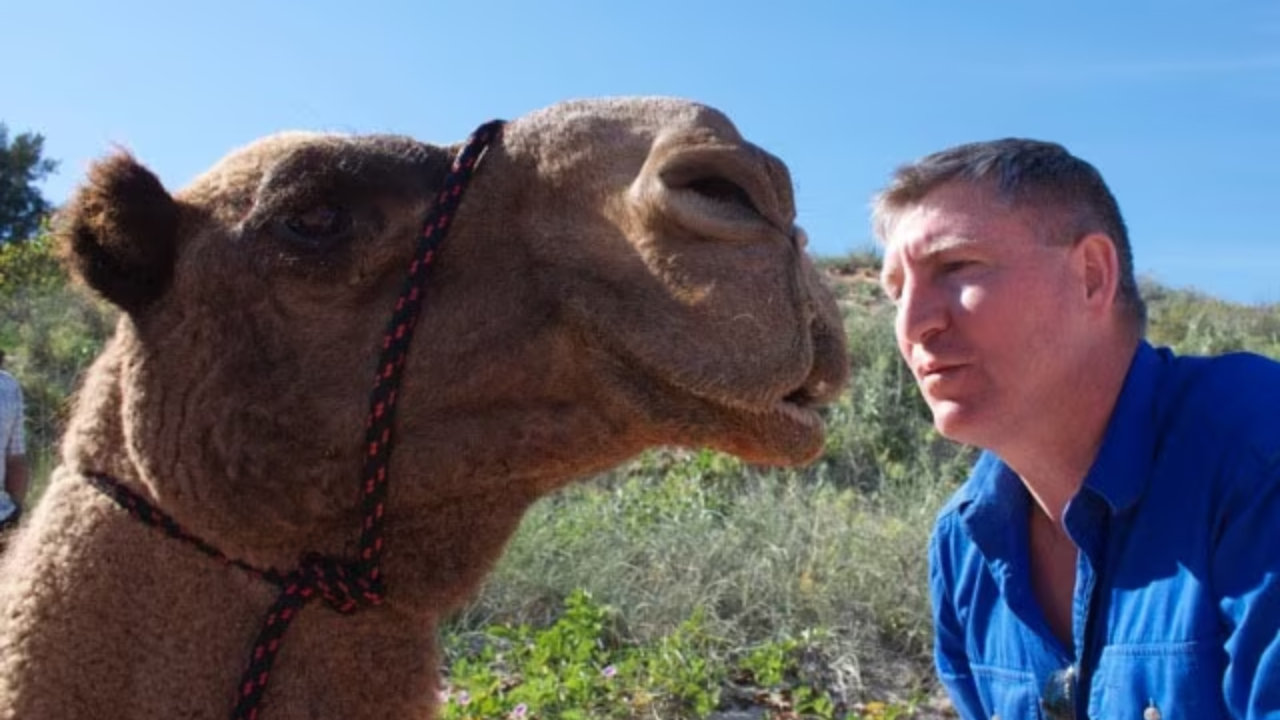
Camels are often misunderstood creatures. Popular culture paints them as stubborn, irritable, and spiteful. But to someone walking across a desert, a camel is a partner in survival, possessing an ancient, almost otherworldly intelligence suited to a world that rejects human life.
Mason’s expedition relied entirely on these animals. They carried the heavy gear, the precious water bladders, the provisions that kept starvation at bay. Yet, a camel cannot be driven the way a machine can be forced. Try to rush them, and they simply plant their feet, refusing to move an inch, staring out at the horizon with large, dark eyes that seem to hold the memory of millions of years of emptiness.
To travel with them meant learning their rhythm. It meant slowing down.
Consider what happens when human urgency collides with desert time. A car breaks down and you call a tow truck. A plane is delayed and you curse the airline. But when a camel drops its head to sniff a stubborn patch of spinifex grass, you wait. You adjust your breathing to match theirs. You realize, with a sudden jolt of humility, that you are the guest in their world, not the other way around.
The physical toll was immediate and unyielding. On the first few weeks, blisters formed, burst, and hardened into calluses that felt like armor. Muscles that had never been asked to bear such continuous weight screamed in protest. Every morning began with the ritual of strapping up aching joints, checking camel girths, and calculating the exact distance to the next potential soak or bore, knowing full well that water sources in the interior are notoriously fickle. They can dry up overnight under the baking wind, leaving behind nothing but cracked mud and shattered hopes.
The Mental Architecture of Isolation
Loneliness is a strange phenomenon. In a crowded city, surrounded by millions of strangers, a person can feel utterly invisible and profoundly alone. But out in the red heart of Australia, miles from the nearest paved road, isolation takes on a physical weight. It presses against the chest. It rings in the ears like a high-pitched tinnitus.
For weeks on end, Mason walked through landscapes where the horizon curved unbroken in every direction, a 360-degree circle of relentless earth and sky. There were days when the only sound was the crunch of gravel, the creak of pack saddles, and his own breathing.
In such vast emptiness, the human mind plays tricks. The ego, accustomed to constant external validation and social noise, begins to panic. It chatters, worries, manufactures fears, and replays old regrets. But eventually, after the hundredth mile, something shifts. The internal chatter burns away in the heat. The ego gets tired of shouting into an endless void and simply goes quiet.
What remains is a radical clarity.
You begin to notice the microscopic details of a world most dismiss as dead. You see the subtle shift in the color of the dirt from ochre to pale crimson. You watch the intricate geometry of a spiderweb stretched between stunted mulga bushes. You track the flight of a lone wedge-tailed eagle circling high above, hunting for prey in the furnace below. You realize that the desert is not empty at all; it is simply quiet enough for you to finally hear what the earth has been saying all along.
The Mathematics of Survival
Every successful long-distance expedition is, at its core, an exercise in brutal arithmetic. Romance has no place when you are five hundred kilometers from the nearest settlement.
Water consumption must be tracked down to the millimeter. Push too hard, sweat too much, miscalculate your reserves by a single day, and the desert claims another statistic. Mason carried heavy loads, but weight is the enemy of distance. Every extra item packed meant more stress on the camels, more water required, more energy expended.
Navigation was another test of wits. GPS units were primitive or nonexistent for everyday civilian use back in the late nineties; paper maps, compasses, and an acute awareness of natural landmarks were the primary tools. A slight miscalculation in bearing could mean missing a remote water station by ten kilometers—a distance that, under a blazing sun with a depleted water skin, is insurmountable.
There were moments of genuine peril. Dust storms that turned the midday sky into the color of dried blood, erasing the horizon and burying the trail in minutes. Swelling heat that made breathing feel like inhaling fire from a tailpipe. Days when the skin on the face cracked so deeply that smiling or speaking became an exercise in pain.
Yet, for every hardship, there was a corresponding grace.
Sleeping under the southern night sky, far away from the light pollution of cities, reveals a celestial vault so dense with stars it feels three-dimensional. The Milky Way stretches across the dark like a spilled river of diamonds. Wrapped in a simple swag, watching shooting stars streak across the cosmos while the camels quietly chewed their cud nearby, the vastness of the universe felt less terrifying and more like a homecoming.
The Return to Noise
Two hundred and thirty-six days after taking his first step, Mason reached his destination. The journey was over. The boots that had carried him across thousands of kilometers were worn down to paper-thin soles, scarred by rocks and burned by sand.
Re-entering human society after months of absolute solitude is a jarring experience. The noise of cars, the bright neon lights of suburban storefronts, the frantic rush of people hurrying to appointments that suddenly seem entirely meaningless—it all feels like a foreign language you have forgotten how to speak.
People asked him why he did it. They looked for a neat moral, a profound philosophical breakthrough, or a documentary-style soundbite. But some journeys resist being neatly packaged into motivational slogans.
Mason walked across Australia because the road was there, because the silence called to something deep inside the human chest, and because we occasionally need to strip away everything superfluous to remember who we actually are.
The red dust eventually washes out of clothing. The calluses on feet soften. The sun-browned skin fades back to normal tones. But the interior landscape remains unchanged. Once you have walked through the silence of the earth, once you have learned to measure your life in heartbeats and horizons, you never truly return to the way you were before. The desert leaves its mark. It stays in the marrow of your bones, a quiet, enduring reminder that human endurance has no fixed ceiling, and that the quietest places on earth are often the ones that speak the loudest.